


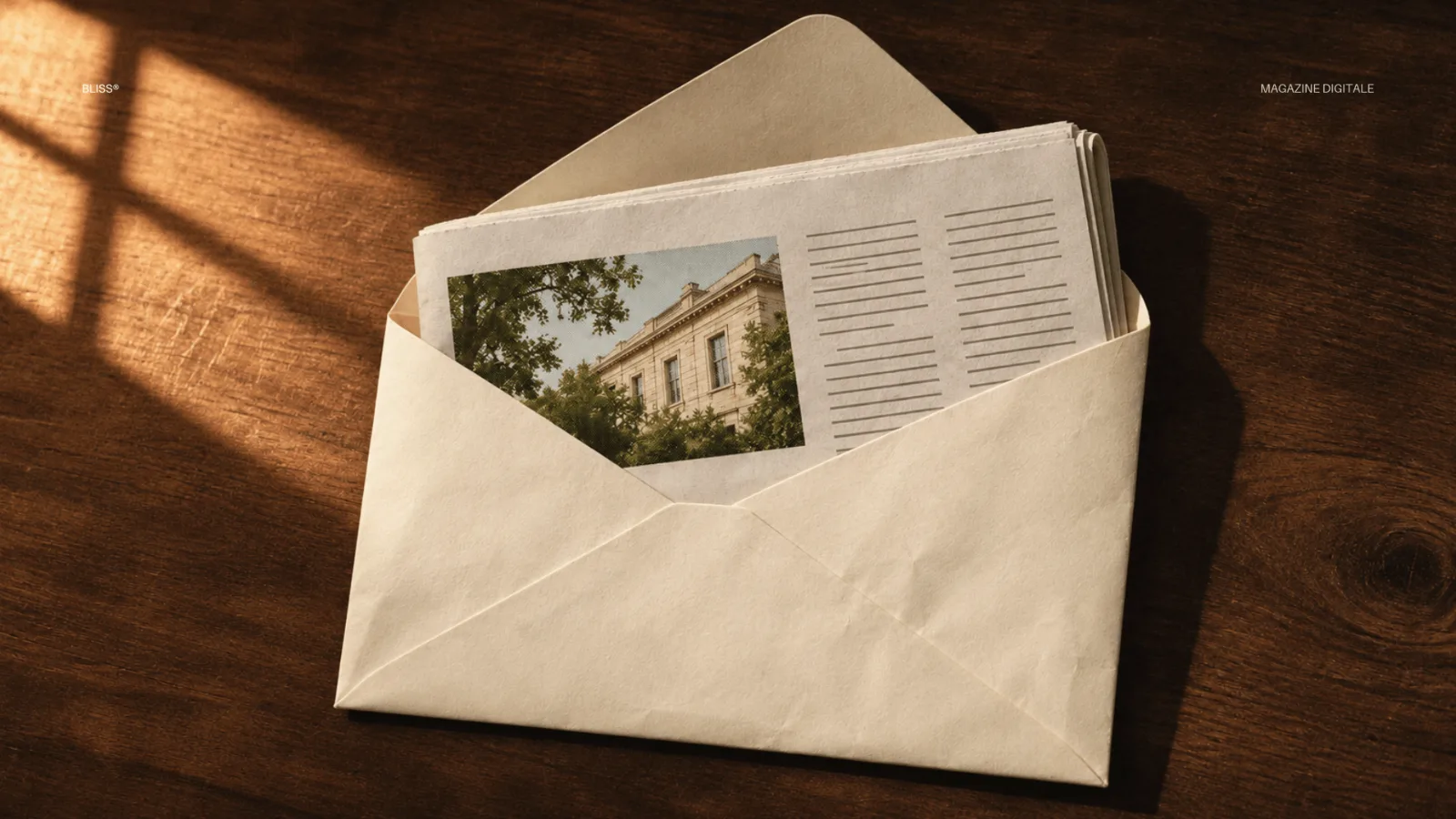
A newsletter is a periodic communication that a company, organisation or individual sends by email to people who have chosen to receive it, to share news, content or offers. The English term combines news and letter, and in Italian it corresponds to the old “bollettino” or “notiziario”.
It is a fundamental tool for direct relationships in today’s landscape: the sender does not depend on an algorithm to reach their readers, and the recipient can unsubscribe at any time.
Today, helped by the rise of Substack and similar platforms, newsletters are more popular than ever. In this guide we look more closely at what they mean, what they are for, how they differ from a DEM and how to build one: list, content, consent rules, technical requirements and measurement. Throughout, we pay particular attention to the subscriber list: one of the few audiences a company truly owns, and one that, if neglected, sends its message straight into spam.
Let’s begin.
Newsletter: meaning in Italian, origin and grammar
In Italian, the meaning of newsletter is bulletin or news sheet. It is a feminine noun, an English word formed from news and letter (as we have seen), sent to a restricted group of people such as the members of an association or a company’s customers.
As a synonym for newsletter, Italian offers bollettino, notiziario or lettera informativa, but in current usage the English term is now the only one in widespread use.
Although its use has spread today thanks to the internet, the word is much older than email. The Boston News-Letter, first published on 24 April 1704, was a single-page weekly sheet and is considered the first continuously published newspaper in the Massachusetts colony (Wikipedia, The Boston News-Letter). For almost three centuries newsletters were printed sheets posted to subscribers and members. Email changed their cost and speed but left the logic intact: a few selected news items for a defined audience.

What a newsletter is and how it works
To understand what a newsletter is, four elements are enough: a recognisable sender, a list of people who have subscribed, a regular cadence and content that keeps a promise.
How it works is simple. People who want to receive it leave their address in a form, on the website or in person. The address goes into a sending platform, which sends the same message to all subscribers, records deliveries, opens and clicks, and handles unsubscribes. Wikipedia highlights one feature that sets it apart from a mailing list: communication is one-way, from the sender to the subscribers, who can reply only to the sender.
What subscribing to a newsletter involves
Subscribing means authorising a sender to write to your email address for the stated purpose, and nothing else. It is normally free. It carries no obligation to buy, and subscribers can unsubscribe whenever they wish via the link included in every message. In return, the company receives a piece of personal data, the address, which it must handle in line with privacy rules.
Are newsletters free or paid?
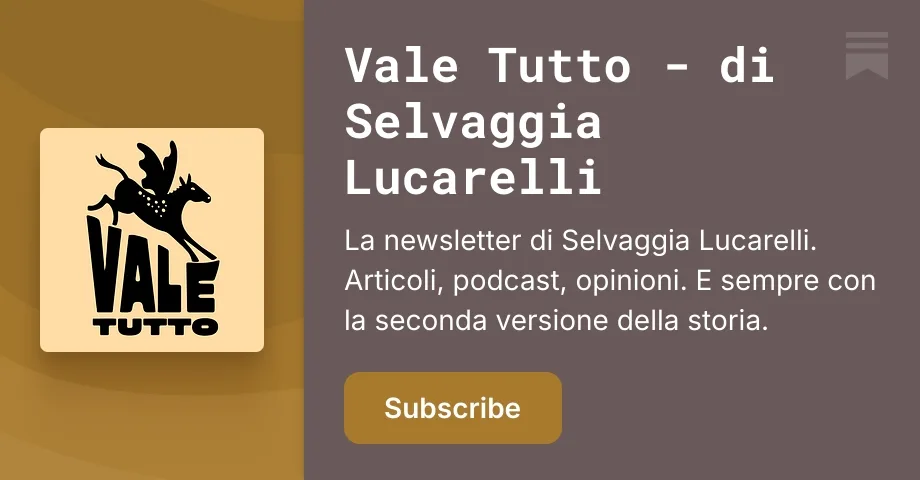
Almost all company newsletters are free, because they are a tool for building relationships with customers and prospects. There are, however, paid newsletters, usually written by journalists, analysts or industry experts, in which the content itself is the product. Platforms such as Substack have made this model simple: publishing is free, and the platform keeps 10% of every paid subscription (Substack). We covered this in our article on Substack and Discord, where the subject is the shift from followers to subscribers.
What a newsletter is for
So, what is a newsletter for? Simple: staying in touch with people who have already shown interest, without going through intermediaries. For a company, this translates into four functions.
| Function | What it does | Example: the wine producer |
|---|---|---|
| Relationship | Keeps in touch between one purchase and the next | The harvest story for those who bought in May |
| Information | Bring news to those who are waiting for it | The release of the new vintage |
| Sales | Brings readers back towards a purchase | The wine of the month with a link to order |
| Listening | Gathers first-hand responses and data | Which content is read and clicked |
The main advantage is ownership of the channel. On a social network, the platform decides who sees a piece of content. A newsletter list, by contrast, belongs to the company, which can write to all subscribers whenever it wants. This is why the newsletter falls within email marketing, as its relational form, and shares its tools and rules.
The second advantage concerns data. With the end of third-party cookies, addresses collected directly from customers are among the few data a company can use without depending on others, as we explain in our article on first-party data.
Then there is an effect on customer value. A newsletter that is read regularly keeps the repurchase habit alive, which is the foundation of customer loyalty.
Newsletters and DEMs: the difference
A DEM (direct email marketing) is a promotional email sent to prompt a specific action, usually a purchase. It differs from a newsletter in purpose, frequency and content.
| Newsletter | DEM | Transactional email | |
|---|---|---|---|
| Purpose | Inform and maintain the relationship | Selling or promoting an offer | Confirm a transaction |
| Frequency | Regular and announced | Occasional, tied to a campaign | Automatic, after a user action |
| Content | Several topics, editorial angle | One message, one request | Order, shipping and account data |
The two forms can coexist, provided they are not confused. If the winery uses its monthly letter to send an offer every week, it breaks the promise made at sign-up, and readers stop opening. Many lists empty out this way without anyone unsubscribing: quite simply, nobody reads any more.
Types of newsletter and examples
Newsletters differ by who writes them and by their relationship with their readers.
| Type | Sender | Contents | Examples |
|---|---|---|---|
| Business | A business to its customers and prospects | News, useful content, offers | A winery’s monthly letter |
| Editorial | A publication or an author | Curated news, analysis, round-ups | Newspapers’ themed newsletters |
| B2B or industry | A company or a professional to other professionals | Data, cases, regulatory updates | The monthly note from a consultancy firm |
| Internal | A company to its employees | Results, appointments, projects, notices | The internal newsletter |
| Institutional | A public body or an association | Calls for proposals, deadlines, activities | A trade association’s bulletin |
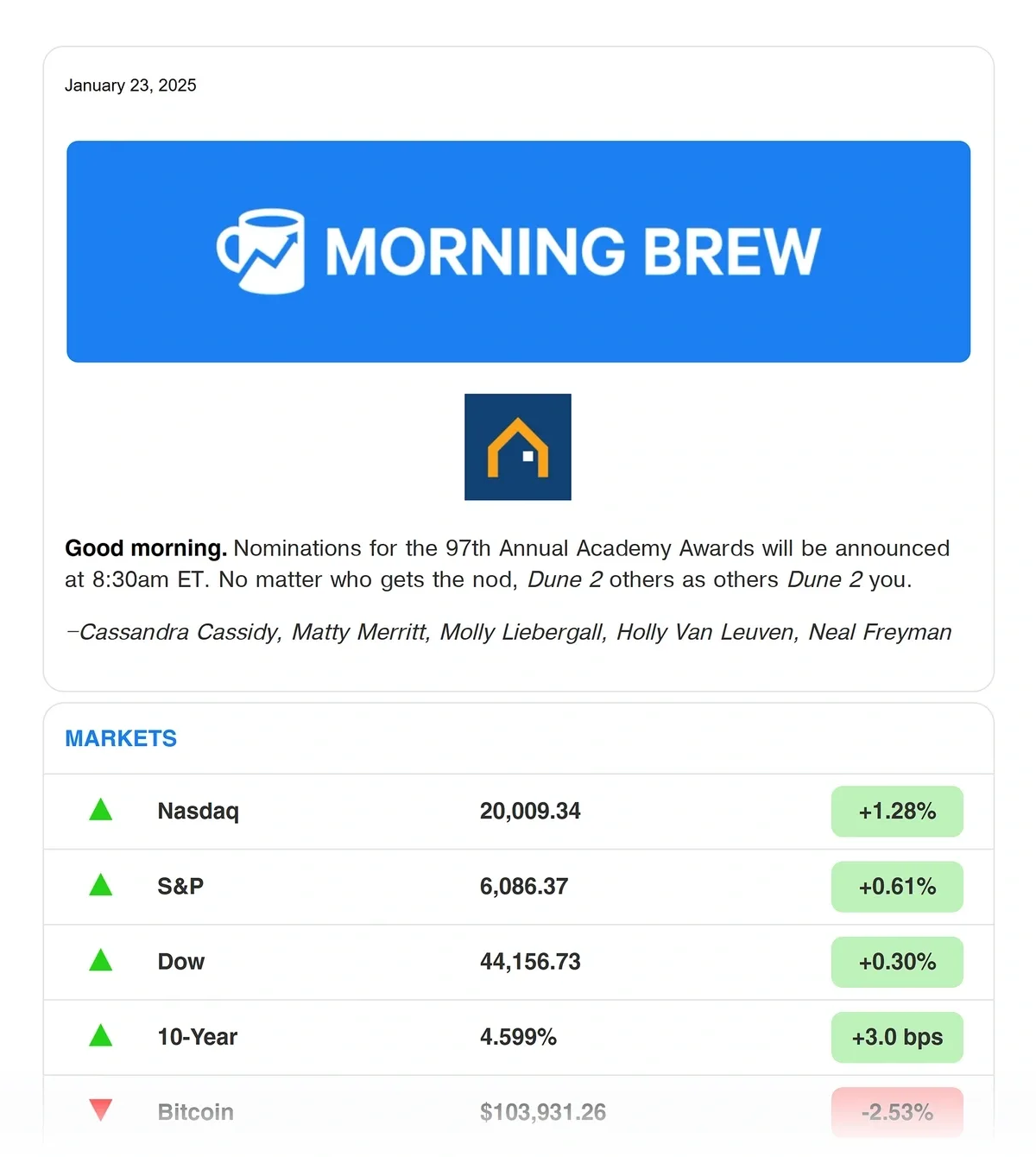
Among the leading examples of company newsletters, the ones that work share one trait: within ten seconds you understand why they exist. “Every first Thursday of the month, three useful things for people who run a restaurant” is a promise. “Our latest news” is not.
In recent years the newsletter has moved beyond the inbox. LinkedIn lets you publish one from your own profile or company page, and subscribers receive a notification with every issue. It is a quick way to start in B2B, with one limitation: the subscribers belong to the platform, and the company does not obtain their addresses.
How to create a newsletter: seven steps
Anyone searching for how to make a newsletter tends, simplistically, to think about the design, but the real work comes first, and it can be organised into seven steps.
- Decide the purpose and the audience. Who we are writing to and why they should read us. For the winery: private customers who have visited the estate or bought online.
- Define the promise. What arrives and how often, in one sentence to put on the sign-up form.
- Build the list. A form on the website, sign-up in store, an optional tick box at checkout. Never purchased lists.
- Choose the sending platform. It manages sign-ups, unsubscribes, authentication and statistics.
- Set a fixed format. The same sections in every issue, so readers know where to find what interests them.
- Write and send. Subject line, body text, a single main call to action.
- Measure and adjust. Opens, clicks, unsubscribes, replies.
The first step works best with a precise reader profile. That is what buyer personas are for: people who buy wine as a gift and people who collect it are not looking for the same information.
On building the list, one practical rule applies: growing slowly with genuine subscribers pays off more than growing quickly with poorly collected addresses. Lead generation covers the ways to do it, from downloadable content to events, and in every case subscribing must be the choice of the person who leaves their address.
What to write and how
A newsletter is read for its content, and the content must be worth the time of whoever opens it. Three elements matter more than the others.
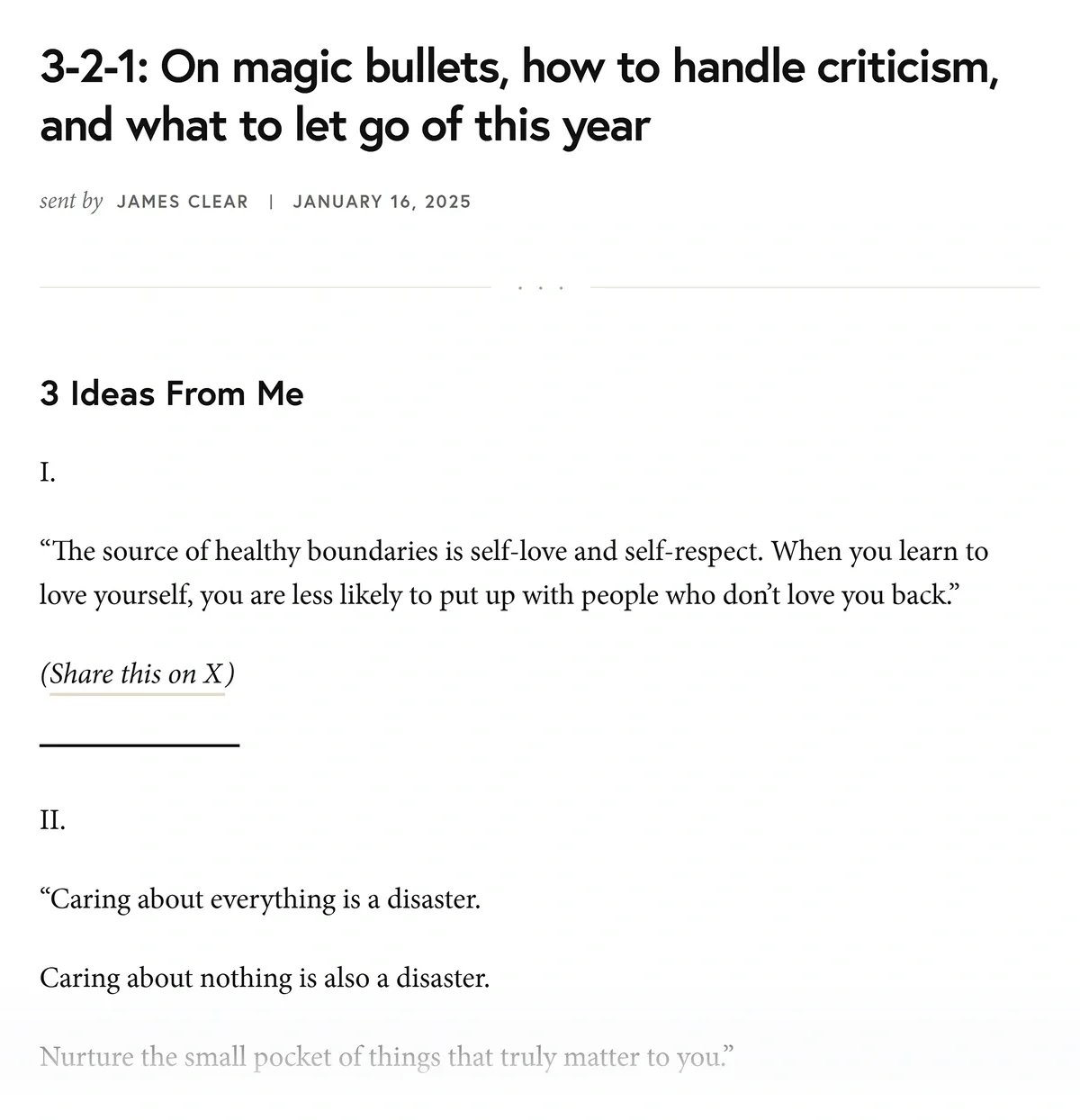
The subject line decides whether the email is opened. It works when it says what is inside, in a few words and without inflated promises. “Harvest 2026: how it really went” is stronger than “October newsletter”.
The copy must sound like the company. A winery that speaks warmly to visitors but writes its newsletter like a catalogue loses its voice exactly where it could use it best. Tone of voice is the tool through which this consistency is decided once and maintained in every issue.
There should be one call to action, clear and consistent with everything else. Copywriting techniques help in writing it, but the rule is simple: if an email asks for five things, the reader does none of them.
How often to send it
There is no absolute right frequency. There is the one the company can sustain with content of the right standard. A monthly newsletter that is always on time is worth more than a weekly one that starts missing issues after two months.
Who writes in your brand’s voice
The experts at work across Rome and Milan



Newsletters and the law: consent, privacy and unsubscribing
The rules on newsletters can be summed up in one very simple principle: you write to people who have said yes.
The guidelines of the Garante per la protezione dei dati personali state that sending promotional emails requires, as a rule, prior consent, which must be freely given, informed, specific and documented (Garante privacy, 2013). Wikipedia states the same principle more directly: sending unsolicited informational or advertising messages is prohibited.
In practice, this means four things.
- Consent is collected through an active choice, for example an unticked box, kept separate from other requests.
- Double opt-in is advisable: after signing up, the subscriber receives an email with a link to click. It proves that the address belongs to the person who entered it.
- Every message must include a simple way to unsubscribe, and the request must be honoured.
- You must be able to prove when and how each subscriber gave consent.
There is one exception, known as soft spam. A company may send direct marketing emails for its own products to a customer without consent, using the address obtained in a previous sale, provided the products are similar to those purchased and the customer, having been informed, has not objected (Garante privacy, Article 130(4) of the Privacy Code).
Technical requirements: why a newsletter reaches the inbox or ends up in spam
Writing well is not enough if the email does not arrive. Delivery depends on the sender’s reputation, and since February 2024 Gmail has made its requirements explicit (Google, Email sender guidelines).
| Requirement | For all senders | Over 5,000 messages a day |
|---|---|---|
| Domain authentication | At least one of SPF and DKIM | SPF, DKIM and DMARC |
| Spam complaints | Below 0.3% | Below 0.3% |
| Unsubscribing | Not explicitly required, but recommended | One-click unsubscribe and a clearly visible link in the message |
SPF, DKIM and DMARC are three domain settings that prove an email really comes from whoever claims to send it. They are configured by whoever manages the domain, following the sending platform’s instructions. Google also recommends keeping spam reports below 0.10%, to leave a margin when a spike occurs.
The spam threshold has a practical consequence: making it hard to unsubscribe is counterproductive. A reader who cannot find the unsubscribe link clicks “report spam”, and every complaint weighs on the delivery of all subsequent emails.
How to measure a newsletter
Suppose we send a newsletter to 2,000 subscribers.
| Metric | How it is calculated | Example | Result |
|---|---|---|---|
| Delivery rate | Delivered ÷ sent | 1.940 ÷ 2.000 | 97% |
| Open rate | Unique opens ÷ delivered | 776 ÷ 1.940 | 40% |
| Click-through rate | Unique clicks ÷ delivered | 97 ÷ 1.940 | 5% |
| Click-to-open rate | Unique clicks ÷ unique opens | 97 ÷ 776 | 12,5% |
| Unsubscribe rate | Unsubscribes ÷ delivered | 6 ÷ 1.940 | 0,3% |
| Spam complaints | Spam complaints ÷ delivered | 1 ÷ 1.940 | 0,05% |
Illustrative example based on a list of 2,000 subscribers. Percentages are rounded.
Out of two thousand subscribers, 776 opened the email and 97 clicked: one in twenty. It is a small number only on the surface, because these are 97 people who chose to find out more without the company paying to reach them.
Open rates should be read with caution. Apple’s Mail Privacy Protection downloads email content in the background, so the sender can no longer tell whether and when a message was opened (Apple). For subscribers using Apple Mail, opens are therefore inflated. Clicks remain a more reliable signal, and CTR should still be linked to what happens next: orders, enquiries, visits.
That is why platform metrics are not enough. A newsletter is judged by its effect on the goals it was created for, which should be chosen beforehand from among the company KPIs: repeat purchases, visit bookings, contact requests.
If the sending platform is connected to the CRM, you can see which subscribers buy and which do not, and that is where the numbers become useful.
Who handles the newsletter within the company
In a small company, the newsletter is often one person’s job. In a larger organisation it involves at least four roles: whoever decides topics and schedule, whoever writes, whoever handles design and sending, and whoever reads the data. Added to these is whoever is accountable for consent and the list, usually together with the privacy consultant.
The typical risk is that nobody is truly accountable for it. The newsletter starts well, then becomes a leftover task for someone with other priorities, and issues grow less frequent. It is advisable to appoint a single owner, with the authority to decide what goes in and what stays out, and to include it in content governance alongside the company’s other content.
The most common mistakes
- Buying or reusing lists of addresses collected for other purposes.
- Promising content and sending only offers.
- Writing “Newsletter no. 12” in the subject line.
- Hiding the unsubscribe link.
- Changing frequency without notice, or disappearing for months and then reappearing.
- Keeping people who never open on the list for years: it lowers the sender’s reputation.
- Measuring only opens.
Domande frequenti
What does newsletter mean?
Newsletter means bulletin or news-sheet. It is a periodic communication sent by email to people who have chosen to receive it, to inform them about news, content or offers from a company, an organisation or an author. The English term combines news and letter. What is newsletter in Italian? The Italian equivalents are bollettino, notiziario and lettera informativa. In everyday usage, however, Italians almost always say newsletter, in the feminine: la newsletter. In the plural the term normally stays unchanged, le newsletter, like other English loanwords that have entered Italian. It is pronounced “niùsletter”.
What is a newsletter for?
It maintains direct, regular contact with customers, prospects or readers. For a company it has four functions: keeping the relationship alive between one purchase and the next, announcing what is new, bringing readers back towards a purchase and gathering first-hand data on what interests its audience.
What is the difference between a newsletter and a DEM?
A newsletter is periodic, informative in approach and aims to maintain the relationship. A DEM, direct email marketing, is an occasional promotional email, with a single message and a single request, usually a purchase. The two can coexist, provided offers do not replace the content promised to subscribers.
Are newsletters free?
Almost always, yes. Company newsletters are free, because they serve the relationship with customers. There are paid newsletters, generally written by journalists or experts, in which the content is the product. Subscribing to a free newsletter carries no obligation to buy.
What does subscribing to a newsletter involve?
It means authorising the sender to write to your email address for the stated purpose. Subscribers receive messages at the announced frequency and can unsubscribe at any time via the link included in every email. The sender must handle the address in compliance with privacy regulations.
How do you unsubscribe from a newsletter?
Through the unsubscribe link, usually at the bottom of every message. Gmail and other services also show an unsubscribe button next to the sender. If the link is missing or does not work, you can write to the sender exercising your right to object, and report the message as spam.
Do you need consent to send a newsletter?
Yes, as a rule you need prior consent that is freely given, informed, specific and documented. The exception concerns your own customers: you may send them emails about products similar to those already purchased, provided they have been informed and have not refused. Every message must offer the option to object.
How often should a newsletter be sent?
It depends on how much useful content the company can produce regularly. The most common frequencies are weekly, fortnightly and monthly. Consistency is what counts: a punctual monthly newsletter works better than a weekly one that misses issues. The frequency should be stated at the point of sign-up.
Who invented the newsletter?
It has no single inventor. Printed bulletins for subscribers have existed for centuries, and the word already appears in the name of the Boston News-Letter, a weekly first published in 1704. Its current form arose with the spread of email, which made sending fast and almost free.
Fonti e riferimenti
- Treccani, Vocabolario, newsletter
- Wikipedia, Newsletter
- Wikipedia, The Boston News-Letter
- Garante per la protezione dei dati personali, Linee guida in materia di attività promozionale e contrasto allo spam (4 luglio 2013)
- Google, Linee guida per i mittenti di email
- Apple, Mail Privacy Protection
- Substack, How much does Substack cost?