
A value proposition example is the statement in which a brand explains which customer it addresses, what problem it solves and why it is preferable to the alternatives. Analysing several, with the same method, helps to understand what makes a proposition clear and credible.
Value propositions that work can be recognised by what they exclude and by the proof they offer. That is why examples are for taking a line of reasoning apart, not for copying a phrase.
In this guide we analyse ten examples of value propositions from Italian brands, eight consumer and B2B and two built with our clients, all using the same grid: who it is for, what problem it solves, what benefit it promises, what proof it offers and what it excludes.
In brief
Value proposition examples in 4 key points:
- 1
A value proposition states who it is for, what it solves and why to choose it.
- 2
The examples that work have verifiable proof: a model, a supply chain, a number.
- 3
They can also be recognised by what they exclude, because exclusion makes the promise credible.
- 4
When it coincides with price, changing it is risky, as the Satispay case shows.
What is a value proposition, in brief?
The value proposition is the promise of value an offer makes to a specific customer: what they get, compared with which alternatives, and why they should believe it. We covered it in full in our dedicated article on the value proposition; here we focus on examples, different from those we gathered among the unique selling proposition examples.
We read each example through five questions. Who it’s for: the customer the proposition addresses. Problem: what fails in the alternatives. Benefit: what the customer gains. Proof: what makes the promise credible. What it excludes: whom or what the brand gives up.

The table below summarises the ten examples using the same questions; in the following sections we analyse them one by one.
Ten value proposition examples compared
Who it is for, what proof it offers and what it excludes.
| Trademark | Who it is for | Proof | What it excludes |
|---|---|---|---|
| Velasca | People who want handmade shoes without the mark-up | Direct sales, artisans from the Marche | Distributors and department stores |
| Cortilia | Quality-conscious urban families | Selected and traced producers | Endless assortment |
| Mutti | People who cook with tomatoes | 100% Italian supply chain, Pomodorino d’Oro | Imported tomatoes |
| Eataly | People who want quality Italian food | Market, restaurants and learning in one place | General supermarket |
| Fineco | People who manage money and investments online | A single account for banking and trading | Branch as the main channel |
| Fatture in Cloud | Freelancers and small businesses | Over 600,000 customers claimed | Management software for large companies |
| Satispay | Merchants with small payments | Zero fees under 10 euros | Competition on ancillary services |
| Brembo | High-performance manufacturers | Motorsport and digital platforms | Low-cost component |
| Doreca | Ho.Re.Ca. professionals | Delivery in under three hours | Communication based only on price and logo |
| Oro Elite | People who sell or buy gold | Transparency and real-time pricing | Category visual codes |
Value proposition examples from Italian consumer brands
The five examples that follow come from food, fashion, online grocery and banking. What they share is a promise that can be verified.
Velasca: handcrafted shoes with no middlemen
Velasca sells men’s shoes handmade by artisans from the Marche, only online and in its own shops, which it calls botteghe. Founder Enrico Casati sums it up this way: offering quality handmade shoes typical of luxury at a lower price, because there are fewer steps and intermediaries in distribution (PMI.it).
Who it is for: men who want handmade Italian shoes without paying the luxury mark-up. Proof: the direct model, with no distributors or showrooms, and the relationship with families of artisans. What it excludes: department stores and the wholesale network. The lesson is that the proof lies in the business model, not in the adjective “handmade”.
Cortilia: groceries from local producers, delivered to your door
Cortilia was founded in 2011 as the first online farmers’ market and connects quality-conscious customers with local producers through a delivery service and product traceability (Amazon, press release, February 2025).
Who it is for: urban families who want fresh, seasonal groceries without going to the market. Problem: large retail chains do not say where the produce comes from. Proof: producers selected and presented one by one. What it excludes: an endless range and the logic of the lowest price.
Mutti: 100% Italian tomatoes, paid at a premium
Mutti works exclusively with 100% Italian tomatoes, grown by long-standing farmers located close to the company (Mutti, corporate document). Since 2000 it has awarded the Pomodorino d’Oro, a financial incentive for the best farmers, and pays a premium price when buying quality raw materials.

For whom: people who cook and want a tomato product they can trust. Proof: the declared supply chain and the award, which makes the quality promise visible. What it excludes: imported tomatoes and competing on the lowest price. Here the value proposition is backed by purchasing behaviour, not just by a label.
Eataly: eat, shop, learn
Eataly, opened in Turin in 2007 from an idea by Oscar Farinetti, brings together in a single offer a market, on-site production, restaurants and education dedicated to quality Italian food and wine.
Who it’s for: people who want to discover and buy quality Italian food in a single place. Benefit: an experience where you eat what is sold and sell what is eaten. What it excludes: the general supermarket. The lesson is that a value proposition can be a format, not a phrase.
Fineco: banking, trading and investments in a single account
Fineco presents itself as a “one-stop solution”: a single account for banking services, cards, investments and trading (FinecoBank). It is a promise of simplicity aimed at those who currently use several providers to manage their money.
For whom: savers and investors who want to manage everything online. Problem: accounts, cards and investments spread across several institutions. Proof: proprietary platforms and an offer spanning multiple markets. What it excludes: branch-based advice as the main channel.
B2B value proposition examples
In B2B, the value proposition speaks to people who have to justify a choice: that is why proof carries even more weight.
Fatture in Cloud: simple invoicing for people who are not accountants
Fatture in Cloud, now part of TeamSystem, describes itself as the e-invoicing software that makes your life easier, aimed at professionals, freelancers and small businesses, and states that it is already chosen by over 600,000 professionals and businesses (fattureincloud.it).
Who it’s for: sole traders and small businesses without an administrative office. Problem: tax obligations that are complex for anyone outside the profession. Proof: the number of customers, the free trial and the collaboration with accountants. What it excludes: large companies that need complex management software.
Satispay: zero fees on small payments
For merchants, Satispay’s long-standing proposition was simple: no fees on payments under €10. In April 2025 the company introduced a 1% fee on those amounts too, prompting protests from merchants and trade associations; from September 2026 it returned to zero fees under €10, with 0.95% above (Money.it, 2026).
For whom: bars, newsagents and neighbourhood shops handling many small payments. Proof: the price itself. The lesson is the most useful on the whole list: when the value proposition coincides with a financial condition, changing it means changing the reason customers chose the brand.
Brembo: from brake supplier to solutions supplier
Brembo describes itself as the trusted solutions provider for those who demand the best driving experience (Brembo, press release, 2023). Since 2020 the company has been on the path to becoming a solution provider, integrating products and digital services for the automotive industry.
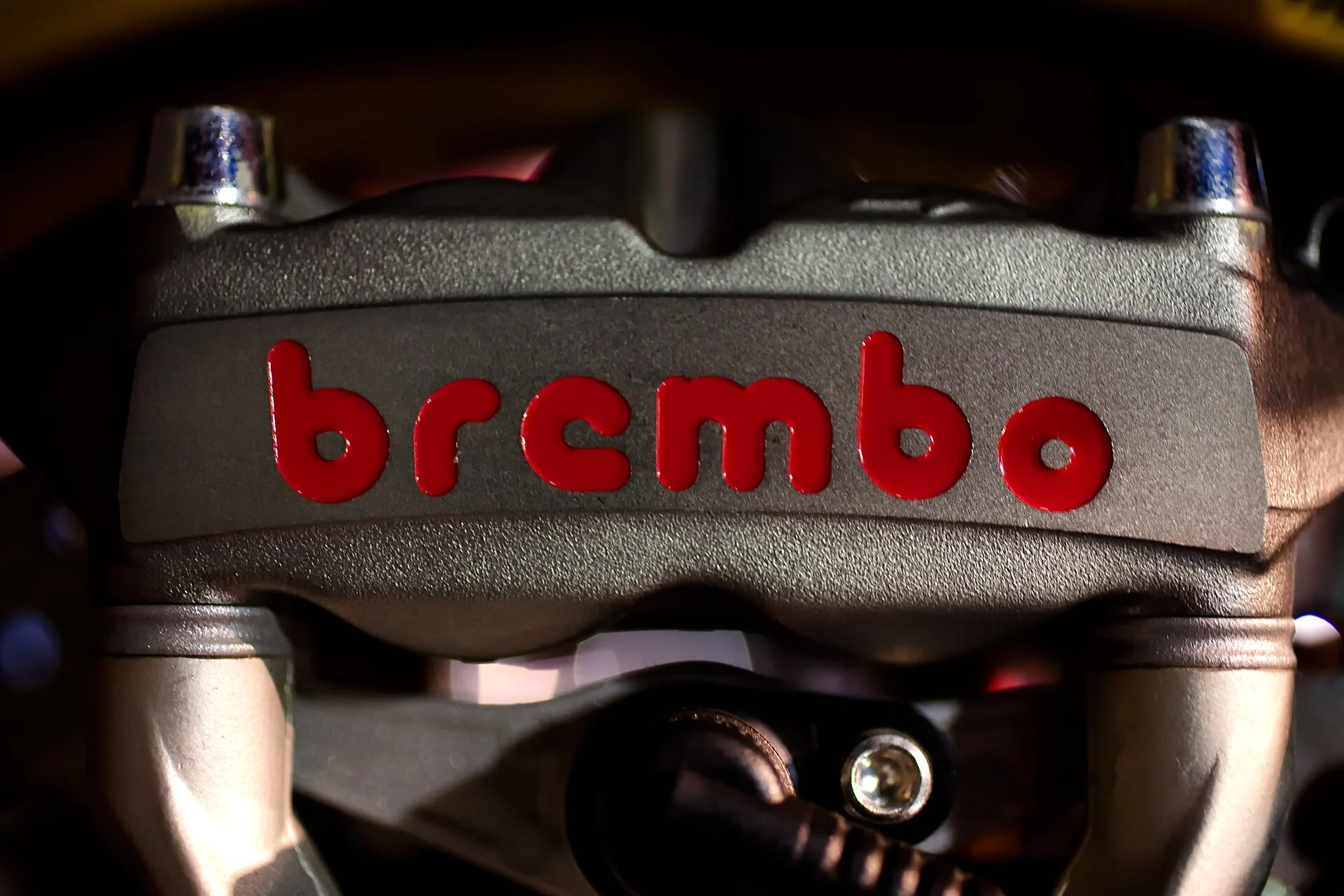
Who it is for: manufacturers of high-performance cars and motorcycles. Proof: braking systems in motorsport championships and investment in platforms such as Sensify. What it excludes: competing on low-cost components. In B2B, the value proposition can shift the category in which the company is compared.
Two value propositions built with our clients
Doreca: speed as the promise
For the Ho.Re.Ca. professionals segment, the most serious problem is running out of drinks during service. For Doreca’s new openings, the message started there: “Bet we can deliver in under three hours?”. During the intervention, in-store conversion rose by 8% and the average receipt by 12% (Doreca internal data, 2023). The full process is in Doreca’s value proposition canvas.

Oro Elite: a brand in a market where everyone looks alike
In the gold-buying sector almost everyone communicates with black, gold and promises to buy and sell. With Oro Elite, between May 2024 and March 2025, we worked on a proposition built on transparency, content and proprietary tools, such as the real-time price quote on the website. During the engagement, revenue rose from €29.9 million to €36.7 million between 2023 and 2024 (registroaziende.it; Oro Elite case).

What do value propositions that work have in common?
Value propositions that work share four traits. They are specific: they name a customer and a problem. They offer proof the customer can verify: a business model, a supply chain, a number. They exclude something, and that exclusion makes them credible. They are consistent with price, as the Satispay case shows. These are the same criteria we use for positioning.

When we analyse the value propositions of a client’s competitors, the most frequent finding is similarity: interchangeable phrases that anyone in the category could have signed. That is where the space opens for a different proposition.

Our case study
The eleventh example: rarity as value
For Profumum Roma, the value proposition is rarity: an artistic perfumery house that grows without becoming commonplace. In 2025, compared with 2024, gross e-commerce revenue grew by 23.9% and wholesale revenue rose from 4.1 to 6.3 million euros (Profumum Roma internal data).
Read the case studyHow do you move from the examples to your own value proposition?
You move from the examples to your own value proposition by answering the same five questions for your own customer, using data gathered in the market rather than in the boardroom. The most useful tool is the value proposition canvas, which sets the customer profile against the offer map; the formula for writing the final statement is in the article on the value proposition.
When the proposition concerns the brand as a whole rather than a single product, it becomes the work we do through brand advisory alongside company leadership.
When we analyse the propositions in a sector, the question is not which phrase sounds better, but what proof the customer can verify. A phrase without proof can be copied in an afternoon; proof built into the business model endures.
Bliss’s point of view
“The best examples are not copied: they are taken apart. Every time, you discover that the sentence is the last thing: before it come a choice of customer and a proof.” Francesco Acri, founder and CEO of Bliss
That is why, before writing a value proposition, we always start by analysing those of competitors and what makes them all alike.
Who works on your project
The people of Bliss across Rome and Milan





Frequently asked questions on value proposition examples
What is an example of an effective value proposition?
An effective example names a specific customer, a real problem and verifiable proof. Velasca’s, handcrafted shoes at a lower price because they are sold without middlemen, works because the proof is the business model itself.
How long should a value proposition be?
One main sentence, usually between ten and twenty words, supported by two or three proofs. Length matters less than precision: a short, generic sentence communicates less than a longer but specific one.
Can a value proposition change over time?
Yes, when the customer, the market or the offer changes. It should, however, be changed with care: as the Satispay case shows, if the proposition is tied to a pricing condition, changing it means calling into question the very reason customers chose the brand.
What is the difference between a value proposition and a slogan?
The value proposition explains why to choose an offer; the slogan makes it memorable. A slogan may contain no verifiable promise at all; a value proposition without a promise is not a value proposition.
Do value proposition examples also apply to SMEs?
Yes, and for an SME they are often easier to apply, because the customer is more clearly defined and the proof is closer to hand: a local area, a delivery time, a service provided directly by the owner.
Where should the value proposition be published?
At the top of the homepage and service pages, in sales presentations and in marketplace and social media profiles. It must be the same everywhere, with proof suited to each channel.
Sources
- Eric Almquist, John Senior, Nicolas Bloch, “The Elements of Value”, Harvard Business Review, 2016
- PMI.it, interview with Enrico Casati, Velasca
- Amazon, press release on Cortilia, February 2025
- Mutti, “Presidiare e valorizzare la qualità del made in Italy”, corporate document; mutti-parma.com, Pomodorino d’Oro
- Eataly, brand history, eataly.com
- FinecoBank, finecobank.com, account comparison
- Fatture in Cloud, fattureincloud.it
- Money.it, “Cos’è Satispay, come funziona e quanto costa”, 2026
- Brembo, Brembo Solutions press release, May 2023
- Bliss, Doreca, Oro Elite and Profumum Roma case studies
- Images: Bliss diagrams; photographs from the Doreca and Oro Elite case studies; Francesco Mutti (photo by Eugeniatta, CC BY-SA 4.0) and Brembo calliper (photo by poppingseed on Flickr, CC BY-SA 2.0) from Wikimedia Commons; cover generated with Magnific
Bliss · Rome and Milan
Let us build your value proposition
A new product, a new market or a proposition that resembles your competitors’: we start from the customer and from the proof you can offer.
Tell us about your offer
Two minutes on the contact form: product, customers, objectives.
We get back to you
A consultant reads your request and arranges an initial call with you.
You receive a proposal
Scope, priorities and costs, starting from the diagnosis.