



The account manager is the professional who manages the relationship between a company and a group of existing clients: they follow up their requests, coordinate the internal departments working for them, negotiate renewals and new supply agreements, and are accountable for the results of their portfolio. In Italian the term is translated as responsabile clienti or responsabile del portafoglio clienti. They work in product companies, service companies and communications agencies.
But in practice, what does an account manager do? What does the term really mean, and how does the role differ from key account manager, account executive and sales manager? We explore this in this article, essential reading for anyone buying services. After all, knowing who your contact is, and what they can decide, changes the way you work with a supplier.

Account manager: meaning and translation
The meaning of account manager is literally “manager of the account”, where account in English denotes the client, or a client’s account. In Italian the role is called responsabile clienti or responsabile del portafoglio clienti, and some also associate it with responsabile clientela (Wikipedia, Account manager).
In everyday usage, especially in agencies, people often just say “the account”, meaning the person the client calls when they need something. The word does, however, carry an ambiguity. In some companies it is a sales title, with sales targets; in others it is a service role, with no revenue targets. Before applying, or relying on this role as a client, it is worth clarifying which of the two you are dealing with.
What does an account manager do?
An account manager maintains the relationship with existing clients and grows it over time. They manage sales and relationships with a specific group of clients, draw up commercial plans, negotiate supply terms, monitor the market and competitors, and are responsible for the results achieved (Wikipedia, Account manager).
The difference from a pure salesperson lies entirely in the time horizon. A salesperson closes a contract; the account manager handles what happens afterwards, so that the client stays, buys more and speaks well of the company. Randstad describes the role as the closest point of contact between the company and its clients, acting as a go-between with internal departments and aiming to build lasting relationships (Randstad).
What an account manager does in practice, then, also depends heavily on the sector: in a software company they handle renewals and new licences, in a manufacturing company they manage orders, deliveries and price lists, and in a communications agency they coordinate the client’s projects.
Main activities
There are six recurring activities.
- 1
Knowing portfolio clients in depth: objectives, contacts, how they make decisions.
- 2
Gathering requests and problems: and taking them to the departments that can solve them.
- 3
Preparing plans for each client: renewals, new supply agreements, objectives for the year.
- 4
Negotiating prices, terms and renewals: within the margins set by the company.
- 5
Checking that what was promised is delivered: on the agreed timing and terms.
- 6
Reporting to the company: performance, risks and opportunities for each client.
Point 4 marks the boundary of the role: negotiation takes place within limits set by others. Discounts beyond a certain threshold, changes of strategy or additional spending go through whoever has the authority to approve them.
Which results they are assessed on
The role is assessed on how many clients stay, how much their value grows and how satisfied they are. The most widely used indicators are the renewal rate, the churn rate, i.e. the share of clients lost over a given period, revenue growth per client and margin.
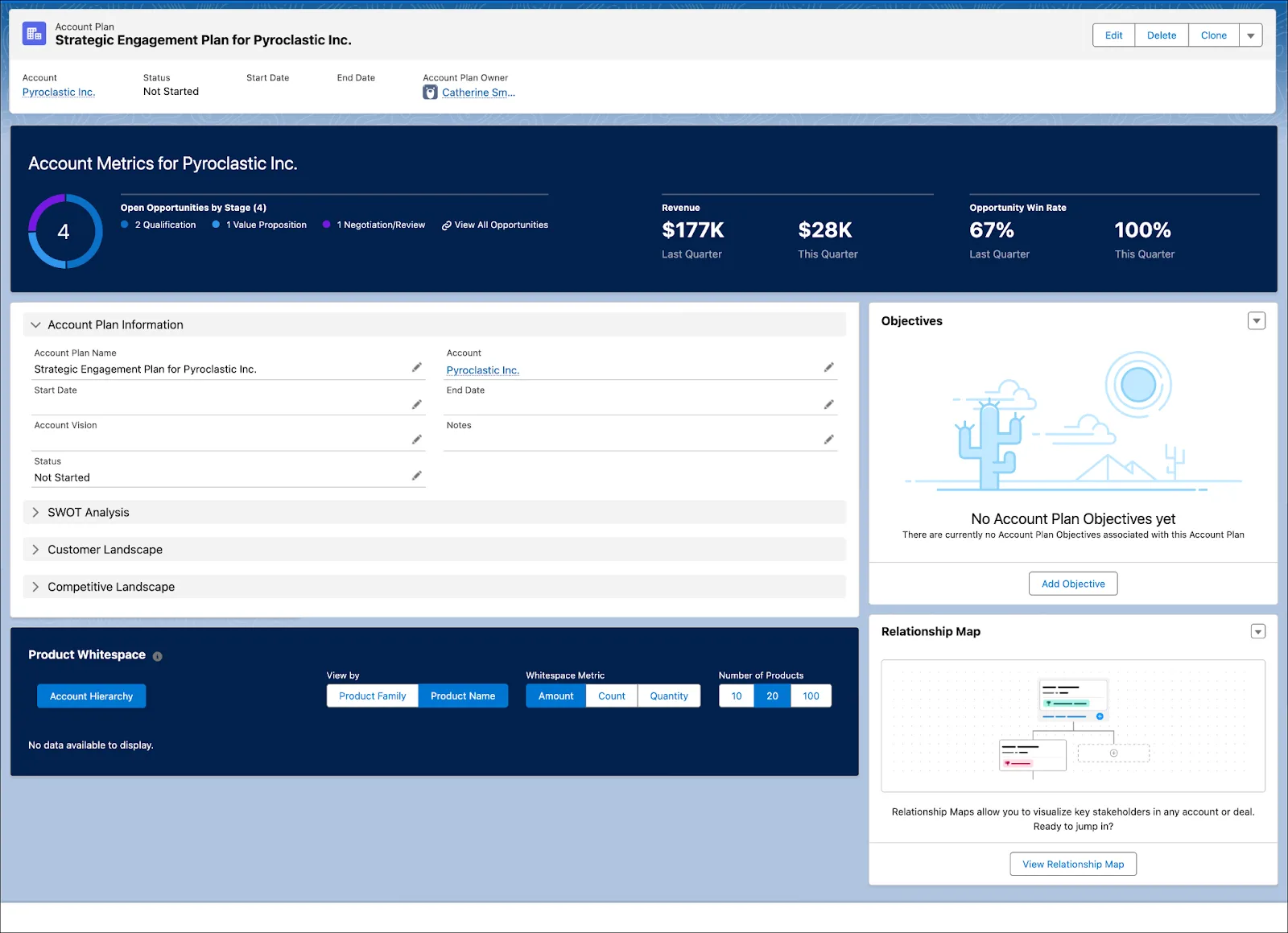
Alongside the financial figures, satisfaction is often measured, for example with NPS, which asks clients how likely they are to recommend the company. All this data usually lives in a CRM, the tool used to record contacts, requests and negotiations.
Account manager and key account manager: what is the difference?
Account manager and key account manager are two distinct roles: the key account manager, or KAM, is an account manager specialising in strategic clients. They handle a few clients, those that generate a significant share of revenue or have strong growth potential, and build long-term relationships with them that go beyond the sale (Michael Page, 2026).
The difference therefore lies in the portfolio. The account manager handles a larger number of clients, with a more operational relationship; the KAM handles only a few, with tailored plans, complex negotiations and the coordination of sales, marketing, production and customer service around each client (Michael Page, 2026). Gi Group describes the KAM as a more specialised role that looks after the company’s most important and prestigious clients (Gi Group).
In small companies the two roles are often held by the same person. In companies with many clients, KAM is usually the next step in the career. We will devote a separate article to the key account manager, covering responsibilities, career path and salaries.
Account manager, account executive and sales manager: what is the difference?
The account manager handles existing clients, the account executive focuses more on winning new clients and the sales manager leads the commercial strategy and the sales team. Randstad and Gi Group both describe the account executive as the role most geared towards finding new clients, and the account manager as the one who looks after clients already won (Randstad; Gi Group).
| Role | What they work on | Customers | Measured on |
|---|---|---|---|
| Account executive | Acquisition | New | New contracts |
| Account manager | Relationship and growth | Existing, broad portfolio | Renewals, growth, satisfaction |
| Key account manager | Strategic clients | Few, high-value | Customer lifetime value, margin |
| Sales manager | Sales strategy and team | Whole market | Overall revenue, team results |
The sales manager works in breadth, on overall sales strategy, markets and the team, while the key account manager works in depth on a few clients (Michael Page, 2026). In communications agencies, account executive often denotes the first level of the account career, not a purely acquisition role: titles vary from one company to another, and it is better to read the role description than the job title.
The account manager in a communications agency
In communications and marketing agencies the account manager is the client’s point of contact: they gather requests, turn them into briefs for the creative and technical teams, keep track of timings and budgets and present the work. They are the person the client speaks to most often.
For anyone buying services from an agency, the useful question is what the account manager can decide alone. The contact who handles the day-to-day relationship often lacks the authority to approve a change of strategy, additional spending or a revision of priorities. That is why, before signing, it is worth clarifying who will actually work on the brand and who decides, as we explain in our article on who really works on your brand.
This is not a flaw in the role but one of its features. The account manager represents the client within the agency and the agency to the client; decisions on direction remain with those who hold the mandate. When the two become blurred, the client ends up discussing strategy with someone who can only pass it on.
How much does an account manager earn?
An account manager in Italy earns on average €35,593 gross a year, according to around 1,900 salaries collected by Indeed and updated to 12 October 2026 (Indeed). The figure varies widely with experience, sector and the type of clients handled.
By city, Indeed reports an average of 37,873 euros in Milan, across 296 salaries, and 35,606 euros in Rome, across 159 salaries (Indeed). The biggest differences, however, are not geographical: they depend on the sector, since technology, manufacturing and high-value services pay more, and on the variable component, tied to renewals and growth targets.
The key account manager earns more, because they handle the highest-value clients. Michael Page gives bands of 35,000 to 45,000 euros for a junior KAM, 45,000 to 70,000 euros for a KAM and 70,000 to over 100,000 euros for senior or strategic profiles, with bonuses and benefits often on top (Michael Page, 2026). These are indicative bands from a recruitment firm, not a statistical survey.
| Profile | Gross annual salary |
|---|---|
| Junior KAM | 35.000 – 45.000 € |
| KAM | 45.000 – 70.000 € |
| Senior or strategic | over 70,000 – 100,000 € |
Indicative bands from a recruitment firm (Michael Page, 2026), not a statistical survey. Bonuses and benefits are often additional.
How do you become an account manager?
No specific qualification is required to become an account manager: people usually come from a degree in economics, marketing or communications and a few years in a sales, customer service or account executive role. The typical path starts with managing small clients and grows with the value of the portfolio.
Training
A degree is not compulsory, but most job adverts require one, with a preference for economics, marketing, communications or management engineering in technical companies. Knowledge of the sector one works in also matters, as does familiarity with tools: CRM, spreadsheets, reporting tools.
There are master’s programmes and courses dedicated to account management and key account management, offered by business schools and training companies. They are most useful for those moving from a technical role to a commercial one, but none is a requirement for entering the profession.

Skills
Five skills make the difference.
1Listening
Understanding what the client wants to achieve, beyond what they ask for.
2Negotiation
Defending the company’s margin without breaking the relationship.
3Organisation
Looking after many clients without any of them feeling neglected.
4Reading the numbers
Knowing how much each client is worth, how much it costs to serve and how likely it is to leave.
5Ability to say no
A client who is promised everything becomes a loss-making client.
Account manager and advisor: why they are not the same role
The account manager manages the client relationship on behalf of the company that is selling; the advisor sits on the client’s side and helps them decide. It is a distinction worth being clear about when choosing whom to work with on your brand.
A supplier’s point of contact is a valuable figure: they know the offering, coordinate the people and get the work delivered. Their job, however, is to make that commercial relationship work and grow. The advisor, as we understand the role, is an ongoing counsellor to senior leadership, accountable for the outcomes of decisions rather than for hours worked (Bliss, Advisory: what it is).
That is why we chose to work directly with CEOs, founders and boards, without going through an intermediary contact. We explained the difference between the two roles in our article on what advisory is and why it is not the same as consulting.
Domande frequenti
What is an account manager?
The account manager is responsible for relationships with a group of existing clients. They follow up on their requests, coordinate the internal departments working for them, negotiate renewals and new contracts, and are accountable for the results of their portfolio. They work in product companies, service companies and communications agencies.
Are account manager and key account manager the same thing?
No. A key account manager is an account manager who specialises in strategic clients, those that generate a significant share of revenue. They handle only a few, with tailored plans and complex negotiations. An account manager manages a broader portfolio. In small companies the two roles may coincide.
How much does an account manager earn per month?
According to Indeed data updated to October 2026, an account manager in Italy earns an average of 35,593 euros gross a year, roughly 2,700 euros gross a month over thirteen monthly payments or 2,500 over fourteen. Net pay depends on contract, tax rates and region, and the variable component can change the total considerably.
What does an account executive do?
In most companies the account executive focuses on acquiring new clients, while the account manager looks after existing ones. In communications agencies the title often denotes the first rung of the account career, supporting the client’s main contact.
Do you need a degree to become an account manager?
It is not a legal requirement, but most companies ask for a degree, usually in economics, marketing or communications. Many come to the role after experience in sales or customer service, and knowledge of the sector often counts as much as the qualification.
What course do you need to become an account manager?
There is no mandatory course. Business schools and training firms offer master's programmes in account management and key account management, useful above all for those changing role. More than any single course, what counts is experience with clients and command of the tools, such as the CRM.