





Miele is a German manufacturer of premium household appliances, founded in 1899 by Carl Miele and Reinhard Zinkann. Over more than 125 years the brand has built its identity around a promise that has remained remarkably stable: Immer Besser, always better.
These two words have accompanied Miele since its origins and still convey its corporate philosophy today.
Quality, durability, performance, ease of use, efficiency, design and service all serve the same simple goal: improving the product without giving up what has made the brand what it is today.
It is precisely this continuity that makes Miele interesting from a branding perspective. Its identity does not depend on a single innovation, a particularly successful move or the recognisability of an iconic product. It has been shaped by the consistent repetition of a promise for more than a century.
Analysing Miele as a brand therefore means observing how a technical advantage can be turned into perceived value, and how that value can be protected over time until it becomes part of the company’s very identity.
Miele today: the German premium home appliance company
Miele began as a manufacturing company and still retains a distinctive structure for a group of its size. The business belongs to the Miele and Zinkann families, descendants of the two founders, and so maintains an ownership continuity that has accompanied the brand’s entire history.
Its market, by contrast, has expanded enormously. From its first machines for the agricultural sector, Miele moved into laundry care, vacuum cleaners, dishwashers, cooking and refrigeration appliances, coffee machines and connected home solutions. To these are added professional applications serving, among others, hotels, healthcare and medical facilities.
Its positioning is clearly premium. Miele customers accept a price that is generally above average, expecting in return performance, reliability, build quality, service and a lifespan consistent with the investment.
This is a key step in understanding the brand. In the home appliance sector, a purchase often stems from a practical need. Miele has built a significant part of its value by ensuring that this need also becomes a brand choice.
The company itself associates its customers with high expectations in terms of performance, comfort, design and environmental care. The product must work well, of course, but it must also convey the sense of having been designed without shortcuts.
The history of Miele: from 1899 to the first washing machines
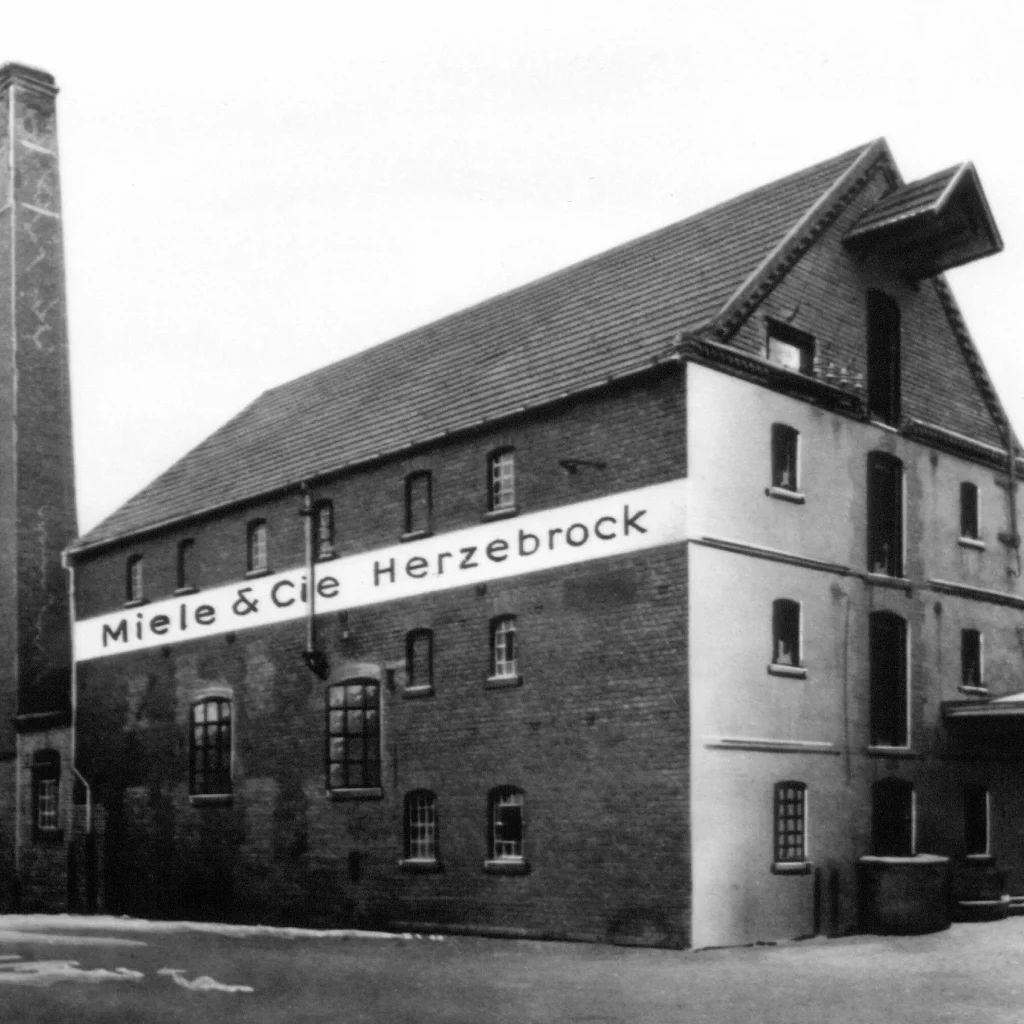
Miele’s history begins in June 1899.
Carl Miele and Reinhard Zinkann founded Miele & Cie. in Herzebrock, near Gütersloh, in a former sawmill and grain mill. The company started with eleven employees, four lathes and a drill, initially producing milk separators. Even in those early years, however, the drive for improvement that would characterise the business was already emerging.
In 1900 came the Meteor butter churn. In 1903 the Model A washing machine was introduced, designed to make operating the agitator less strenuous. In 1910 Miele launched its first washing machine with an electric motor.
The brand’s history also includes some curious detours. Between 1912 and 1914 Miele produced cars, and from the 1920s it entered the bicycle market. The company experimented, broadened its scope, abandoned some categories and consolidated others.
One detail, however, captures the direction taken better than many others. As early as 1916, Miele was confident enough in the quality of its products to offer, on request, a ten-year guarantee. It is a distant episode, but it contains an essential part of the future positioning: durability is not treated as an ancillary feature. It progressively becomes proof of the brand promise.
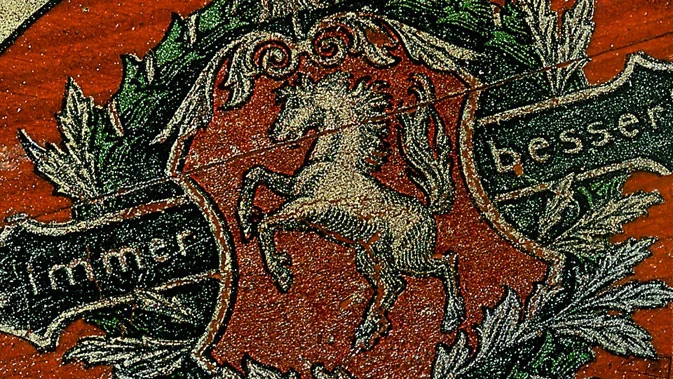
Immer Besser: what Miele’s motto means
Many brands change their strapline over the course of their history. Yet Miele has built much of its identity around the same two words.
The phrase was used by the founders on their first products and over time became the company’s guiding principle. Miele interprets it as a commitment to be consistently better than its competitors, but also better than itself.
From a brand strategy perspective, then, this is a particularly interesting case.
“Immer Besser” works because it can apply simultaneously to the product, innovation, design, service and customer experience. It does not describe a single technical feature, and for precisely this reason it can accompany the company as technologies, markets and product categories change.
The promise remains stable. The proof through which it is demonstrated evolves.
This is one of the reasons why Miele manages to maintain a recognisable identity despite operating in a sector in constant transformation. A solid brand strategy defines principles precise enough to guide decisions, yet deep enough not to depend on the product of the moment.
In Miele’s case, continuous improvement has fulfilled this role for over a century.
Why Miele is considered a premium brand: quality and durability
Quality is probably the most immediate association with the Miele brand. From a branding perspective, however, claiming to make quality appliances would carry little value without elements capable of making that promise credible.
This is precisely what Miele has worked on.
The company subjects most of its domestic appliance ranges to tests designed to simulate up to twenty years of use. The principle is applied across several categories, including washing machines, tumble dryers, dishwashers, refrigerators, ovens and vacuum cleaners.
The figure matters because it translates an abstract concept such as reliability into easily understood proof.
This is where product quality and positioning begin to coincide.
A premium brand must be able to justify the gap that separates it from cheaper alternatives. For Miele, a significant part of that gap is built through a long-term perspective: the value of the product is also measured by its ability to support domestic life for many years.
Longevity thus becomes at once a technical feature, a commercial argument and a component of the brand identity.
Miele design: essentiality, consistency and recognisability
Perceived quality also depends on how the product looks.
Miele defines its design philosophy through clean lines and timeless elegance, with particular attention to consistency across appliances in the same range. Ovens, hobs, coffee machines, fridges and other elements must be able to coexist in the same space as parts of a single visual system.
This focus has deep roots.
In the 1950s, as the washing machine began to leave cellars and utility rooms and enter living spaces, its form changed too. In 1952 Miele promoted a machine designed to look elegant in the kitchen or bathroom. In 1974 came a generation of built-in appliances designed to integrate precisely with Miele kitchen furniture.
The shift is significant. The appliance gradually stops being merely a machine and becomes part of the living space.
The same approach continues today. Materials, surfaces, interfaces and proportions build a recognisability that is less conspicuous than one entrusted to highly visible logos or strongly distinctive colours, yet consistent with the brand’s premium positioning.
The weight given to design is also confirmed by the many international awards received over the years, including the iF Design Award and Red Dot for several ranges and products.
Miele appliances and innovation: improving everyday tasks
Miele’s history can be read as a succession of innovations applied to everyday life.
In 1931 the Model L helped popularise the “torpedo” shape of the vacuum cleaner. In 1963 the G 45 dishwasher was designed to fit standard kitchen dimensions. In 1987 Miele introduced a dishwasher with a third level dedicated to cutlery. In 2001 came the honeycomb drum for gentler fabric care.
These innovations differ from one another, yet are united by a recurring criterion: simplifying or improving tasks that already existed.
This, too, contributes to building the brand.
When technology becomes too complex to explain, it risks drifting away from the user’s real life. Miele, by contrast, is able to link it to highly concrete benefits: washing better, preserving food better, cooking with greater precision, reducing consumption or the time needed for a given task.
This is also a fundamental feature in communication. The more sophisticated the product becomes, the more necessary it is to translate that sophistication into an understandable outcome.
What appliances does Miele make: from laundry to the kitchen
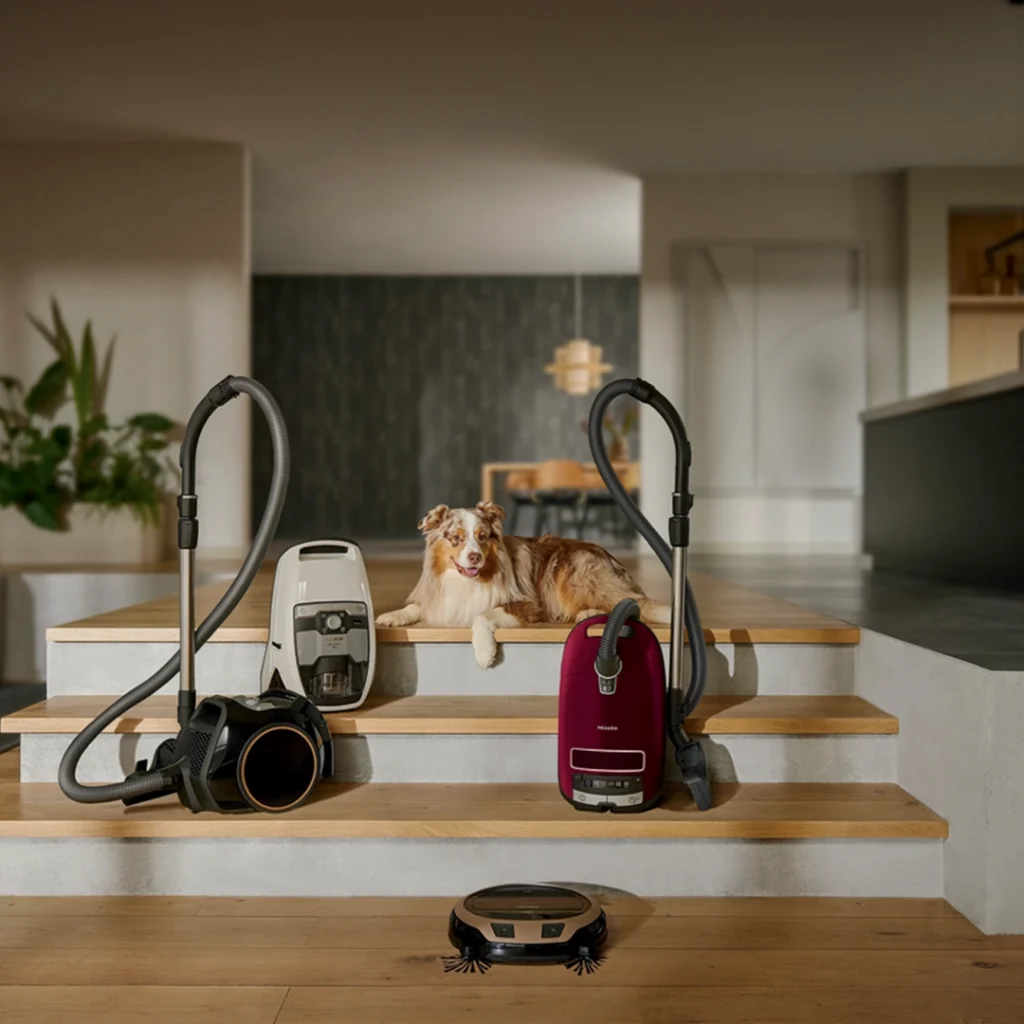
The progressive expansion of its offer has transformed Miele from a manufacturer associated mainly with laundry care into a brand able to hold a place in many moments of domestic life.
The kitchen is one of the clearest examples.
Over time, the range expanded to include dishwashers, built-in appliances, microwaves, refrigerators, ovens, hobs, coffee machines and increasingly integrated solutions. In 2019, with Generation 7000, Miele renewed its entire range of built-in appliances with almost 3,000 model variants worldwide, at the time the largest product launch in the company’s history.
This broadening also changes what the brand means.
Miele becomes connected with a set of everyday tasks: laundry, cleaning, food preparation, coffee, food storage. It is an often discreet presence, but a recurring one.
For a premium appliance brand, this very frequency is an extraordinary asset. The relationship with the customer is built through thousands of uses, far more than through the moment of purchase alone. Its reputation is therefore put to the test every day.
Who owns Miele: the Miele and Zinkann families since 1899
There is another element that sets Miele apart from many large international groups: continuity of ownership.
Since 1899 the company has remained in the hands of the Miele and Zinkann families. More than 125 years in which generations, markets, technologies and the size of the business have changed, while ownership and guiding principle have remained essentially stable.
From a brand governance perspective, it is a particularly interesting case.
The continuity of a heritage brand requires the ability to distinguish what can evolve from what must remain recognisable. Miele has changed products, interfaces, technologies and ways of communicating while keeping quality, reliability and continuous improvement at the centre.
This consistency contributes to the strength of the company’s heritage.
History, in this case, gains value because it still finds a match in the brand’s contemporary experience. 1899 becomes relevant in the present when the company manages to turn that continuity into trust.
Miele worldwide: revenue, employees and international presence
Today Miele operates internationally while keeping its headquarters in Gütersloh, Germany. The group’s corporate page reports revenue of €5.16 billion, around 23,000 employees, 19 production plants and 49 sales and service companies worldwide.
Its size has changed radically since the eleven employees of 1899. The more strategically interesting point is that the meaning attached to the brand has remained surprisingly close to the original promise.
Sustainability is also viewed through this continuity. Designing products built to last longer means acting not only on consumption during use, but also on how often an appliance needs to be replaced. Miele explicitly links durability and efficiency to its environmental strategy.
The result is a positioning in which heritage and innovation manage to coexist: the past provides credibility, while technology allows the promise to remain relevant.
The Miele case study by Bliss Agency
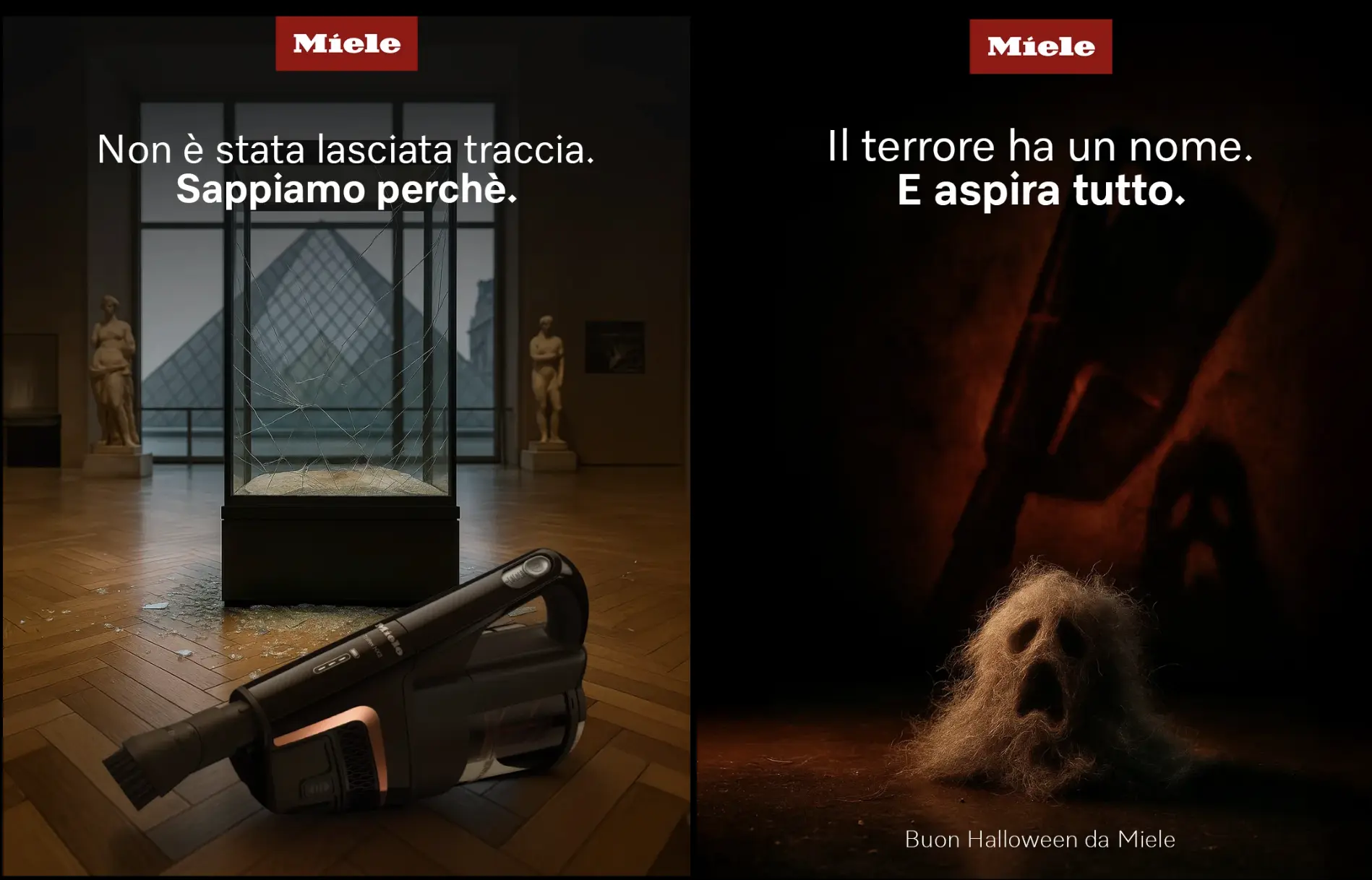
The Bliss Agency Miele case study addresses one of the central problems for a brand of this kind: turning a heritage of technology, innovation and quality into digital communication that is immediately understandable.
The project covered the production of editorial materials and the management of Miele’s social channels for the Italian market, in particular Instagram and Facebook. The aim was to translate the brand’s identity and values into a consistent editorial presence, maintaining its premium positioning while making product features and functions more accessible.
The editorial plan starts from a precise principle: presenting technology in a more direct and concrete way.
Features such as PowerFlex, MattFinish, FlexiLight 2.0 or PerfectFresh are brought into the communication without turning the posts into mere technical data sheets. The layout remains essential, and product information is integrated into a visual narrative consistent with the Miele identity.
Alongside the functional dimension, an emotional one then emerges.
A kitchen, a coffee machine or a hob are part of experiences whose meaning extends well beyond their technical function. They are the setting for a shared lunch, a morning routine, a gesture repeated every day.
The communication work draws precisely on this dual dimension: showing what the technology does and what it allows people to experience.
Technology, emotion and everyday life: the social media strategy for Miele
The strategy developed for Miele Italia is built around three complementary territories: technology, emotion and everyday life. Each corresponds to a language able to adapt to the different functions of social media communication.
Real-time marketing allows the brand to join the contemporary conversation with more responsive, ironic posts, while keeping a visual construction consistent with the brand.
Emotional marketing, by contrast, shifts the focus onto the experience. The product remains present, but is placed within familiar, convivial and everyday situations capable of creating closeness.
Engaging stories complete the system, giving greater space to people, habits and community participation.
This strategic choice addresses a problem typical of premium technology brands. Communication focused exclusively on specifications risks being cold and interchangeable. Purely emotional communication, on the other hand, risks failing to explain why the product deserves a higher positioning.
The meeting point is making technology part of everyday life.
In Miele’s case, this means presenting a function together with its benefit, design together with the environment in which it is experienced, and performance together with the everyday task it makes simpler.
Miele and premium branding: lessons from the case in 2026
For a brand like Miele, contemporary communication must sustain a particularly delicate balance.
Audiences can compare features, prices and reviews in a matter of seconds. Innovations are quickly imitated. Interfaces and functions that set a product apart today can become category standards within a few years.
The strength of a premium brand must therefore extend beyond any single specification.
In this respect, Miele has an asset that is hard to replicate: a history that began in 1899, more than a century of ownership continuity, a promise kept over time and an established association with quality and durability.
The challenge is to make this capital understandable in contemporary languages.
A social post, a reel or a digital communication has only a few seconds to convey what a brand has built over generations. Achieving this requires clear hierarchies: knowing which brand elements are essential, which can change and which proof points make the positioning credible.
This is where strategy and communication meet again.
Because Miele’s strength does not lie only in being able to say “Immer Besser”. It lies in having accumulated, over more than 125 years, enough proof for those two words to keep their value.
New Connections (FAQ)
How long do Miele appliances last?
Miele states that it tests most of its domestic appliance ranges for a service life of up to twenty years. The figure refers to the testing protocol and naturally does not constitute an automatic guarantee of identical lifespan for every individual appliance or condition of use.
How do you communicate a premium technology brand?
Communication for a premium technology brand must make technical features accessible without losing the perception of quality and differentiation. In the Miele case, the work developed for the Italian market combines product information, visual essentiality, emotional marketing, everyday life and posts tied to contemporary conversation.
What did Bliss Agency do for Miele Italia?
Bliss Agency worked on the digital communication of Miele for the Italian market, producing editorial materials and managing its social channels, in particular Instagram and Facebook. The aim of the project was to translate the brand’s technology, quality and premium positioning into content that was immediately understandable and consistent with its identity. The strategy combined product information, emotional marketing, everyday life and real-time marketing, conveying both what the appliances do and what they allow people to experience. The core principle was to make technology accessible without diminishing Miele’s premium perception.
Sources consulted
Miele Corporate, “Miele History”
Miele Italia, “About us: quality, design and sustainability since 1899”
Miele Italia, “Excellent reasons to choose Miele”
Miele Corporate, “About us”
Bliss Agency, Miele Case Study
BLISS®
© 2026. ALL RIGHTS RESERVED