



There is a ranking that has circulated for years among large-scale retail insiders and is almost never cited in the debate on Italian marketing.
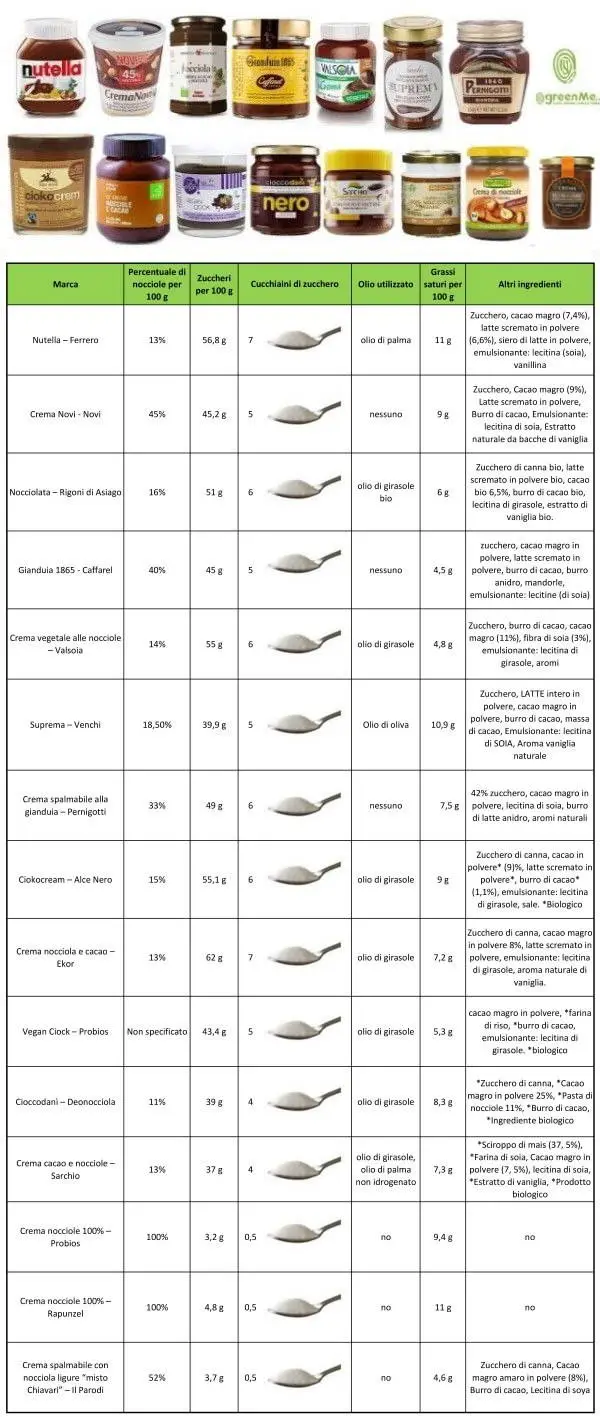
It is the ranking of hazelnut spreads compiled by consumer associations and independent testing laboratories. Parameters measured: hazelnut percentage, ingredient quality, absence of palm oil, nutritional balance, absence of additives.
In this ranking Nutella consistently sits near the bottom.
The recipe contains 13% hazelnuts, against significantly higher percentages in its main artisanal competitors and some industrial brands. The first ingredient by weight is sugar. The second is palm oil. Lesser-known products, at comparable or lower prices, beat it on almost every objective quality metric.
Yet Nutella holds around 55% of the global spreads market. In 2024 the brand alone generated more than 2 billion euros in revenue, within a Ferrero group that closed the year at 17.7 billion.
The worst product in the category has dominated the market for sixty years.
It proves that quality and brand strength are two distinct variables. And when they compete, almost always the winner is the brand.
What people buy when they buy Nutella
The fact is that quality tests measure the wrong variable.
Neuroscientific research on purchase decision-making shows that recognising a familiar brand activates the hippocampus: the brain structure responsible for autobiographical memory, even before the consumer has consciously processed the product they are looking at. In short, the choice happens before the analysis. The brand comes before the product.
Whoever buys Nutella is not just buying a spread. They are buying the breakfast of their childhood. They are buying the jar on their grandmother’s kitchen table: an emotional code shared with millions of other people who hold the same memory.
Nostalgia reduces the desire to hold on to money and lowers resistance to buying: people in a nostalgic state are significantly more willing to spend than those who are not. Nutella is a product people choose because it is already in their memory, in their habits.
In the identity.
Sixty years of consistency
The story of Nutella is the story of brand governance managed consistently for more than sixty years.
And on reflection, over the decades Michele Ferrero made a series of decisions that may seem obvious to us today but were anything but at the time.
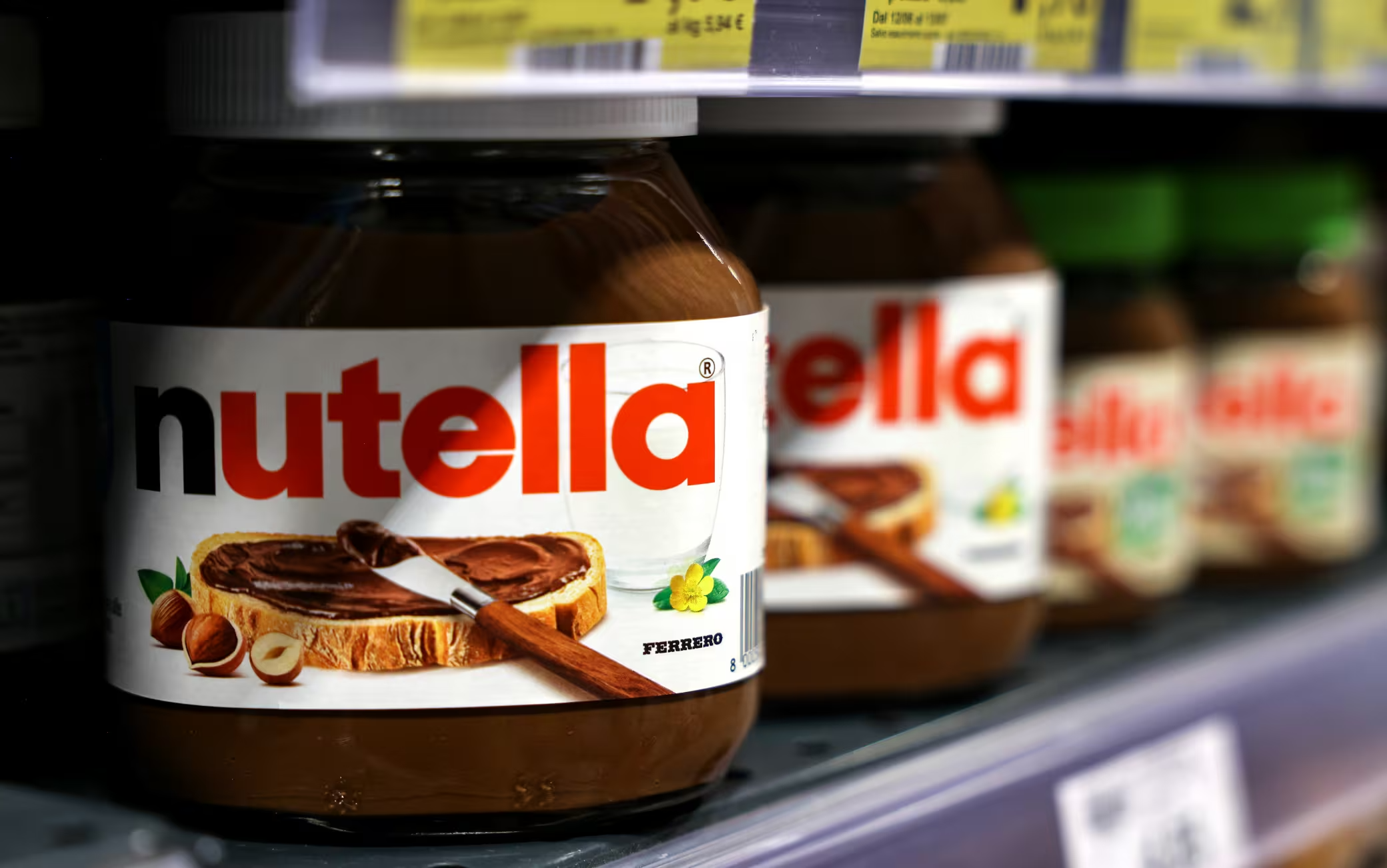
The glass jar with the white lid, never altered, has become an iconic object thanks to a visual consistency no restyling has ever broken. Then there is the name written in red on a white and brown background. The proportions of the logo. The texture of the product.
Everything stayed the same while everything around it changed: competitors, habits, fashions.
That consistency was the most expensive and most profitable choice Ferrero has ever made.
The trap everyone falls into
Over the years, the Nutella case has prompted a series of disruption attempts that all share the same mistake.
Every brand that has tried to win market share from Ferrero by competing on quality has achieved the same result: recognition from experts, distribution in premium channels, modest growth. Because superior quality is a value proposition that works when the consumer is in rational evaluation mode. In front of supermarket shelves, with Nutella in sight, that mode never switches on.
The mere exposure effect, the mechanism whereby simple repeated exposure to a stimulus increases our favourable response to it, operates independently of conscious attention. Sixty years on Italian and European shelves have built a neurological familiarity that simply has no market price.
No new product, however good, can compete.
What Nutella teaches those who build brands
The first lesson Nutella teaches us is that investing in product quality without investing in brand governance is a strategy that produces invisible excellence.
In Italy there are dozens of artisanal products objectively superior to Nutella in composition, ingredients and production process. Some are even distributed nationally. Yet none of them has ever made the slightest dent in Ferrero.
That is because the market responds to variables that are not found on the nutrition label.
The second lesson concerns consistency. Nutella has never chased trends. It did not go organic when organic boomed. It did not remove palm oil when palm oil became unpopular: it withstood public pressure, adjusted its communication slightly and kept the recipe. Perhaps, yes: that choice carried a reputational cost in the short term. But it preserved long-term consistency.
According to neuroscience, when an established brand breaks the usual expectation, it activates the anterior cingulate cortex, the brain structure responsible for detecting prediction errors, producing a negative emotional response proportional to the strength of the pre-existing bond.
New Coke, in 1985, had a better recipe than the original. Yet the market rejected it simply because it was different.
The third and final lesson concerns those who manage a brand today.
Quality does not automatically convert into market share. Only when placed within a system of meaning that the consumer recognises can it deliver results. That system is called the brand. And it is worth as much as the length and consistency of its history.
Nutella is worth what it is worth because no other brand has built, over time, a structure of meaning as solid, consistent and rooted in the collective memory of entire generations.
Perhaps quality is necessary to enter the market. But it is governance that is needed to dominate it.
New Connections (FAQ)
Can a new brand build the same kind of emotional bond as Nutella?
Over time, yes. But the path demands absolute consistency over the long term, not creative acceleration in the short term. The neurological familiarity Nutella has built is the result of sixty years of repeated exposure with an unchanged identity. A new brand that changes its positioning every three years does not accumulate that familiarity: it resets it each time. Speed is not the enemy of brand building. Inconsistency is.
Why did Ferrero not give in to pressure over palm oil when other brands changed their recipes?
Because Nutella’s brand governance recognises that the recipe is part of the identity, not an operational variable. Changing the recipe under public pressure would have signalled that the identity is negotiable. For a brand built on absolute consistency, that signal is more costly than the pressure it sought to avoid. Ferrero calculated the risk correctly: Nutella consumers do not switch brands because of palm oil. They might switch if the product changed its taste.
Does product quality still matter in brand building?
Yes, but as a necessary condition, not a sufficient one. A poor-quality product builds a fragile brand that gives way at the first competitive pressure. But quality alone does not produce brand equity: it produces satisfaction in use, which is a different category. Brand equity is built through consistency over time, through settling into collective memory, and through the ability to hold a territory of meaning that goes beyond the product’s functional features.