


Here is a story few people know.
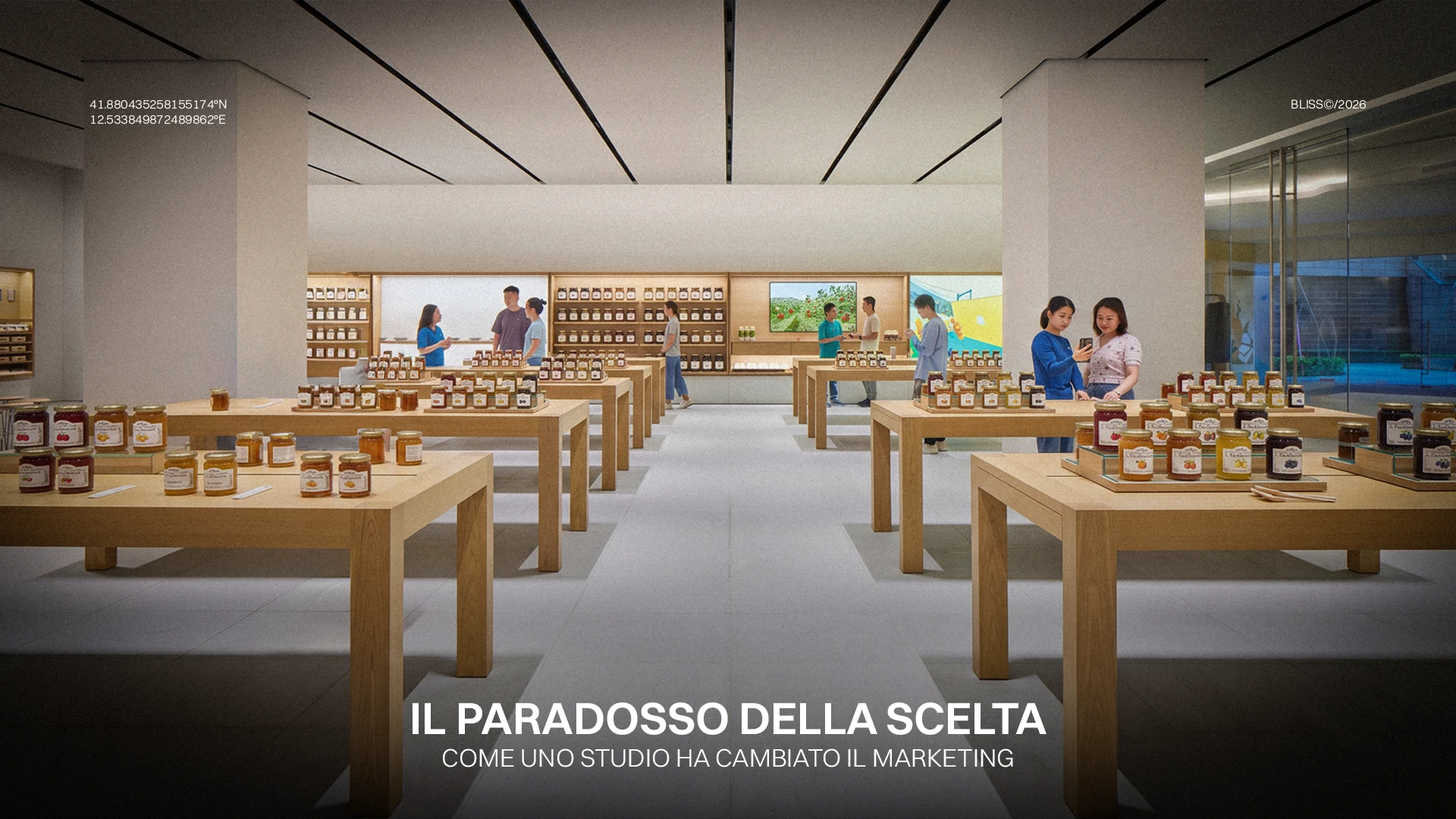
In 2000, Sheena Iyengar of Columbia University conducted an experiment destined to become a classic of consumer psychology. She set up two tables in a Californian supermarket, displaying twenty-four varieties of jam on the first and just six on the second.
As one might suspect, the table with twenty-four flavours drew more passers-by. There was more curiosity, more footfall, more attention. Yet only 3% of those who stopped bought anything.
The table with six flavours converted at 30%. A law was born.
Iyengar called the phenomenon overchoice: too many options overload the cognitive system. The brain, unable to process all the variables at play, adopts the cheapest strategy available: not choosing.
Marketing has changed today, but above all marketing consultancy has changed, and for good, thanks to that discovery. Hundreds of brands now use the phenomenon to improve the purchasing experience. Roughly speaking, this is how it works.
The choice the mind makes (or doesn’t)
The prefrontal cortex, the region responsible for reasoning and comparative evaluation, consumes glucose with every decision. In nutritional terms, this means that choosing is costly. It therefore demands energy and resources. Imagine that with twenty-four options to compare!
Contrary to what many think, the brain freezes not out of laziness but out of survival: conserving cognitive resources is a number-one biological priority for our bodies.
There is also a secondary effect not to be underestimated: choice anxiety. When there are many options, any decision taken is more likely to be perceived as wrong in hindsight, because the range of excluded alternatives remains visible and comparable. Barry Schwartz, in his work on the paradox of choice, identifies this effect as the main source of dissatisfaction in high-income economies: abundance and unhappiness, in essence, grow together.
Put simply, this means that whoever governs a brand, even without realising it, is unknowingly managing an entire cognitive architecture through which customers weigh their decisions. Underestimating this principle would be a serious mistake.
How brands have already shown us how it works
Apple knew all this before the phenomenon had a recognised academic name.
When Steve Jobs returned to the company in 1997, the first thing he did was cut 70% of the products. Few models, sharp positioning, a clearly defined purchase decision structure.
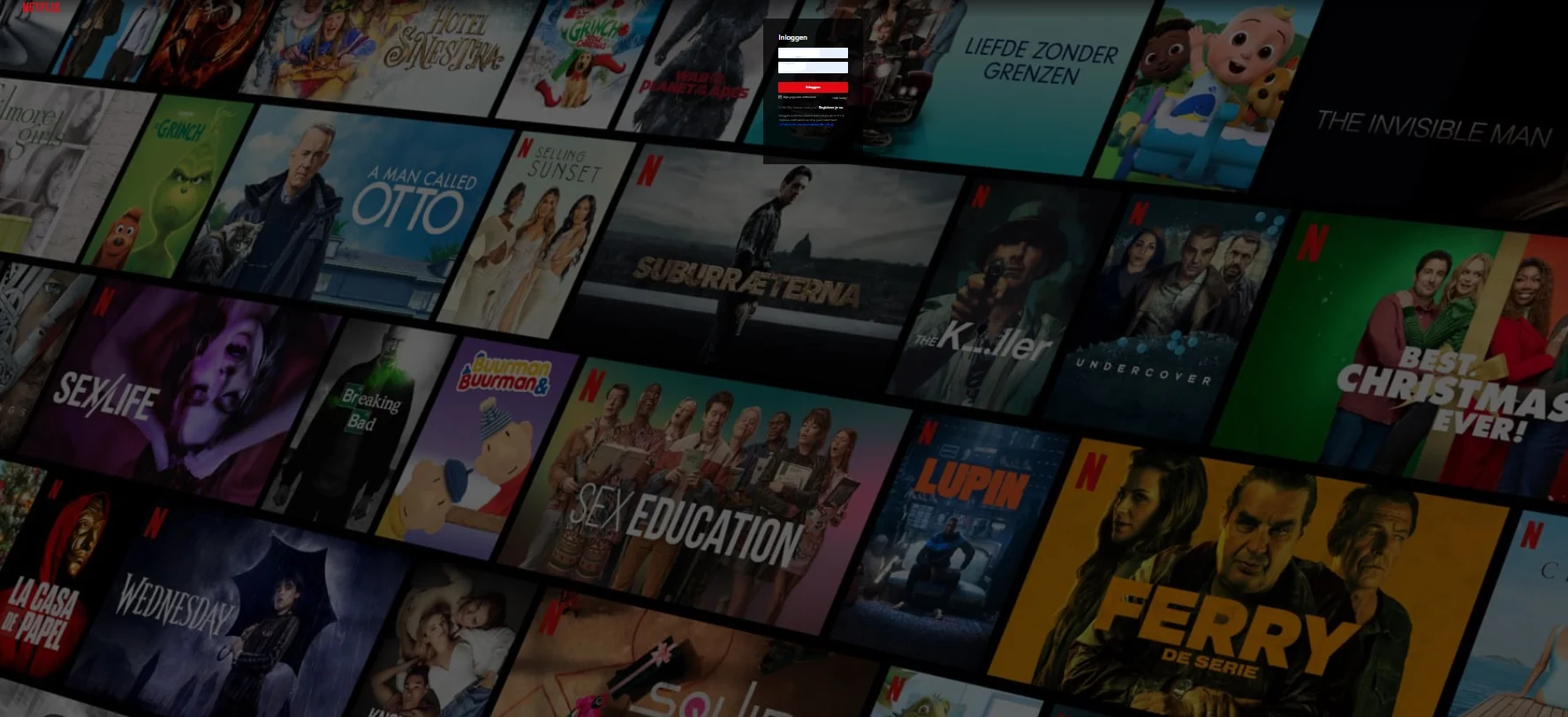
Netflix, by contrast, faces the opposite problem: the unlimited number of titles is its very product, yet that same product creates paralysis. The company’s solution was twofold. A highly personalised recommendation algorithm that shrinks the perceived universe of available options, and the “Play Something” button, introduced in 2021.
In short, when there is too much choice, the platform decides for the user.
These two cases show that, even when the actual choice is broad, the perceived choice must always be guided. The tension between the two is the territory on which positioning is decided. This is because range architecture is part of the brand’s identity before it is ever a commercial decision.
What exactly is governed
Three variables determine whether a brand’s choice architecture works or disperses value.
First, the structure of the catalogue. How many options, in what hierarchy, and by what logic they are presented. Hierarchy, beyond design, is a statement of relevance. A catalogue without hierarchy shifts the entire weight of the choice onto the customer, along with all the cognitive friction that comes with it.
Next, the path to the decision. Every step the customer goes through before deciding is a point where friction can increase or decrease. Guiding that path must be a priority for every brand.
Finally, coherence between options and positioning. A premium brand offering twenty price bands is simply incoherent. The range of choices available must be compatible with the brand’s identity direction; otherwise every additional option erodes the meaning of the others.
Governing these three elements with discipline means building the foundations on which the purchase decision becomes an experience that strengthens the brand rather than eroding it.
New Connections (FAQ)
Our range has expanded over time for commercial reasons. Doesn’t reducing it mean losing market share?
It depends on what you measure. A wide range can increase traffic and reduce conversion, as with the jam table. A narrower range reduces traffic but increases conversion and, often, the average value per transaction. The question is not whether to cut back, but whether the current breadth is building positioning or dispersing attention. In almost every case we have encountered, incremental range expansion happens without any check on how it changes the customer’s decision-making experience. The most common answer to that check is that the catalogue is larger than it needs to be.
How do we measure whether we are offering too many or too few options?
The most direct signal is the abandonment rate along the purchase journey. A high abandonment rate at the product comparison stage is almost always a sign of decision overload. A second signal is the distribution of actual choices: if 70-80% of customers always choose the same option, or two options out of twenty available, the other eighteen are not covering real segments; they are adding cognitive noise. Mapping these two indicators, before any intervention on the range, almost always produces surprises.
Does algorithmic personalisation like Netflix’s solve the problem or sidestep it?
It sidesteps it, in the best sense of the word. Netflix has not reduced its range: it has built a system that shrinks the perceived universe for each individual user. It is an engineering solution to a cognitive problem. For brands without Netflix’s data infrastructure, the same logic applies to the structure of the experience: segmenting the offer by audience, presenting dedicated paths instead of generic catalogues, using the information gathered to reduce decision friction rather than add more options. Algorithmic personalisation is a means. The underlying principle, reducing perceived complexity while preserving the richness of the real offer, is within reach of any brand that governs its architecture with method.