


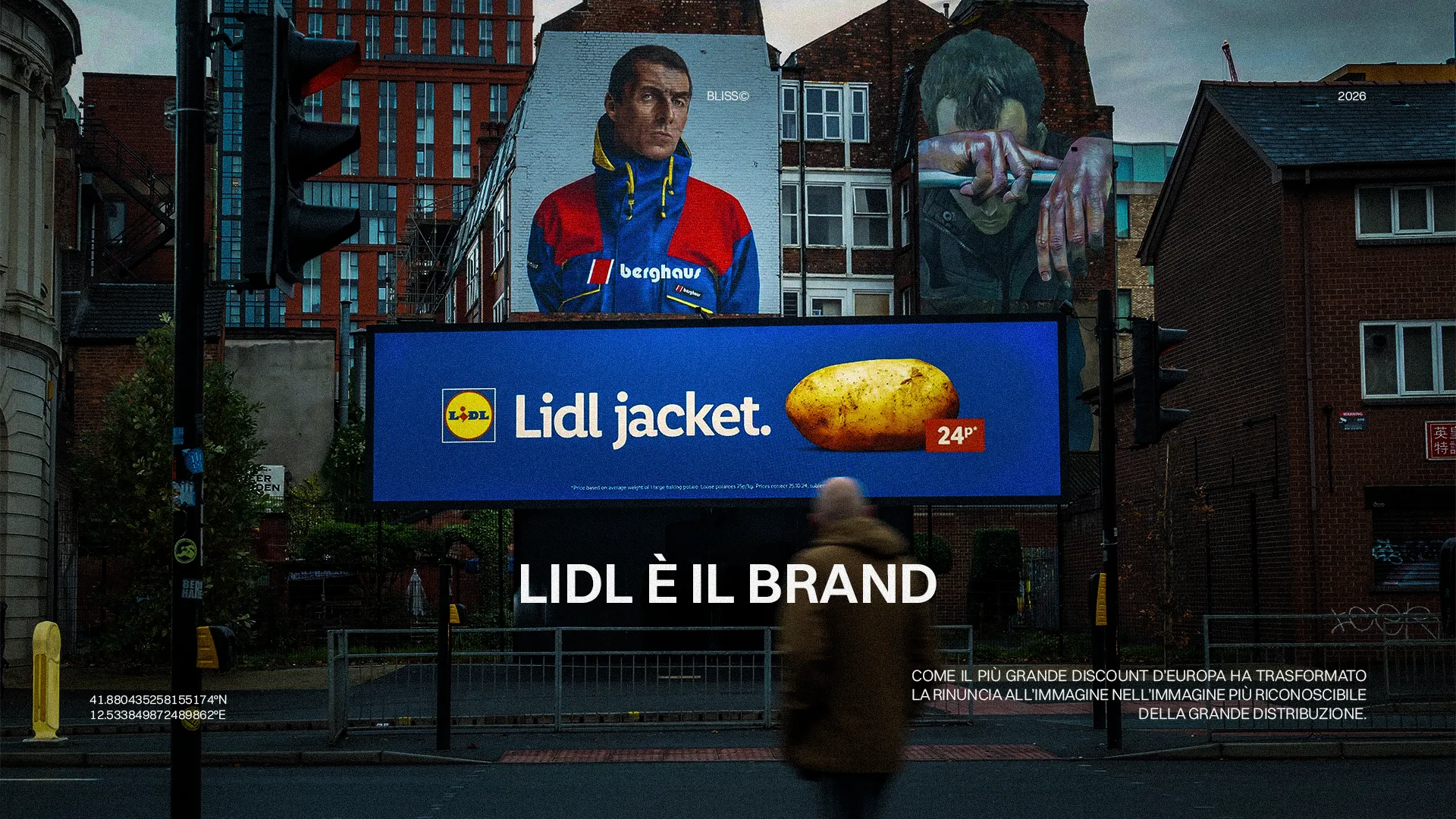
When you walk into a Lidl, you immediately know where you are.
The narrow aisles. The essential packaging. The prices displayed in large type. The deliberate absence of that aspirational atmosphere competitors build through lighting, music and carefully arranged shelves.
Lidl wants to look exactly like what it is.
And that, paradoxically, is its brand.
The value of consistency
To understand why this choice works, we need to start with how the brain processes commercial environments. Environmental neuroscience has shown how an environment can correspond to the expectations it has generated: the human brain, in fact, registers a confirmation signal that reduces cognitive friction and produces a sense of implicit trust. It is pure neurological relief.
Lidl has, in a sense, done exactly the same thing, building an environment that promises exactly what it delivers. It invites you in by promising a discount store, and that is exactly what you find. And so the implicit contract is respected every time. And every time it is respected, trust becomes stronger.
The opposite mechanism, which always activates distrust, is called expectation violation. It occurs when an environment signals something that does not correspond to the experience. Premium communication hiding a mediocre product; an aspirational atmosphere that does not survive the first disappointing purchase: the brain registers this kind of inconsistency as deception, even when it is not.
Lidl chose the opposite option, eliminating this risk at the source.

Anti-positioning is positioning
For decades, Italian and European mass retail competed on perceived quality. Increasingly curated shelves, warmer lighting, increasingly premium private label products, communication oriented towards ever higher aspiration.
Lidl chose the opposite direction. It bet that there was a market segment looking for stable prices, sufficient quality, a predictable experience. In other words, security. Customers who wanted to know exactly what they would find every time, without surprises.
But be careful: Lidl’s positioning has never been “we are cheap”. It has always been “we are honest”.
“We are cheap” communicates a limitation. “We are honest” communicates a value. In the mass retail market, where consumer trust is systematically eroded by artificial promotions and inconsistent quality, honesty is a real differentiator.
A discount store game
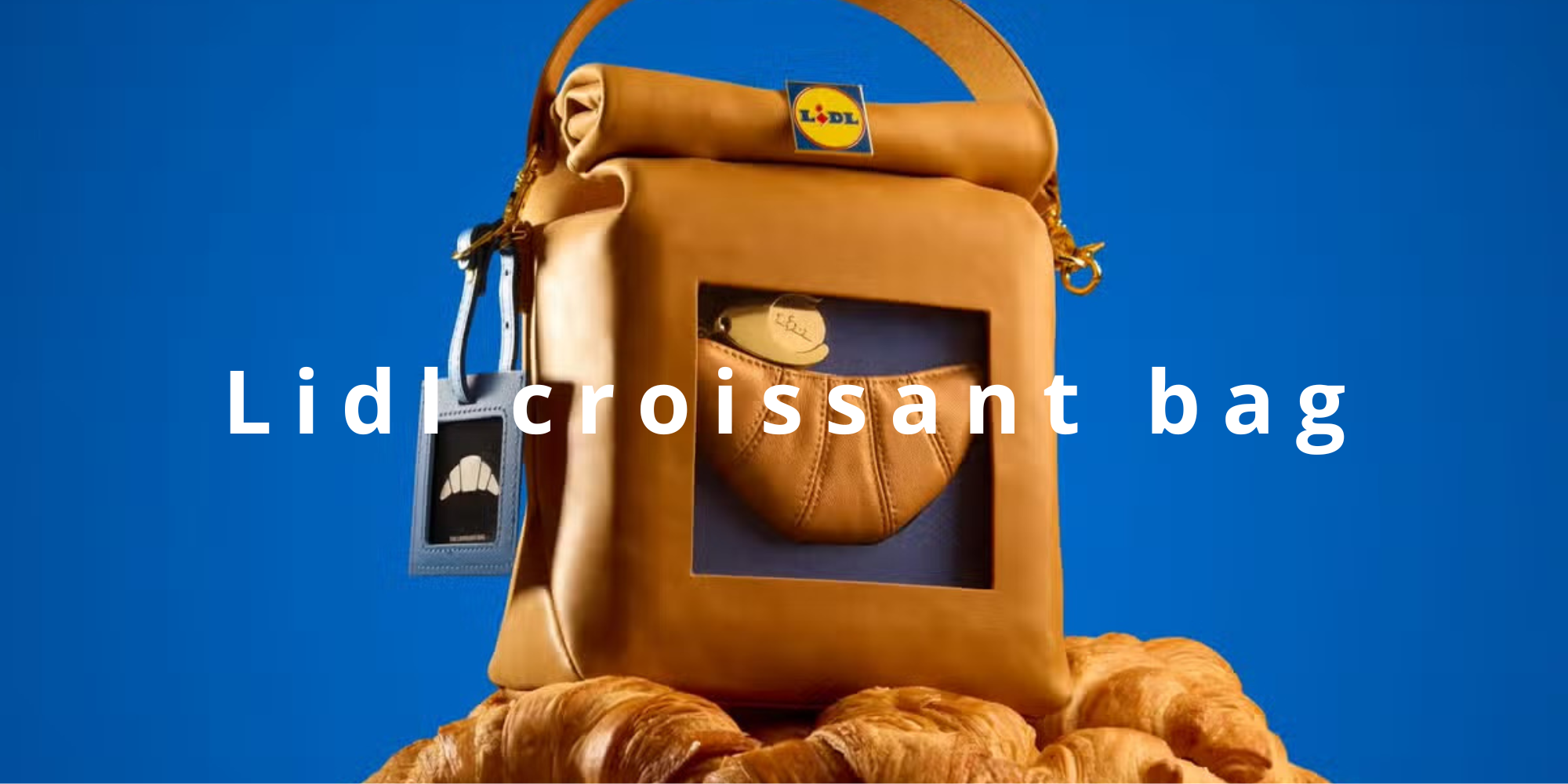
So far, everything is straightforward. The moment Lidl’s strategy became more interesting from a brand perspective, however, was when it began using its own identity consciously and ironically. Collaborations with designers such as the croissant bag, the sneakers with the yellow and blue logo that went viral, and communications built around the contrast between discount store simplicity and product aspiration. All moves built on a precise awareness: the audience already knows the brand, has already classified it, and surprising people within that classification produces a much more powerful effect than trying to change the classification itself.
From a neurological perspective, this mechanism exploits what researchers call schema incongruity, which describes the effect of a stimulus when it partially violates the expectations generated by a familiar schema. When this happens, the brain increases cognitive processing and the memorability of the content, registering the phenomenon as unexpected. And this generates enough surprise to attract attention, but not rejection.
Lidl uses the distance between what it is and what it is doing as a communication tool. The implicit message is: we know who we are. And we are confident enough to play with it.
This is the most sophisticated form of identity governance. Using what you are as leverage, with self-irony.
The Lidl lesson
The Lidl case demonstrates something that many companies understand they need to accept, but struggle to apply. Positioning requires consistency.
The strength of a brand is measured precisely by its consistency. Lidl is recognizable because it always behaves in the same way, in every country, in every store, in every communication.
And this consistency, replicated over decades, has produced a position in the consumer’s mind that no competitor can take away, because it is founded on experience.
After all, the strongest brand is the one that never disappoints.
New Connections (FAQ)
How did Lidl become a strong brand without investing in premium communication?
It built consistency. The brain measures the strength of a brand through the correspondence between what it promises and what it delivers. Lidl eliminated the distance between expectation and experience. This correspondence, replicated millions of times, produces structural trust that no media investment can replicate in a short period of time.
Can Lidl’s visual simplicity work in other sectors too?
It works wherever there is a market tired of broken promises. The principle is strategic. Define precisely what you are willing to guarantee, build every touchpoint around that guarantee, and maintain it without exception. In sectors where premium communication has become so inflated that it no longer means anything, essential honesty is the rarest differentiator.
How can the viral success of Lidl sneakers be explained?
Through schema incongruity. The brain increases attention when a stimulus partially violates the expectations generated by a familiar schema. Lidl was already classified as a discount store. The sneakers used that classification as creative material. The audience bought them precisely because of this, not despite it.
BLISS®
© 2026. ALL RIGHTS RESERVED