


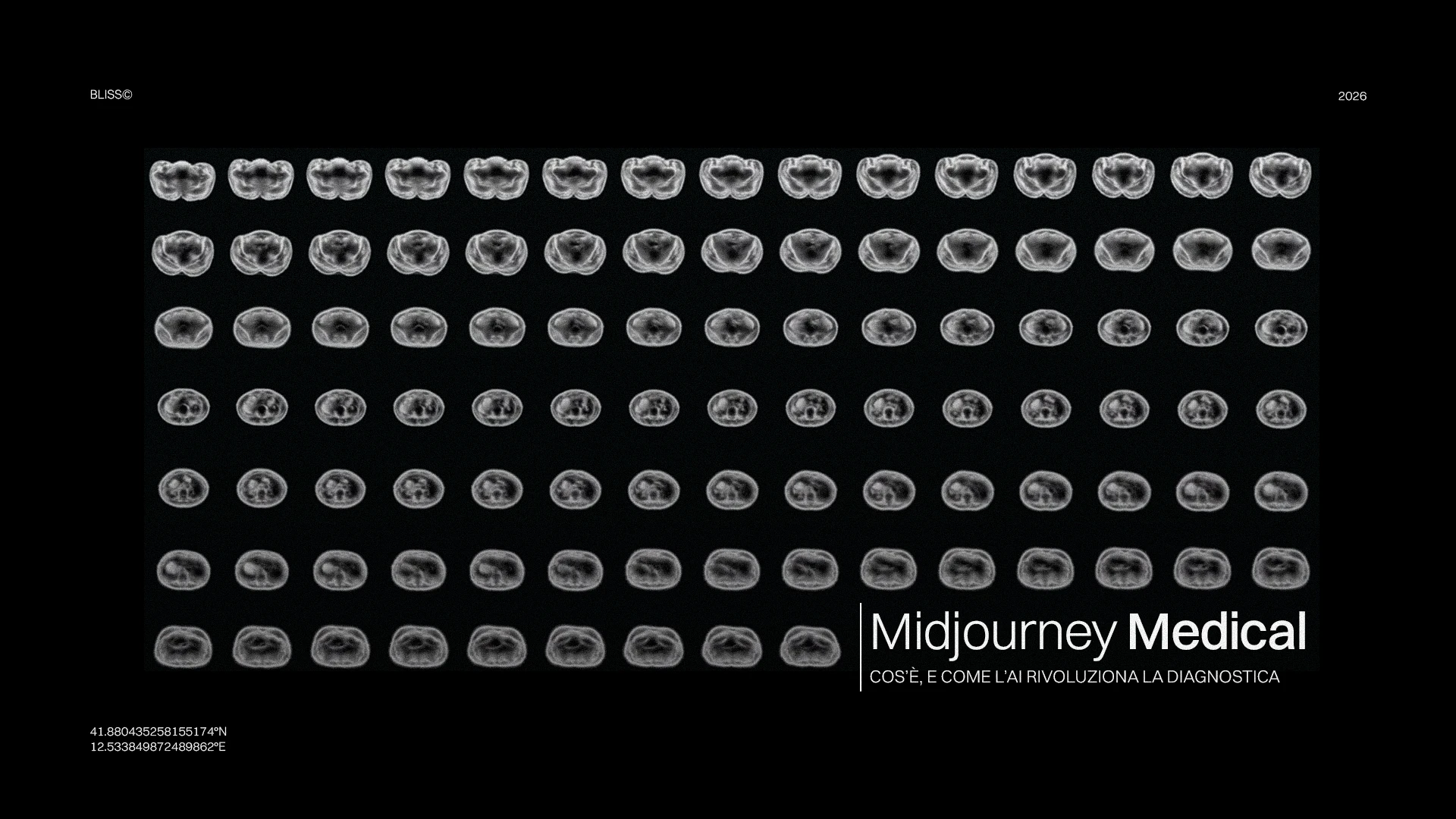
On 17 June 2026, on stage at an event in San Francisco, founder and CEO David Holz announced Midjourney Medical, a new division of the artificial intelligence lab famous for its image generators. Its first hardware product is called the Midjourney Scanner: an ultrasound device that produces a detailed map of the entire body in around sixty seconds, without radiation, by immersing the patient in a tank of water.
The news stunned the tech sector, and with good reason.
Midjourney had never made a physical object, let alone a medical device. The leap from generating pixels to diagnostic imaging seems as arbitrary as a record label announcing it has started building aircraft.
Four months after the announcement, however, the project is much more concrete than it first appeared. A first-generation prototype already exists, volunteers have been scanned within an independently reviewed study, and the FDA has already set out the device’s initial regulatory classification. The lesson it offers is therefore all the more interesting: the real asset is not the product you sell, but the capability that enabled you to build it.
What the scanner promises
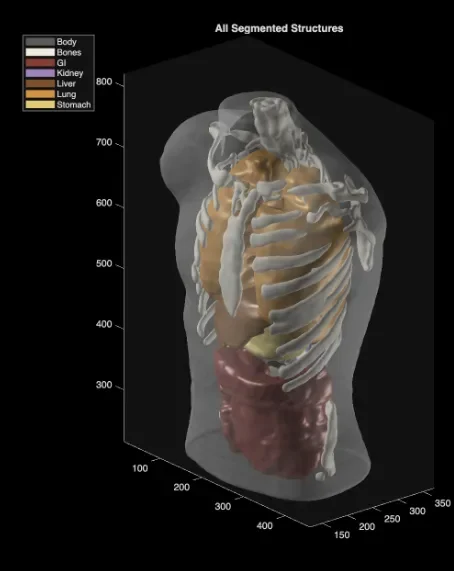
The Midjourney Scanner uses a ring of around 500,000 ultrasound elements, capable of sending and receiving sound waves as the body is gradually immersed in water. The waves pass through tissues of differing density and stiffness, and the data collected are used to reconstruct a three-dimensional representation of the body. Midjourney calls this technology Ultrasonic CT.
The point that needs clarifying, however, is speed. The existing Gen 1 prototype currently takes more than twenty minutes for a full scan. Gen 2, the version planned for the first Midjourney Spa, aims to cut this to around five minutes. The sixty seconds initially announced are instead the target for Gen 3, designed for subsequent large-scale roll-out.
In the meantime, the project has also passed a first fundamental test: the images shown by Midjourney were not generated by artificial intelligence. They come from real people scanned by the prototype within a study reviewed by an independent Institutional Review Board, identified by protocol WCG IRB #20260427.
The plan remains extremely ambitious. Midjourney aims to build around 50,000 scanners worldwide by 2031, reaching a theoretical capacity of one billion scans a month. The first facility will be the Midjourney Spa in San Francisco, designed to integrate the scanners into a setting with saunas, pools, showers and other wellness spaces. The original goal was to open by the end of 2027; in its FAQs updated in September 2026, Midjourney now gives early 2028 as the more realistic target.

The Midjourney Scanner is not yet a diagnostic tool
And yet, a caveat. Midjourney Medical operates in the medical imaging sector, but the Midjourney Scanner is not being presented as a tool for diagnosing disease.
In February 2026 the company submitted a 513(g) request to the US Food and Drug Administration, used to clarify which regulatory pathway a device must follow. The response, received on 4 June, classified the Midjourney Scanner as a Class II medical device exempt from the 510(k) premarket notification procedure, because its stated use is to analyse body composition, not to diagnose or treat medical conditions.
This means a scan can produce a three-dimensional representation of muscle, fat, bone and other structures, but Midjourney cannot automatically turn it into a diagnosis of a condition. The company has already stated that it intends to develop further capabilities in future and, if so, it will have to go through the regulatory pathways required by the FDA.
The difference is far from subtle. Midjourney is not yet selling a machine that “finds diseases in sixty seconds”. For now, it is building the infrastructure to collect a very large volume of data on the body, betting that, over time, that same infrastructure will be able to support far more advanced applications.
Butterfly Network and Midjourney
The core technology of the Midjourney Scanner was not built from scratch by Midjourney. It rests on a co-development and exclusive licensing agreement signed in November 2025 with Butterfly Network, the American company that made “on-chip” ultrasound famous, that is, transducers fabricated on silicon using the semiconductor industry’s standard processes.
This is not, however, a simple supply arrangement. Documents filed by Butterfly Network with the SEC show a five-year co-development and licensing agreement: $15 million paid upfront by Midjourney, $10 million a year for the licence, up to $9 million more tied to reaching specific milestones, plus chip purchases and forms of revenue sharing. Butterfly has estimated up to $74 million in payments over the five years.
The current scanner prototype incorporates 40 Butterfly Ultrasound-on-Chip imaging modules per system, as Butterfly itself confirmed in a statement published the day after the announcement. The physics of ultrasound, in other words, comes from a specialist partner that has been working on this technology for years.
Midjourney did not invent a new way of doing ultrasound.
It took an existing technology and built on top of it exactly what it does best: computing power, visual infrastructure, product design, and a brand able to make desirable an experience that until yesterday was perceived as clinical and unpleasant.

What Midjourney sells
The most common misunderstanding when reading news like this is to think that a company sells the object it produces.
Midjourney does not sell ultrasound: the ultrasound belongs to Butterfly. Ultimately, Midjourney did not even sell “images” with its original product: anyone can generate images with dozens of competing tools, some of them free.
What Midjourney sells, in both cases, is a method. The expertise. The ability to take extreme computation, at enormous scale, and turn it into an experience people want to use. With image generators, that method produced a recognisable style and a community willing to pay a subscription. With the scanner, the same method is applied to an entirely different output: no longer a generated image, but a real map of the human body processed by petaflops of on-site computing.
The product changes. The capability that makes it possible remains.
And it is that capability, not the product itself, that is the real asset the market is assessing when it reads this news.

A lesson in diversification
Organisations that remain tied to the category of their first product face a structural ceiling on growth: they can only improve that product, not move to where the market goes next.
Organisations that build their brand around a competence, a method, a specific way of solving problems, can instead apply that competence to entirely different categories while retaining the same perceived identity.
Apple does not sell computers: it sells an idea of design and experience that it has applied to phones, watches and headphones. Yamaha does not sell pianos: it sells a manufacturing philosophy that it has also applied to motorcycles. With this announcement, Midjourney is betting it can do the same: prove that its real asset was never “generating images with AI”, but a broader expertise in computational engineering and experience design, one that also applies to medical diagnostics.
A few months on, it has become clearer that this is not an isolated experiment. Midjourney has stated that Medical will not replace its image-generation business, and David Holz has described the project as the beginning of the company’s transformation into a broader research lab, with other initiatives in the pipeline. July also brought the first acquisition in Midjourney’s history, Co–Star.
Whether the bet pays off, the market will tell in the coming years. Not least because recent history is full of ambitious pivots that ended badly. But the question every organisation should ask on seeing this announcement is not whether ultrasound will work, but whether its own brand is built around a product or around a capability that the product, today, simply represents.
Domande frequenti
If the ultrasound technology belongs to Butterfly, what does Midjourney really bring to this partnership?
Three things Butterfly alone could not have brought at the same scale: capital (Midjourney funds the project from the revenue of its core product, with no need for investment rounds), computing infrastructure to process the volumes of data generated by each scan, and above all a brand able to make a medical experience desirable by turning it into a spa-like format. Butterfly provides the physics. Midjourney provides the scale, the capital and the user experience.
Can any company enter a sector other than its own?
No. It works when the organisation has genuinely built a transferable capability, not just a lucky product in a specific category. Midjourney spent years investing in the computing infrastructure needed to generate high-quality images at scale: that same infrastructure, that same ability to process vast amounts of data quickly, is what makes the leap into medical imaging plausible. Without that pre-existing capability, the leap would have been merely an announcement, not a working product.
What should an Italian SME learn from a case like this?
Not the specific leap into medical diagnostics, but the principle behind it: before planning expansion into a new category, it is worth asking what competence your brand has truly built, as distinct from the current product that embodies it. A furniture manufacturer might discover that its real competence is managing complex artisanal supply chains, applicable to other sectors too. A communications agency might discover that its real asset is a brand governance method, not the individual services it sells today. The product changes. The competence behind it is what the next phase should be built on.