




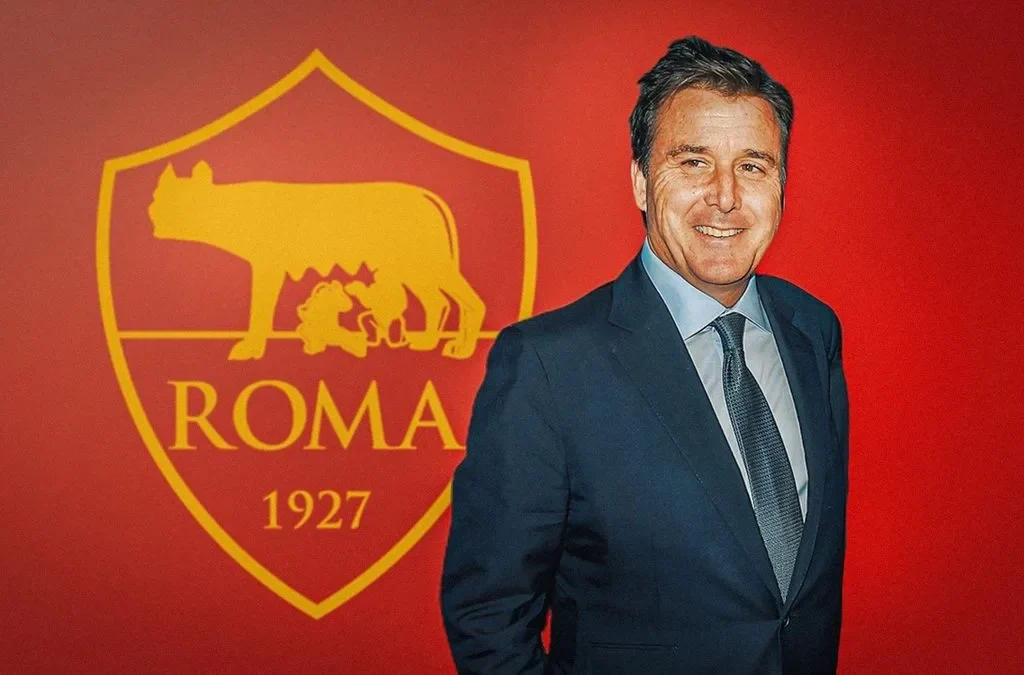
Dan Friedkin comes from Toyota distribution in the United States. In 2020 his group acquired control of Roma, in a deal valued at around €591 million in total. In December 2024 he also took over Everton. For anyone thinking about brand strategy, the question is what is bought along with the team: an audience, a history, a recurring presence in public conversation?
His is one case among many.
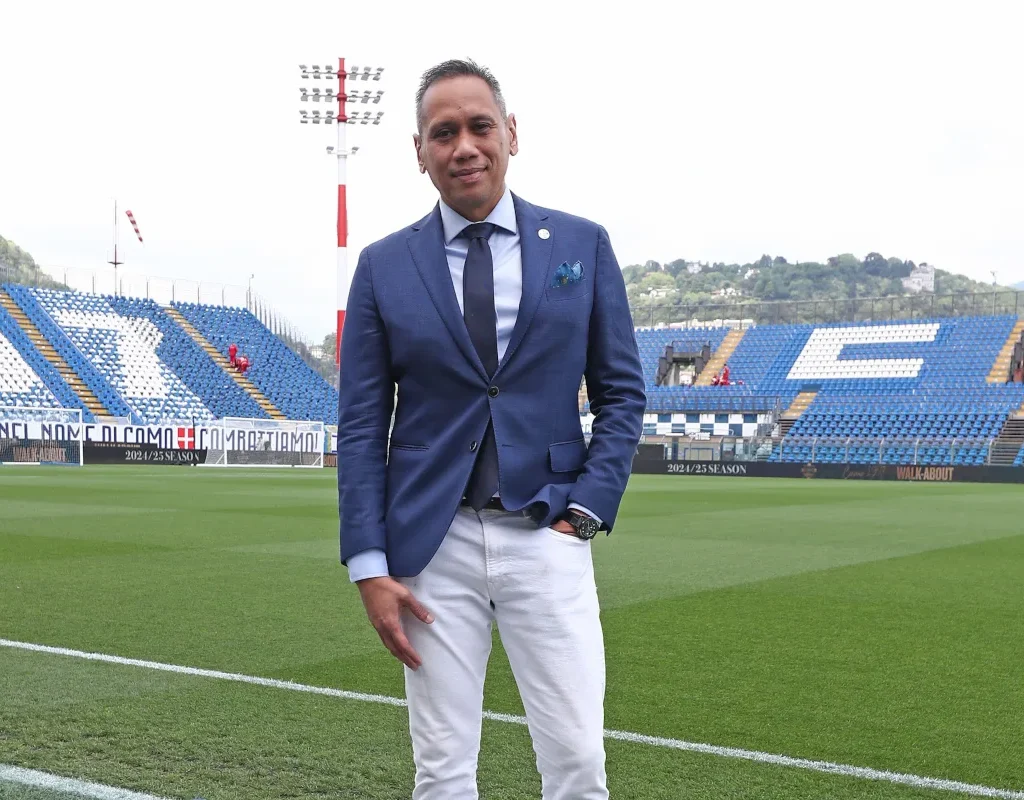
Funds managed by Oaktree took ownership of Inter in May 2024 after a loan to the club’s holding companies went unrepaid. RedBird has controlled Milan since 2022. Como, backed by the Hartono family, has qualified for the 2026/27 Champions League. According to Calcio e Finanza, spending on the player transfer market reaches around €406 million from 2023/24 to 2026/27: four seasons, one of which is still under way. The routes of entry and the capital deployed differ, and that difference matters before looking for a common motivation.
The interesting point is what these investors can gain from an asset that requires capital and faces uncertain sporting results. Those who run an organisation and want to understand how intangible assets work will find in football a question that is useful beyond the stadium too: when does a brand’s recognition become value for its owner?
In the 2024/25 season, Premier League clubs generated around £6.8 billion in revenue, according to Matchday Finance. For Serie A, Deloitte reports around €3 billion. The gap shows how much the broadcasting market, commercial revenue and stadiums matter. A club’s profile is monetised within this system: an international brand does not deliver the same financial results in every league.
What buying a football club actually “buys”
A football club can be an asset of visibility and legitimacy: it brings together attention, belonging and relationships with a continuity that is hard to build from scratch. It is the same question that arises in acquisitions in which the brand is worth more than the company: what does it cost to develop comparable recognition, and what results does it make possible? The strategic value can exceed the annual return, but it requires a plan that explains how to turn the audience into measurable revenue, relationships or opportunities.
The team is not the real asset
Beyond sporting results, a board can ask what possibilities the club adds to the investor’s portfolio. The main ones concern:
- access to markets where the core business is little known;
- institutional legitimacy with governments, cities and communities;
- weekly visibility across dozens of countries, tied to an emotional narrative;
- relationships with sponsors, media and investors who orbit the club.
Working through these four points is an exercise in brand governance that goes well beyond football.
The four types of buyer
The sport and media investor.
RedBird presents Milan as a live entertainment business built around a recognisable intellectual property. In this logic, football offers room for growth through rights, licensing, sponsorship and content distribution. The stated strategy helps explain the acquisition; its effectiveness must be judged on commercial and sporting results.
The sovereign investor.
The presence of capital linked to states and sovereign funds means football can also be read as an instrument of international positioning. Sponsorships, events and relationships can contribute to a country’s public presence. It is a strategic reading that does not exhaust the motives behind every deal and does not guarantee a reputational return: the club also exposes its owner to criticism and public scrutiny.
The diversified group.
The Friedkin portfolio spans automotive, film, hospitality and football. Roma and Everton add relationships with different audiences and territories. The connections between these businesses can have value, but synergy requires concrete projects, expertise and verifiable results. Mere presence in the same portfolio still leaves open the question of how far the businesses reinforce one another.
The local project.
A club can also be an investment in the relationship with a community. This logic places value on the continuity of the club and its bond with the city. The owner must make explicit how much capital it is prepared to commit to sustain it, and what balance it seeks between sporting results, sustainability and local representation.
Serie A as an opportunity
Serie A still lags behind the Premier League in its ability to generate revenue. For an investor, history and recognition can coexist with room for commercial growth. Entry price, debt, stadium availability and capital requirements, however, vary from club to club. The gap becomes an opportunity when there is a credible plan to close it; years of visibility do not automatically make up for a bad investment. Serie A has no owner explores the governance of the system in which these deals take place.
When it works and when it does not
Football as a brand asset works when the owner can explain how the club’s audience and positioning will contribute to the project: better commercial agreements, content, experiences or market development. Coherence between the brands is a useful condition, but it must be backed by capital, expertise and the capacity to execute.
Milan gives RedBird a recognisable foundation for its sport and entertainment strategy. This alignment makes the logic of the investment legible, without proving its success on its own. SPAL, left out of Serie C in 2025 after failing to register, is a reminder that history and recognition do not guarantee continuity. The outcome is not enough to attribute the collapse to a single cause: for an investor, it makes verifying the resources needed to sustain the club decisive.
A lesson for those who govern a brand
The rule applies to any intangible asset: a brand can be bought; its governance has to be built. Whoever buys a football club also buys the responsibility of managing it consistently with what that club represents to its community and its markets. It is the same responsibility that comes with every acquired brand, and the reason brand equity is measured over time, well beyond the day of signing.
Before an acquisition that involves the group’s name and reputation, an advisory process can connect objectives, capital requirements and governance criteria. The first useful result is to make explicit what the company expects from the club and how it will verify that it has achieved it.
Domande frequenti
Can a football club really be a profitable investment?
It can be, but revenue, operating result, capital injected and exit value need to be distinguished. A league’s aggregate losses do not prove that every club is loss-making. The sale price must also be read within its scope: in 2022 the Chelsea deal provided for £2.5 billion for the shares and a further £1.75 billion in future investment. The combined £4.25 billion is therefore neither the price received by the seller nor their capital gain; the return also requires taking into account the capital deployed over the years.
Do foreign investors face fewer reputational risks?
Not necessarily. A foreign owner may have a different exposure in the club’s home territory, but still faces scrutiny from fans, media, sponsors and institutions. The consequences of sporting and commercial decisions can also reach the owner’s home country and the group’s other businesses. Nationality and geographical distance are not enough to measure the risk.
What should a board ask before approving the purchase of a club?
The board must clarify what value it intends to build, how much capital will be needed even in adverse scenarios and who will lead the club. It must also assess the investment horizon, any exit strategy, the relationship with the community and reputational risks. Running a sports club requires specific expertise: these are elements to be tested in an advisory process before a decision with a high impact on the brand.
Fonti e riferimenti
- AS Roma, Comunicato ufficiale sulla proprietà dell’AS Roma, 2020
- Premier League, Premier League statement sull’acquisizione dell’Everton, 19 dicembre 2024
- Inter, Comunicazione sulla nomina del Presidente e del Consiglio di Amministrazione, 2024
- RedBird Capital Partners, AC Milan e strategia dell’investimento
- Reuters, Milan Juve miss out on Champions League as Roma and Como qualify, 24 maggio 2026
- Calcio e Finanza, Como le strategie degli Hartono dopo investimenti per 400mln e il peso delle intese con la UEFA, 12 settembre 2026
- Matchday Finance, Premier League Financial Results 2024/25, 2026
- Deloitte, Annual Review of Football Finance 2026 Europe’s Top Leagues
- Chelsea FC, Club statement sull’accordo di acquisizione, 6 maggio 2022
- Fanpage, Anche la Spal è fallita Epilogo doloroso è fuori dal calcio professionistico, 2025