



Choosing a marketing agency in 2026 depends first and foremost on where the problem lies. Before even comparing services and quotes, you need to understand what role marketing must play in the business: clarifying positioning, generating demand, improving conversions or coordinating several objectives at once.
If the problem concerns the brand, meaning identity, positioning and perception, you need a strategic partner. If it concerns performance, leads, conversions and ROAS, you need a technical and operational partner. If it concerns both, you need a structure capable of integrating them.
The framework nobody uses: define the problem first, then choose the agency
Most companies choose an agency starting from the output (“I need social media”, “I want to run Google Ads”). It is the wrong approach: it leads to buying services instead of solving problems. Before contacting the first agency, answer this question: why isn’t marketing working as it should?
| The real problem is… | The type of partner you need | What you don’t need (yet) |
|---|---|---|
| I don’t know who I am, who I’m speaking to, what sets me apart | Brand advisory / strategic advisory | ×Google Ads, SEO, social media manager |
| I have a clear brand but I’m not generating leads or conversions | Performance marketing agency | ×Rebranding, visual identity |
| I have traffic, but it doesn’t convert | CRO / UX + content agency | ×More advertising on existing traffic |
| I have everything but I’m not well known enough | PR + content + distribution | ×Cold performance campaigns |
| I don’t know what the problem is | External audit / diagnostic consultancy | ×No retainer before the diagnosis |
An agency that proposes a retainer before diagnosing where the problem lies is not the right choice, however good it is at what it does.
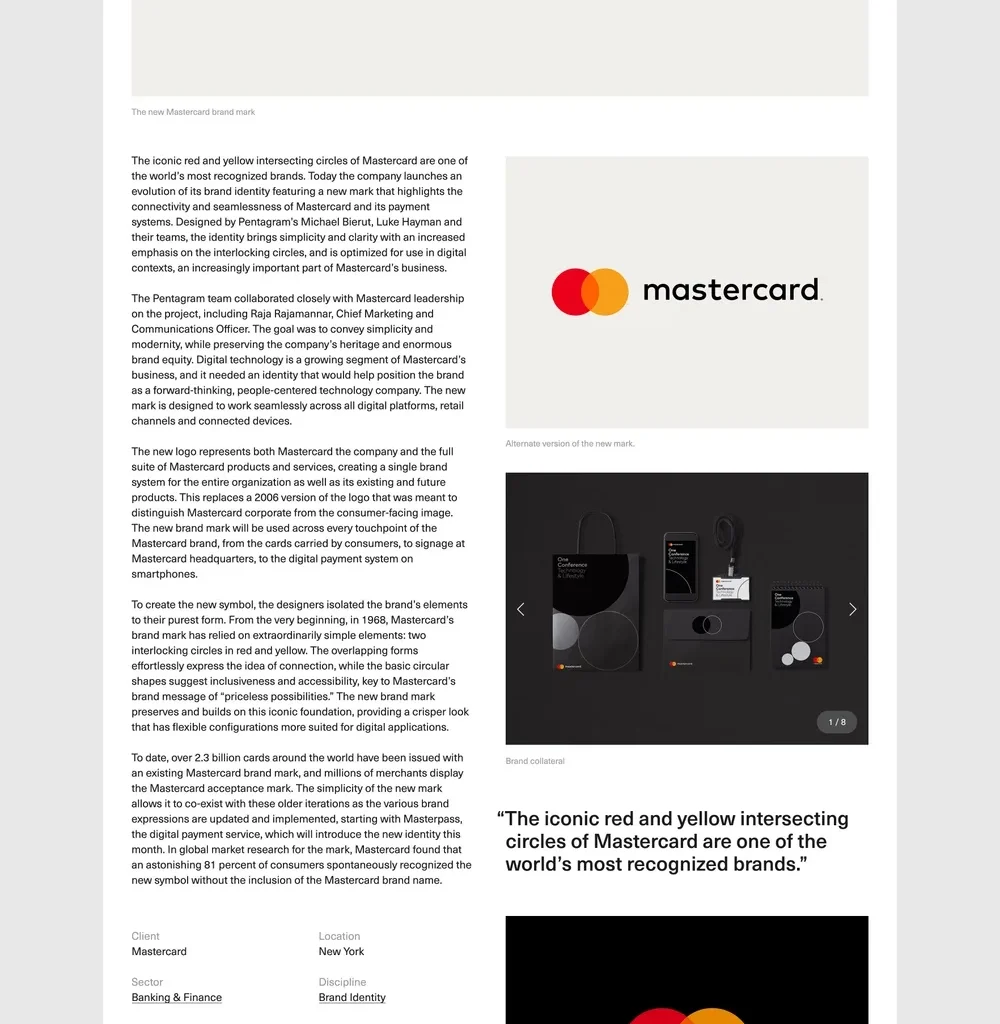
How to choose a marketing agency: the criteria that really matter
1. The seniority of the people who work on your account, not of those who sell it
In larger agencies, the senior figure who presents the pitch is rarely the one who manages the day-to-day work. The question to ask during selection is not “who are you” but: “Who will actually work on my account, how many years of specific experience do they have, and can I speak to them before signing?” If the answer is vague or filtered, that is a warning sign.
2. Case studies in your sector with verifiable data, not testimonials
Ask for case studies in your sector or similar sectors, with specific numerical KPIs: not “we increased the client’s revenue”, but “from X leads/month to Y leads/month in Z weeks, with a budget of W euros”. If the case studies are anonymous or have no metrics, either the agency does not track results or the results do not stand up to scrutiny. Both are problems.
3. The pricing model and what is NOT included in the retainer
The monthly cost of a retainer almost never includes: advertising spend (adv budget), production of visual assets (photos, videos, graphics), the cost of tools (SEO tools, CRM, automation platforms), or one-off activities. Before signing, ask for an explicit list of what is excluded from the base retainer. The difference between a €2,000 retainer that covers everything and a €1,200 one that excludes production may be nothing, or double. Agencies that do not answer this question clearly have pricing structures that are opaque by design.
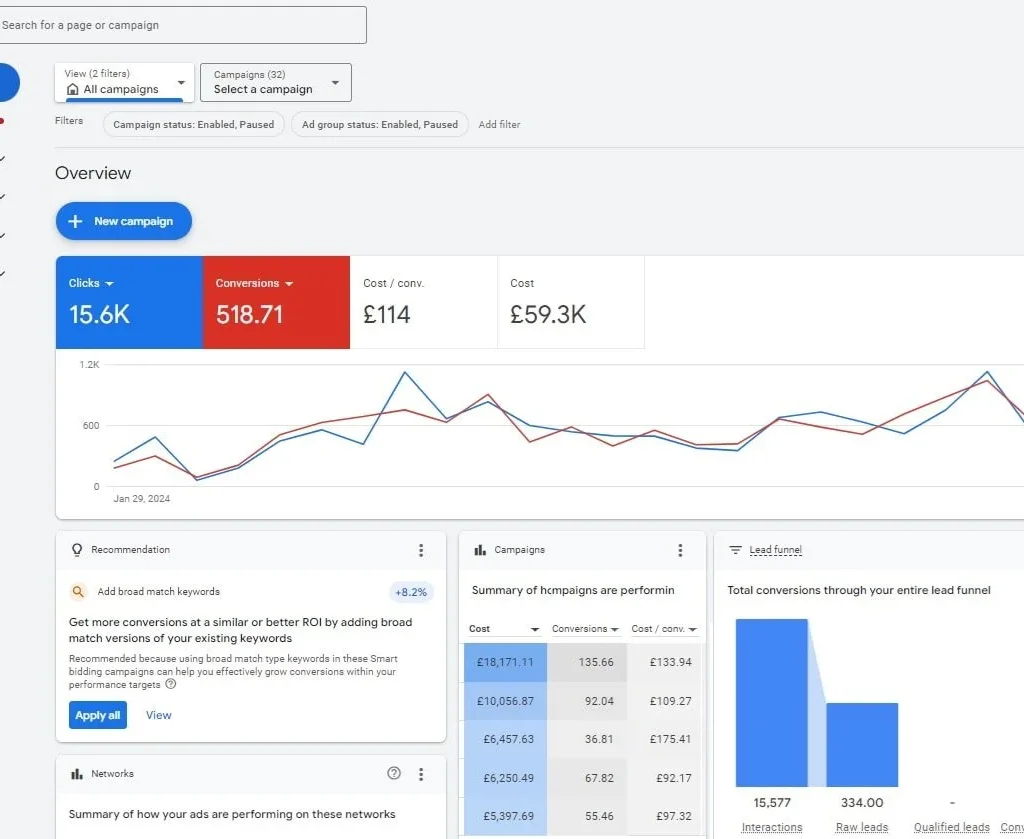
4. The answer to the awkward questions
The questions that separate agencies that deliver from those that make promises:
- “Have you ever lost a client? Why?”
- “Which activities have you advised a client against, even though they would have increased your revenue?”
- “In what scenario would our project not work with you?”
- “How are you handling Google’s AI Overview in your SEO strategy in 2026?”
An agency that answers the first three candidly and the fourth with specific expertise is an agency that knows what it is doing. One that tends to answer in generalities or becomes defensive either has something to hide or cannot answer.
The real cost of the wrong choice
According to Tready (2026), the wrong agency costs on average 12-18 months and tens of thousands of euros before the problem is recognised and the relationship ended. The cost is not just the retainer paid: it is the opportunity cost of lost time, the cost of rebuilding digital positioning from scratch and, in the case of brand identity, the cost of correcting a narrative already circulating in the market.
The signs that the relationship is not working often appear before the numbers do: reports that are always late, a point of contact who changes without notice, an inability to explain tactical decisions in strategic terms, KPIs that change every month with no stated reason. The problem is not always the agency: sometimes the brief was inadequate, the objectives had not been defined, or the expectations on timing were unrealistic. That is why onboarding matters as much as selection.
Generalist vs specialist agency: when the difference matters
The distinction is not between large and small. It is between those who have specific expertise in your sector or your type of problem and those who do not. For an industrial B2B company, a 50-person generalist agency that has never worked in industrial B2B is worth less than an 8-person boutique with 10 clients in the same sector.
The areas where specialisation makes the most difference in 2026:
- Regulated sectors (pharmaceutical, legal, financial): restrictions on claims and communication require direct experience, not generic adaptations.
- B2B with long sales cycles: lead nurturing and content marketing for a 6–18 month sales process follow a radically different logic from B2C.
- Luxury and premium positioning: the visual and narrative codes of luxury cannot be improvised. An agency that does not know them from direct practice produces communication that signals the opposite of what the brand intends.
- High-volume e-commerce: product feed optimisation, Performance Max campaign management and email and SMS retention strategy all require highly technical skills that few generalist agencies have in depth.
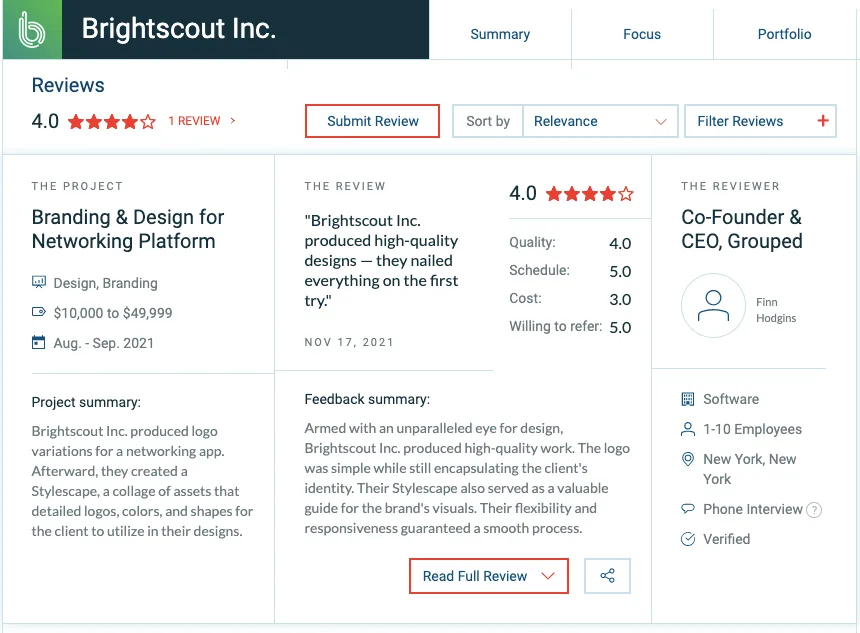
How to read a commercial proposal before signing
Four elements every serious proposal must contain, and whose absence is a red flag:
- A diagnosis of the client’s current situation, not just a presentation of the agency’s own services. If the proposal does not show that the specific problem has been understood, it is a template proposal.
- Success KPIs defined before starting, not “we’ll align on metrics during the first month”. KPIs are defined beforehand, not after signing.
- Timeline with specific deliverables: what is delivered and when, not “ongoing optimisation activities”.
- Reasonable exit clause: a 12-month contract with no exit clause after 3–6 months with notice signals that the agency is not confident of retaining the client on results alone.
Further reading
How much does a marketing agency cost in 2026
Domande frequenti
How much does a marketing agency cost in Italy in 2026?
Monthly retainers range from €800–1,500 for small agencies with limited services to €3,000–8,000 for established agencies with a dedicated team. Boutiques specialising in branding and strategic positioning often work on a project basis (€5,000–30,000 per engagement) plus an operational retainer. Advertising spend (adv spend) is always separate from the agency fee. The right measure is not absolute cost but cost per result, which requires KPIs defined before starting.
Is a marketing agency or a freelancer the better choice?
It depends on the complexity of the project. A senior freelancer is often the best choice for vertical, well-defined activities (SEO, Meta Ads, copywriting). A marketing and communications agency is needed when the project requires several integrated skills at once, strategy, production, distribution, analysis, which a single professional cannot cover in depth. The risk with a freelancer is dependence on one person. The risk with an agency is paying for structure instead of expertise.
What questions should you ask a marketing agency before choosing it?
The five questions that separate agencies that deliver from those that only promise: 1) Who actually works on my account? 2) Do you have case studies in my sector with verifiable numerical data? 3) What is excluded from the base retainer? 4) How do you provide reporting, live dashboard or monthly PDF? 5) In what scenario would our project not work with you? The answers to the fifth question in particular reveal the agency's level of intellectual honesty.
How long does it take to see results from marketing?
It depends on the channel and the objective. Paid campaigns (Google Ads, Meta Ads) produce data in 2–4 weeks and optimised results in 2–3 months. SEO and content marketing take 3–6 months for the first organic results and 6–12 months for consolidated results. Brand identity and positioning have horizons of 12–24 months. Any marketing agency that promises significant SEO results in under 3 months or doubled revenue in 30 days is lying, or is using techniques that will lead to penalties.
How do you measure the ROI of a marketing agency?
ROI is measured by comparing the total cost of the agency (retainer + ad spend + production) with the value generated (new customers acquired × average value, leads generated × close rate × average contract value). In long-cycle B2B, attribution tracking is complex: a lead generated today may become a client in 12 months. That is why short-term KPIs (leads, CPL, ROAS) must be paired with medium-term KPIs (pipeline generated, close rate, overall CAC).