



The worst corporate scandals of 2025-2026. And what they have in common
In 2025 a group of researchers at the University of Florida compared 59 cases of CEO personal misconduct with more than 300 financial scandals at listed companies between 1997 and 2020. The result is striking: in the sample analysed, a CEO was roughly five times more likely to lose their position over personal behaviour than over financial fraud committed under their leadership. The study was reported by the University of Florida and offers a useful lens for reading many of the cases that have emerged up to 2026.
The explanation put forward by the researchers concerns above all the attribution of responsibility.
Personal behaviour has an identifiable author and leaves little room for interpretation. When the problem arises within processes, controls, incentives and different hierarchical levels, reconstructing who knew what and when becomes much harder.
It is a difference that directly concerns the board.
Some crises become unmanageable within hours because they are already in plain sight. Others grow slowly, fed by signals that remain separate until the moment the damage becomes evident. Boeing, Astronomer and Nestlé illustrate three very different forms of the same problem: how quickly an organisation can see what might harm it.
Boeing: when warning signs stay apart for too long
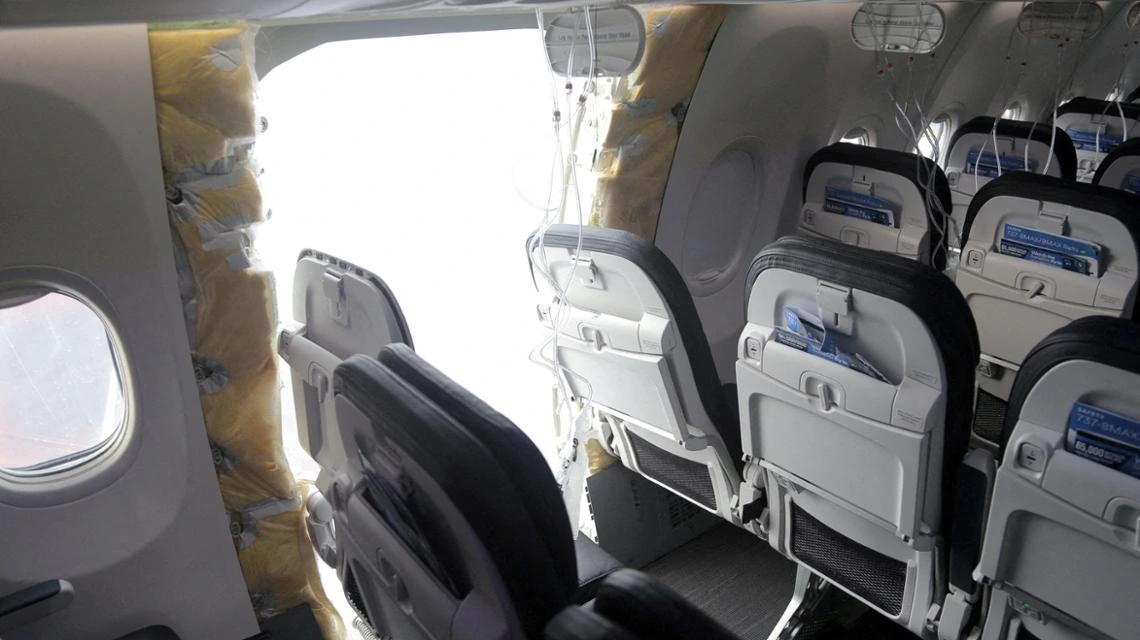
On 5 January 2024 a fuselage panel on a Boeing 737 MAX 9 operated by Alaska Airlines blew out in flight, causing rapid decompression. The incident refocused attention on the quality of Boeing’s production and came after years already marked by the consequences of the two 737 MAX disasters of 2018 and 2019, in which a total of 346 people died.
In 2021 Boeing had reached a deferred prosecution agreement worth more than $2.5 billion with the US Department of Justice. In May 2024 the DOJ informed the court that the company had breached certain obligations under the agreement, including those relating to its compliance programme and fraud prevention. The timeline of the proceedings is published by the Department of Justice.
The legal proceedings continued into 2025. On 29 May Boeing and the DOJ concluded a non-prosecution agreement; in November the court dismissed the charge. The agreement entailed further commitments of $1.14 billion, covering penalties, compensation for the victims’ families and investment in compliance.
According to the Department of Transportation’s Office of Inspector General, the sum will be split as follows: $243.6 million for the fine, $444.5 million for the victims’ families fund and $455 million for compliance.
Clearly, the point that concerns us here goes beyond the outcome of the proceedings. After the Alaska Airlines incident, the FAA stepped up the presence of inspectors at the plants, halting the expansion of 737 MAX production and launching more thorough audits of quality processes. In 2024 the regulator spoke of the need to change the way Boeing managed quality and safety culture. A point of no return.
Boeing shows how costly a problem can become when technical information, production pressures and control systems fail to converge in time. The single incident attracts attention; the hardest part for those who govern the company is recognising the trajectory much earlier.
Astronomer: when a personal matter becomes corporate reputation
In July 2025 Andy Byron, then CEO of the software company Astronomer, was caught on the big screen at a Coldplay concert in Foxborough alongside Chief People Officer Kristin Cabot. The video went viral within hours and placed a company known mainly in the data sector at the centre of a global conversation that had little to do with its product.
Astronomer placed Byron on leave and the board opened a formal investigation. Shortly afterwards the CEO resigned, while co-founder Pete DeJoy took on the role on an interim basis (Associated Press).

The University of Florida used the Astronomer case precisely to explain why a CEO’s personal conduct can have very rapid consequences. When the fact is visible, the leader’s role is known and the board can directly verify what happened: and so the time to decide becomes shorter.
For a company, the delicate point comes when the leader’s reputation starts to affect that of the organisation. At Bliss we have already examined the relationship between the public exposure of top leadership and corporate reputation in our analysis of CEO Activism. In the Astronomer case the connection formed almost instantly, amplified by virality and by how easily the people involved were identified online.
After all, it was hard not to be noticed at a moment like that…
Nestlé: when the code of conduct reaches all the way to the CEO
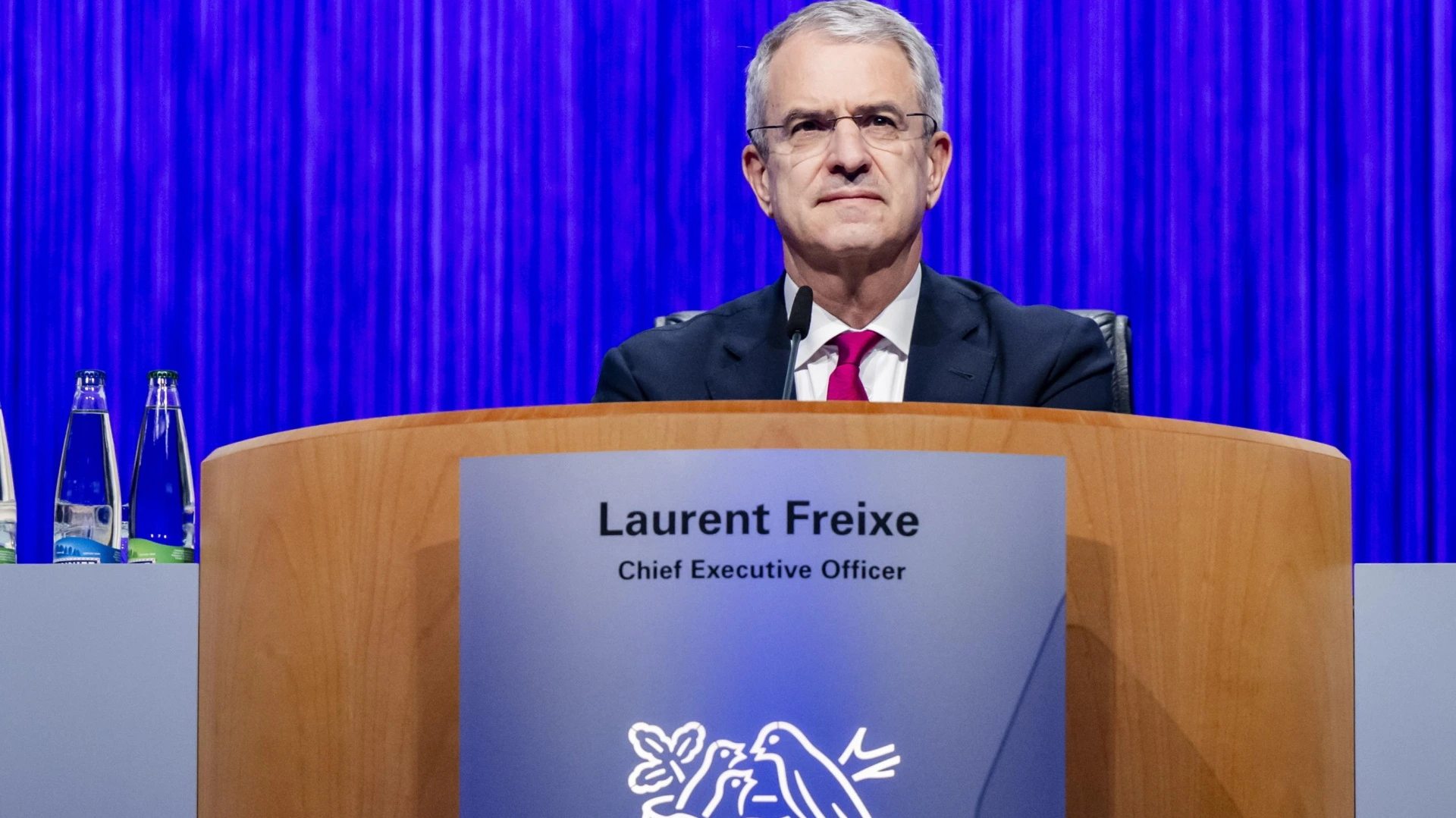
On 1 September 2025 Nestlé removed CEO Laurent Freixe with immediate effect, around a year after he took office. An internal investigation had established an undisclosed romantic relationship with a direct subordinate, deemed a breach of the group’s code of conduct.
The company explained that the investigation had been overseen by Chairman Paul Bulcke and Lead Independent Director Pablo Isla, with the support of external advisers. In the same announcement Nestlé appointed Philipp Navratil as its new CEO (if you would like more information on the case, Nestlé’s official press release sets out very clearly the process the board followed).
The same year, other major companies dealt with cases of personal conduct or conflicts of interest at the top. In March Kroger announced the resignation of Rodney McMullen following a board investigation into his personal conduct, which was found to be inconsistent with the company’s ethics policy. In May Kohl’s dismissed Ashley Buchanan for cause after an investigation overseen by the Audit Committee uncovered vendor transactions linked to undisclosed conflicts of interest.
The official statements from Kroger and Kohl’s show how much the handling of such cases depends on clear policies, independent investigations and defined responsibilities.
Why some problems reach the board before others
Taken together, these cases reveal a difference in speed. A personal affair can give the board a specific fact to verify and a responsibility that is easier to assign. Problems that grow within the organisation, by contrast, require connecting information from different functions, understanding how it has changed over time and recognising when a signal deserves to be escalated.
This is where the University of Florida finding becomes interesting. Companies have increasingly sophisticated procedures for reacting when a breach is evident; the harder part remains building a culture in which uncomfortable signals reach the top early enough to still be manageable.
A recurring quality problem, internal reports that trigger no investigation, information that reaches the board already filtered, or controls sitting too close to the functions they are meant to assess may seem like separate issues. By the time they start telling the same story, the cost of responding is already much higher.
The issue also concerns the economic value of reputation. In an in-depth piece on Financial Reputation we have already seen how strongly trust, credibility and perceptions of governance can influence the way investors and stakeholders read a company. Scandals make this relationship suddenly visible.
Reputation is built before the crisis
When a case becomes public, communication can contain part of the damage and clarify the company’s position. The quality of the response, however, depends on what was already in place: credible whistleblowing channels, people authorised to investigate, clear responsibilities and a board that receives enough information to act.
After the 737 MAX 9 incident, the FAA stepped up precisely its level of presence and oversight over Boeing’s production. Nestlé handled its case through an investigation overseen at the highest levels of the board. Astronomer swiftly launched a formal investigation and appointed an interim CEO. These are very different responses, united by the need to quickly reconstruct facts, responsibilities and room for decision.
For a CEO and a board of directors, the most useful lesson is therefore a simple one: reputation is rarely ruined at the moment the news breaks. That moment simply makes visible something the organisation should have been able to know about much, much earlier.
The quality of a company’s governance also shows in how many problems it manages to bring to the top while they are still invisible.
And therefore, still solvable.
Domande frequenti
Why do some scandals lead to a CEO’s immediate removal?
Much depends on the ability to verify the facts quickly and assign responsibility. Research led by Aaron Hill found that, in the sample analysed, CEOs were around five times more likely to be removed for personal misconduct than for financial fraud occurring during their tenure. When the problem involves different processes and people, the board needs more time to reconstruct what happened.
How can a board spot a reputational problem earlier?
What is needed are credible whistleblowing channels, clearly defined oversight responsibilities and reporting that allows uncomfortable information to reach the top. How often reviews take place matters less than the quality of the information: a board can receive many reports and still spot a problem late if the relevant data remain scattered or get filtered.
When does a CEO’s personal behaviour become a company matter?
The threshold is crossed when the conduct creates conflicts of interest, breaches internal policies, involves people within the organisation or significantly alters the trust of employees, customers, investors or other stakeholders. The Nestlé, Kroger, Kohl’s and Astronomer cases show different routes by which the board may be called upon to act.
How do you manage a reputational crisis before it becomes unmanageable?
Effective management begins before any public communication. In the first few hours, what is needed is a reliable reconstruction of the facts, clear decision-making responsibilities, a direct line to the CEO and the board, and predefined criteria for establishing who may speak, what information may be disclosed and which stakeholders must be engaged first. This is the principle behind the management of Reputation Risk at Bliss: preparing scenarios, responsibilities and protocols before the organisation is forced to decide under pressure. A crisis becomes far harder to govern when the board must simultaneously understand what has happened, establish who decides and build its response from scratch.
Fonti e riferimenti
- University of Florida, CEOs 5 times more likely to survive fraud than a personal scandal
- U.S. Department of Justice, United States v. The Boeing Company
- U.S. Department of Transportation, Office of Inspector General, Boeing Agrees To Pay an Additional $1.14 Billion
- Federal Aviation Administration, Updates on Boeing 737-9 MAX Aircraft
- Alex Veiga, Associated Press, Tech company CEO resigns after controversy over video captured at Coldplay concert
- Nestlé, Board appoints Philipp Navratil as CEO following the departure of Laurent Freixe
- The Kroger Co., Kroger Announces Resignation of CEO Rodney McMullen
- Kohl’s, Kohl's Announces CEO Transition Process