


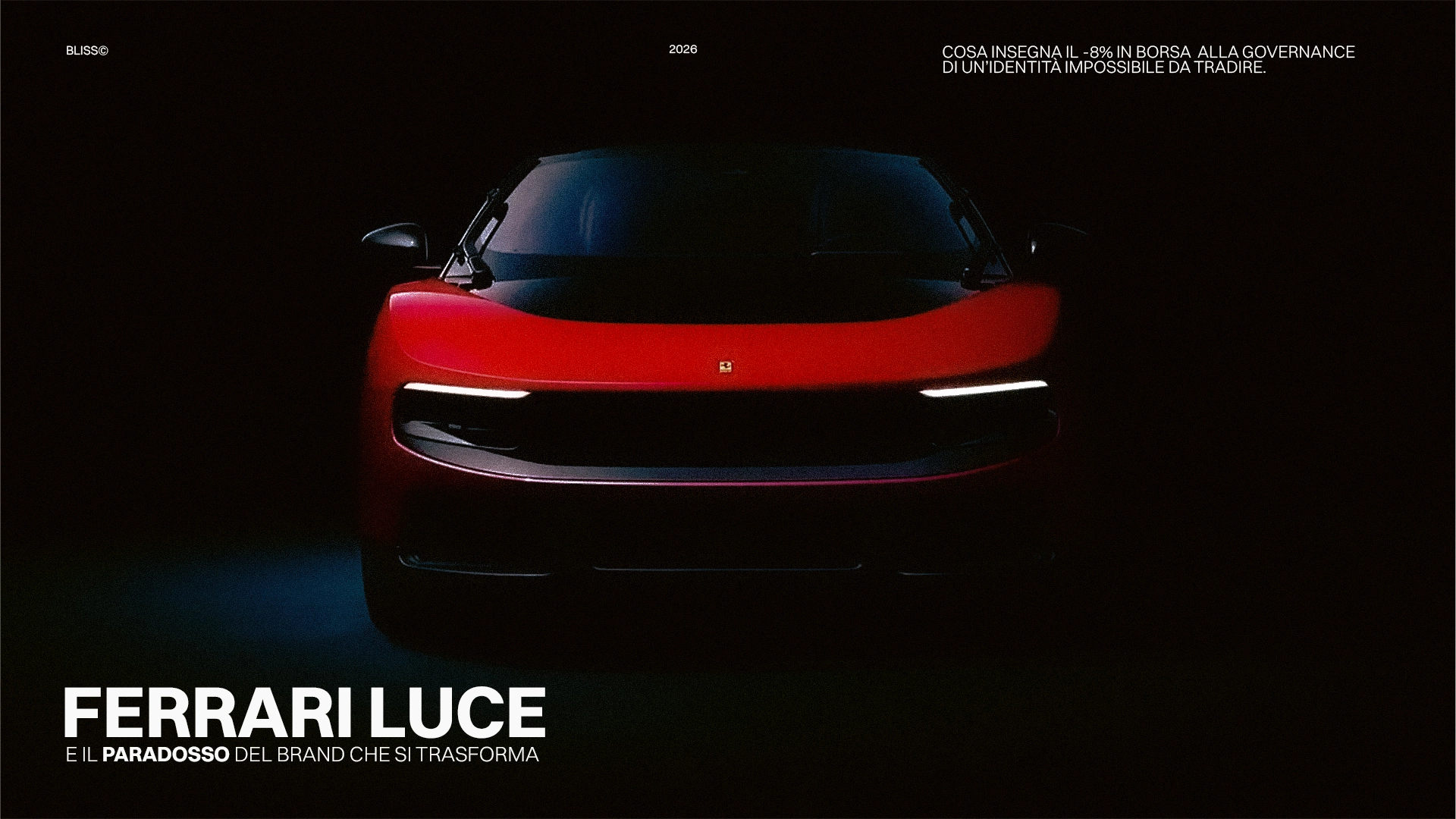
Cosa insegna il -8% in borsa alla governance di un'identità impossibile da tradire
On 25 May 2026 Ferrari unveiled the Luce at Calatrava’s Vela in Rome. The President of the Republic was also in attendance.
The two Formula 1 team drivers unveiled the car in front of the cameras. The international press had been summoned. The investment in communication matched the historic moment. And yet the next morning, the stock opened on Piazza Affari down 8%. It touched an intraday low of 7.8%, taking the share price to its lowest level in two years. In twelve months, the stock had already lost 30% of its value.
There is only one way to read this sequence clearly. The problem is not the Luce. The problem is the question the Luce has forced the market to ask out loud.
What is Ferrari when it stops doing what Ferrari exists to do?
The facts, without simplification
The Ferrari Luce is, technically, an extraordinary project.
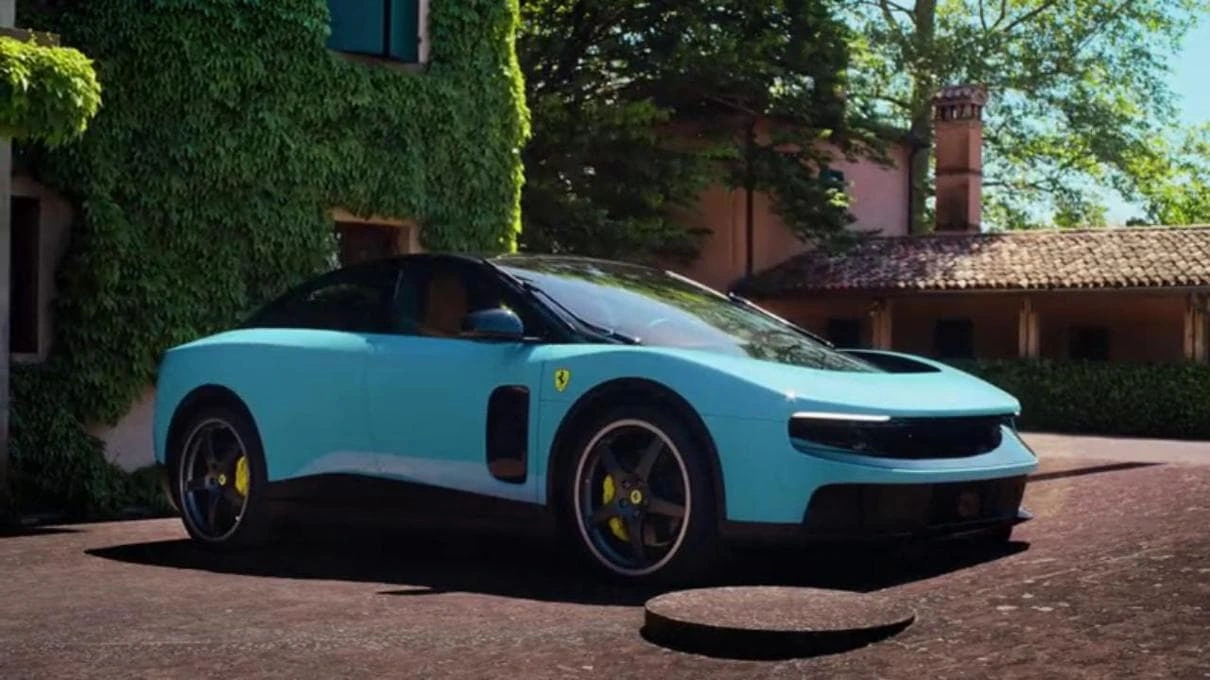
Four electric motors delivering 1,050 CV in total. Nought to a hundred in 2.5 seconds. Stated range of over 530 km. Proprietary 880-volt platform built from scratch in a dedicated facility, the E-Building in Maranello. 122 kWh battery. Four doors, five genuine seats, 597-litre boot.
It is the first five-seat Ferrari in the brand’s history. It is the first Ferrari without a central tunnel. The first, too, without a combustion engine. The first designed in collaboration with LoveFrom, the creative collective founded by Jony Ive and Marc Newson, the designers of the iPhone.
The list price starts at 550,000 euros. First deliveries are expected at the end of 2026.
The market responded coolly, then, not because the product was disappointing, but because the product was exactly what had been announced. And it was, by definition, something Ferrari had never done.
The context the launch narrative left out
Be careful, though: yesterday’s fall did not begin yesterday. When Ferrari presented its strategic plan to 2030, cutting its electric target to 20% of the range from the previous 40%, the stock had already lost over 14% in a single session. The market had judged that plan too cautious relative to the expectations built up in previous years. From the highs above 480 euros per share reached in the first half of 2025, the decline was already under way.
Then the geopolitical crisis in the Middle East suspended some deliveries in a region worth 5% of revenue. Brokers therefore revised their 2026 delivery estimates downwards, anticipating margin dilution linked to the amortisation of the investment in the Luce.
Today’s -8% is the crystallisation of a structural uncertainty that has lasted for months. The Luce launch merely made it visible.
The question of identity
Ferrari is not a car company. It is a system of meaning built over seventy years around three inseparable elements. The sound of the engine. Driving as a primary physical experience. Exclusivity as a condition of access. These three elements are not merely product attributes. They are the structure of the brand’s value.
The Luce confronts all three head-on.
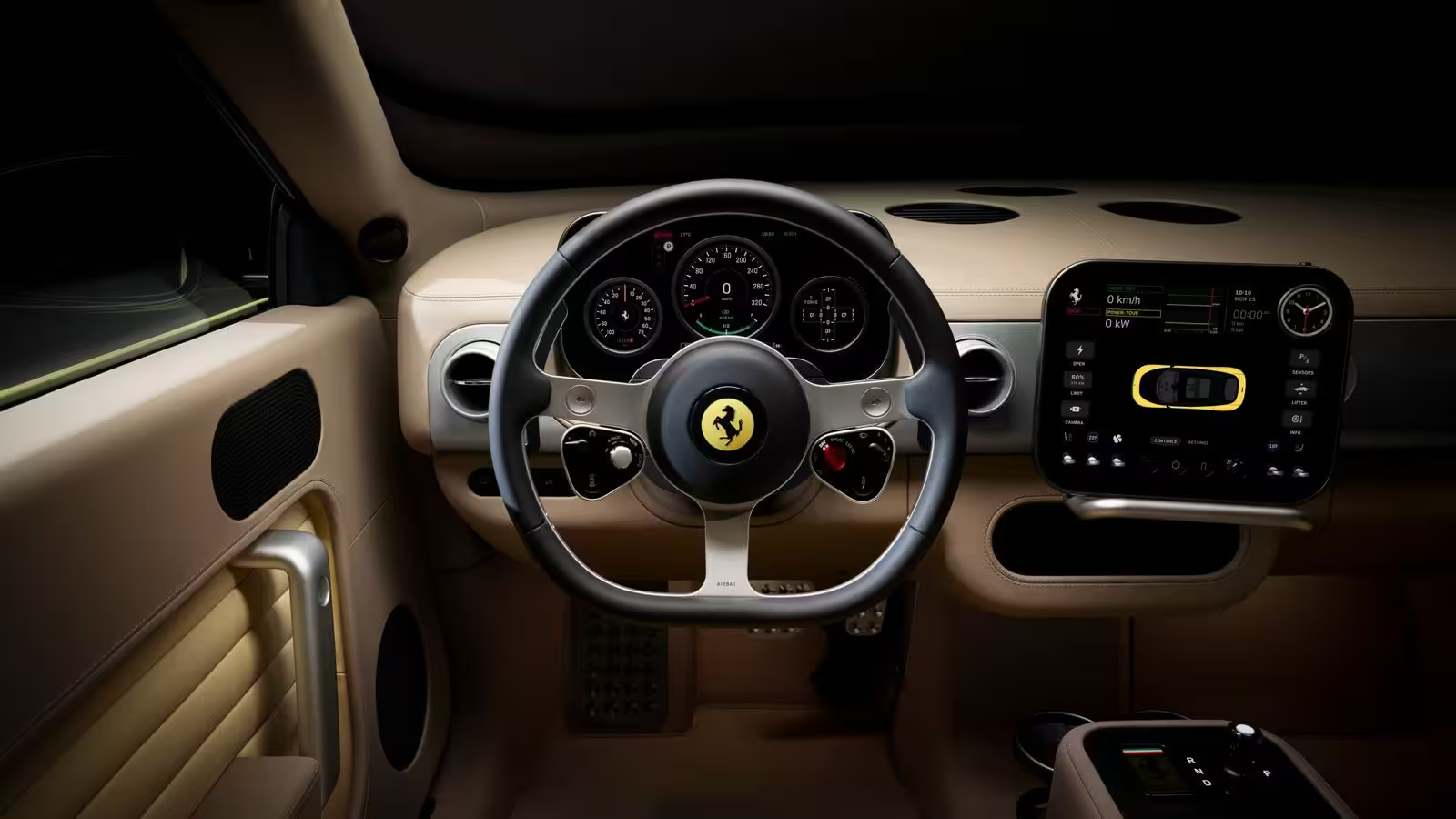
The sound has been replaced by a proprietary system that amplifies mechanical vibrations and turns them into a simulated sound experience. Ferrari describes it as “authentic and functional to driving”. The market reads it as proof that what was natural has become artificial.
Driving on four motors with sophisticated torque vectoring and active suspension that updates 200 times a second is a different experience from driving a 296 GTB or an SF90. Not necessarily inferior. But different. In a brand built on the specificity of the driving experience, “different” is a word the market prices cautiously.
Finally, on exclusivity: the Luce is neither a special series nor a limited edition. It is a series-production model, with orders open at launch. Five seats, four doors, a 597-litre boot. It is a luxury saloon in shooting brake form. It is, for the first time in the history of the Prancing Horse, a car that can be bought with a standard waiting list.
Each of these elements, taken individually, is defensible. Together, they amount to a redefinition of what a Ferrari means so profound that the market chose not to cheer.
The comparison that matters
The timing of the launch carries an irony that analysts were quick to point out. As Ferrari unveils its first electric car, Porsche is scaling back investment in electrification after the Taycan showed signs of weaker-than-expected demand in premium markets. Lamborghini has announced a review of its electric plans. Aston Martin has postponed its targets.
Ferrari is choosing to accelerate where its premium competitors are braking. This choice can be read as long-term vision. It can, however, also be read as exposure to a risk the sector is collectively reassessing.
The stock market chose the second reading.
What worked in Ferrari’s communication, and what did not
The Luce launch was staged as a state occasion. The venue, Calatrava’s Vela in Rome, is a building designed by one of the world’s most recognisable architects. The car was shown to President Mattarella at the Quirinale the day before the public launch. Leclerc and Hamilton as presenters. Jony Ive, the designer who defined the aesthetics of the digital age, as creative signature.
Every element of this communication construct conveys a precise message. Ferrari is not launching a car. It is declaring a paradigm shift. Choosing the capital, not Maranello, not Milan, is the choice of a company that wants to place its product in a context broader than its own industry.
This construct is sound in both logic and execution. The problem is not the event. It lies in the statements that accompanied it.

The words that fuelled the uncertainty
CEO Benedetto Vigna spoke of the “courage to dare” and of “our unprecedented vision of electrification”. Chairman John Elkann cited an “unconventional multidisciplinary point of view” and a model that “carries into the future the values that make Ferrari instantly recognisable”.
These statements share one characteristic. They describe the process, not the result. They speak of the courage to act, not of what has been done. They shift the focus to intention, not outcome.
At a moment of radical discontinuity for a brand, this is precisely the communication stance that generates the most uncertainty. Those who invest in Ferrari do not need reassurance about management’s courage. They need to understand how the brand’s identity survives the transformation.
The answer to this question was not in the press release.
What was missing from the launch narrative
A launch of this scale required an explicit answer to a question the market had already been asking for months. The question was not technical. It was not about horsepower, range or top speed. The question was one of identity.
What remains of Ferrari in a car without the sound of the engine? Where is the line between innovation that protects identity and innovation that erodes it? What value system does the Luce carry into the future, and how does it relate to the one that made Ferrari the brand it is?
Ferrari responded with technical data and statements of principle. It did not respond with a coherent, verifiable identity narrative. It described the product. It did not govern the meaning of the product.
This distinction, between describing and governing, is the crux of the matter.
Brand governance as structure. The lesson for decision-makers
The Ferrari Luce case is not a case of bad marketing. It is a case of incomplete brand governance at a moment of radical discontinuity.
There is a structural difference between managing the communication of a product and governing the narrative of a brand in transformation. The first is an execution task. The second is a strategic task that requires an explicit answer to questions the market asks before the product even exists.
A brand that has built value for seventy years on a specific, precise identity system cannot cross a discontinuity of this scale with ordinary communication tools. The press conference, the video with the drivers, the prestigious venue. These tools manage visibility. They do not manage meaning.
Managing meaning requires work that begins years before the launch. It requires defining precisely which elements of the identity are foundations and which are attributes. The foundations are not to be touched. The attributes evolve. Confusing the two levels is the most common and most costly mistake a positional brand can make.
What Ferrari’s foundations really are
Ferrari’s foundations are not the combustion engine. They are not the sound of a naturally aspirated engine. They are not two doors. These are attributes that have embodied the foundations for decades, but they are not the foundations themselves.
The foundations are technical superiority as a proven fact, not as a promise. They are exclusivity built on rarity, not on price. They are driving as a total, unrepeatable sensory experience. They are the consistency between every design decision and a value system that is recognisable without needing to be explained.
The Luce can honour these foundations with an electric motor. Technical superiority is verifiable, with 1.050 CV and a proprietary platform built from scratch. Exclusivity is defensible, with a price of 550.000 euro and volumes necessarily limited by the product’s complexity. The driving experience is an open question that only driving the car can answer.
But the work of brand governance lies in making this continuity explicit before the market calls it into question. Not after.
Owning the narrative at moments of discontinuity
Every brand going through a profound transformation faces the same risk. The risk is not that the transformation is wrong. The risk is that the market reads the transformation as abandonment before it has the tools to read it as evolution.
The window in which this distinction is established is short. It opens in the months before the launch and closes in the months after it. Within that window, the narrative the brand builds determines whether the market, the audience and investors read the change as strength or as fragility.
Ferrari invested that window in the visibility of the launch. Not in the solidity of its identity narrative. The result is a historic moment communicated with flawless execution and governed with insufficient strategic depth.
The -8% on the stock market is the cost of that distinction.
The Luce of the future
The Ferrari Luce is arguably one of the most important automotive products of recent decades, for the significance of what it represents.
It proves that it is possible to build a 1,050 CV electric car with the range of a luxury saloon, a radically new design and build quality on a par with the finest products Maranello has ever made. It proves that the electric transition does not necessarily require sacrificing technical excellence.
But it carries the weight of everything it has yet to prove. Whether the driving experience stands up to expectations built over seventy years. Whether the premium market is ready to associate the Prancing Horse with a four-door saloon with no engine sound. Whether the identity narrative Ferrari builds over the coming years will match the courage of the project.
The -8% on the stock market is not a sentence. It is a question, and the answer can only be found in Ferrari’s ability to govern its identity with the same precision with which, for years, it has governed its engineering.
New Connections (FAQ)
Does Ferrari’s share price fall reflect a judgement on the quality of the Luce, or an assessment of the brand’s identity risk?
Mainly the latter. The market has not seen the Luce, has not driven it and has no data on orders. It assessed the symbolic and strategic significance of the move against the backdrop of a stock that had already lost 30% in twelve months on unmet expectations. The -8% is not a verdict on the product’s technical quality. It is the quantification of the risk premium the market attaches to an identity transformation of this scale, in the absence of a narrative that governs its meaning convincingly.
Did Ferrari make a strategic mistake by launching an electric car while premium competitors are slowing down, or is it a long-term leadership choice?
Both readings are defensible, and the answer will depend on variables that cannot yet be determined. If demand for electric vehicles in the ultra-premium segment consolidates over the next three years, Ferrari will have occupied territory its competitors left open. If demand stagnates or retreats, Ferrari will find itself with significant investments in a segment that has not reached critical mass. The decisive variable is not the quality of the Luce. It is the speed at which the global premium market agrees to redefine what a luxury car means without the combustion engine.
How do you build the identity narrative of a brand in transformation without lapsing into defensive communication or unverifiable promises?
Through three precise moves. The first is an explicit distinction between what remains and what changes, with the ability to name both without ambiguity. The second is concrete proof, not declared principle. You do not say Ferrari remains Ferrari because the brand says so. You demonstrate it through every design choice, every material, every compromise refused, every technical first achieved. The third is consistency over time. The identity narrative of a brand in transformation is built over years, not in a single launch. Every subsequent touchpoint must confirm the continuity the launch declared.