




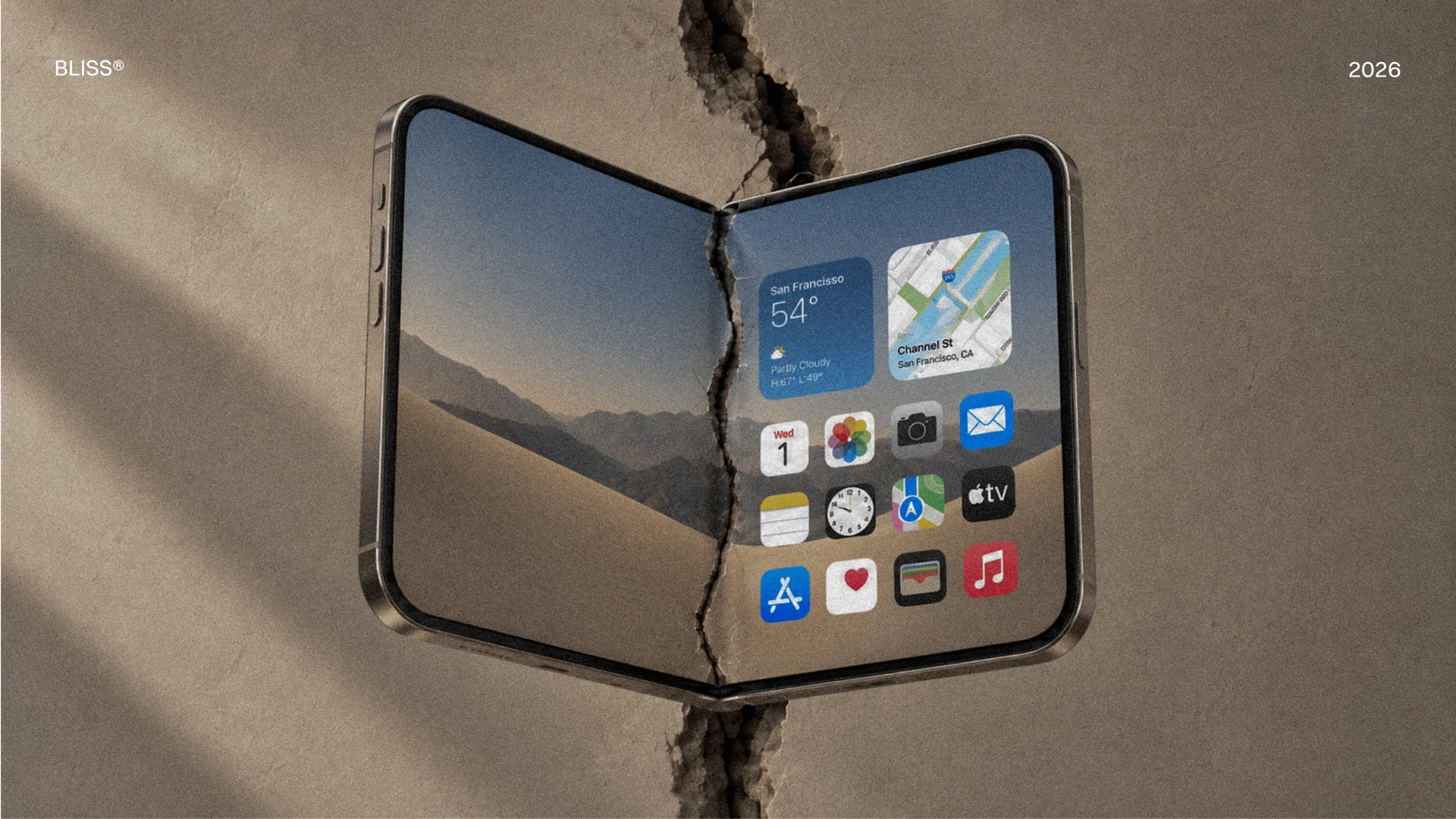
For years Samsung worked on generation after generation of Galaxy Z Fold. Meanwhile, Huawei secured a dominant position in China. Still other manufacturers experimented with formats, hinges, proportions and different ways of using a screen that can open. A clear direction, and one that Apple had, until now, always carefully chosen to avoid. Then came 9 September 2026.
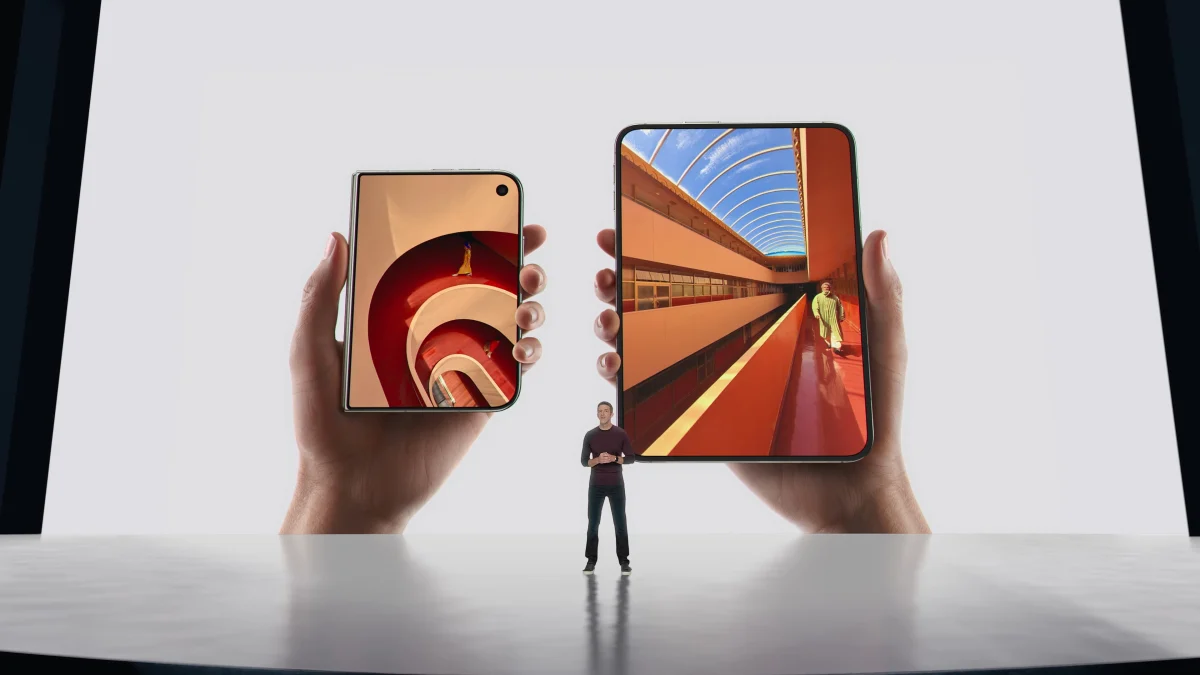
At the end of the first keynote led by new CEO John Ternus came the iPhone Duo, the first foldable smartphone in Apple’s history. A 5.4-inch external display, a 7.6-inch internal screen, the A20 Pro chip, iOS 27 redesigned for the new format and a starting price of $1,999 in the United States (€2,369 in Italy). An unexpected turn, given Apple’s usual strategy. The product enters a category that already exists, in the wake of more established competitors who have had years to experiment. But perhaps, by the end of this story, the Duo case will lead us to ask how advantageous it really is to start first, or whether it is not in fact more important, quite simply, to finish first.
Apple long ago turned the product launch into a market-building moment (a mechanism we also analysed in our guide to Launch Strategy). With the iPhone Duo, however, the Day One staging matters less than what happens in the coming months: how many users will find the format useful, and how many developers will start designing around it?
The foldable market has always been marginal. Now that Apple has entered the field, it will become central.
The foldable market already exists
First, a clarification. Yes, as we have already mentioned (and as is well known), Samsung has been selling foldable smartphones since 2019 and today holds a central position in the category. According to Counterpoint, cited by Reuters, it has around 40% of the global foldables market. In China, Huawei’s lead is even more pronounced: IDC attributes 79.4% of units sold in the second quarter of 2026 to the group.
Apple is therefore entering difficult territory. Large multinationals have invested in the category and tested on their own products how much a hinge must withstand, which compromises users will accept, how the interface behaves across two surfaces and which price bracket demand is willing to tolerate.
Many of the Duo’s features will also be familiar to anyone who has followed Android for years: multitasking, modes tied to screen position, stylus support and the book format already belong to the category. This tells us one thing: Apple’s wait was probably strategic. It let competitors absorb the costs of experimentation, and entered only once the market was “mature”. Cupertino has had the privilege of observing and studying everything. Now, however, it must also prove that it observed well.
How the market reacted
When news of the Duo’s release broke, the market went wild. Samsung responded during the keynote with a series of sarcastic messages, from “So far, so same” to “Let us know when you’re done reheating our leftovers”, implicitly laying claim to the seven years it has spent developing foldables (9to5Google).
Duolingo, true to form, did not miss the chance to point out the shared Duo name, turning the episode to its own narrative advantage (and Samsung joined the conversation again, claiming Apple had copied it too).
Heineken opted for an even simpler solution: a bent bottle cap and the claim of being “foldable since 1873”. Real-time marketing around the launch involved numerous brands, all able to recognise in the same detail – folding – an immediate cultural shortcut.
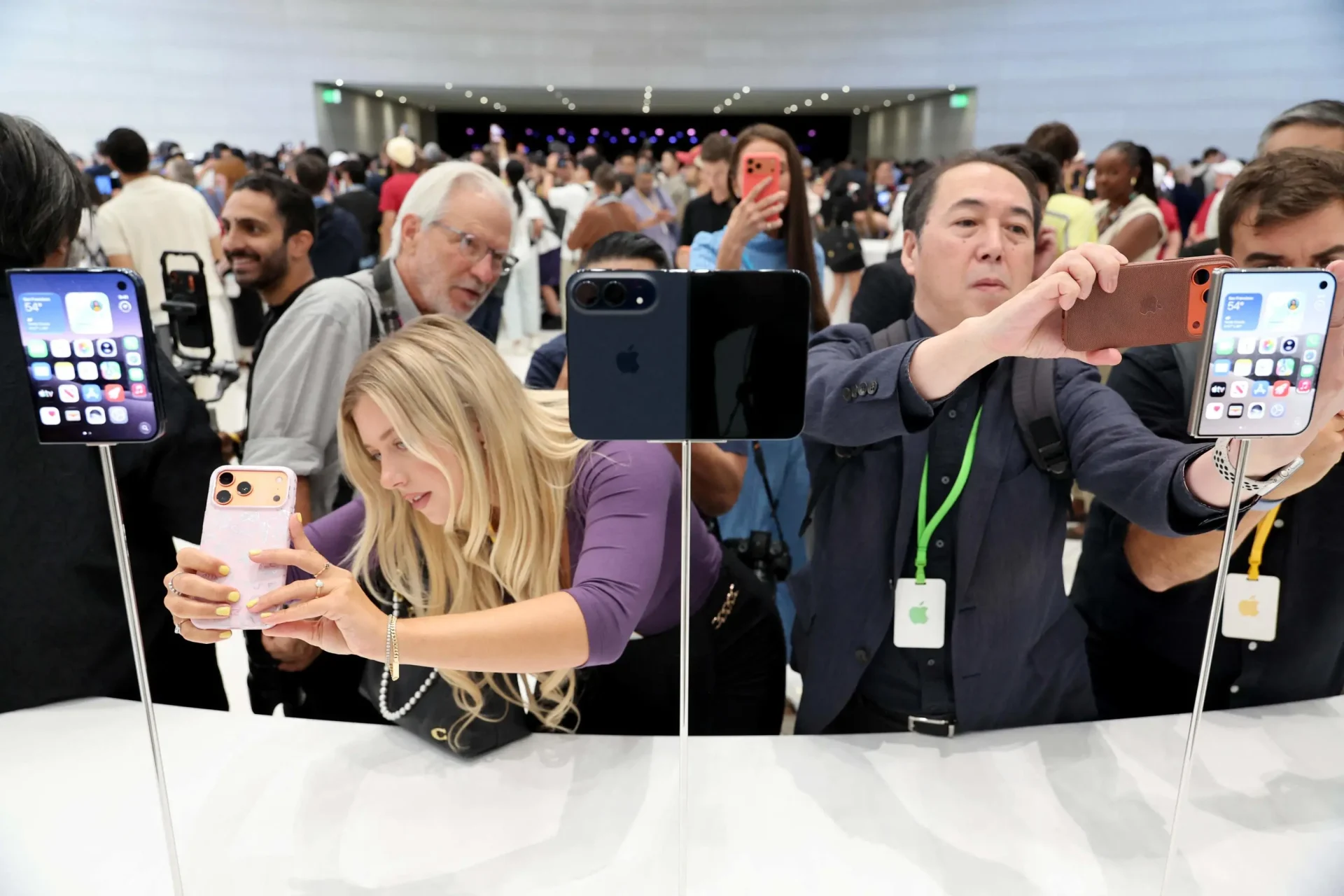
An irony that nonetheless reveals something interesting. None of this accompanied any Galaxy: within hours, the Duo became recognisable enough for other brands to use it as a language. And that, in itself, is already a victory. Even if what ultimately counts is the market in the most literal sense. On the day of the keynote, Apple shares closed down 0.28%. In the following session the reaction changed: on 10 September Apple rose 3.6%, while the S&P 500 fell 0.58%. A single day does not judge an industrial strategy, but it shows the launch was not read merely as an exercise in style.
John Ternus’s first real test
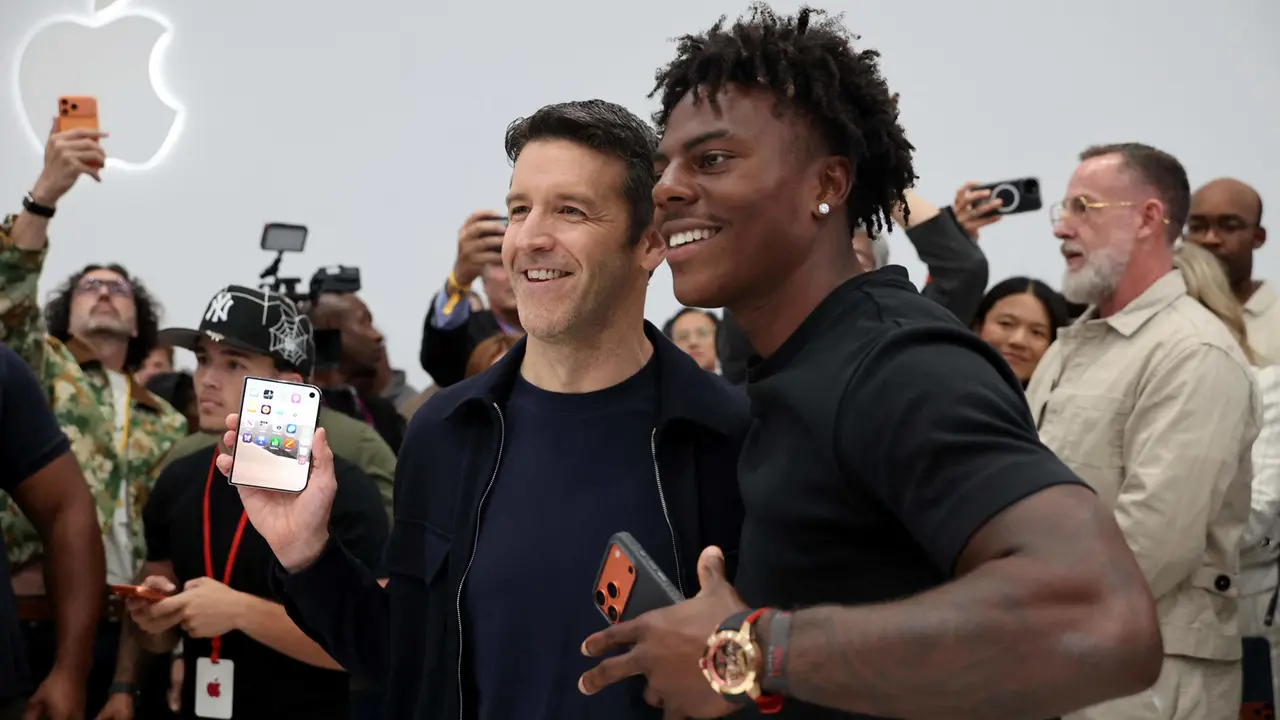
The Duo was not built in nine days, and crediting it to the new CEO would be wrong. Yet Ternus reaches the top after a long career in Apple hardware and debuts with Apple’s most radical shift in years. The format therefore fits the new leader’s profile particularly well: engineering, product and the ability to turn complex components into a simple experience.
The market’s positive reaction therefore earns the new CEO initial credit. Ternus inherits a vast ecosystem and a portfolio capable of funding experiments on this scale. His task will be to turn that optionality into a new product phase.
Has Apple fallen in line behind Samsung?
Now, though, let’s address the elephant in the room. On the hardware side, many of the Duo’s ideas already belong to the market. Samsung, Huawei and other manufacturers were first to introduce the book format, multitasking, multiple screen postures and years of hinge iterations.
The difference, then, lies mainly in the software. iOS 27 has been redesigned to change the layout of controls, orientation and app behaviour when the phone is opened, closed or tilted (The Verge). This is where the ecosystem comes into play. A foldable iPhone simultaneously involves iOS, the App Store, developers, services, accessories, Apple Pencil and millions of people already used to moving between iPhone, iPad and Mac. The product can therefore also influence what others build around it.
It is a dynamic Apple knows well: in our analysis of disruption cases, we observed how the advantage of the Apple ecosystem stems from the combination of hardware, software, services and platform. The Duo brings that same architecture to bear on a category that has so far grown without becoming mainstream.
Reuters showed apps such as Zoom, Slack and Netflix already adapted to the expanded experience. Apple has also provided APIs and components that reduce the work needed to adapt many apps. The official press release presents the Duo as a device for multitasking, content and AI. A further step towards the profound acceleration of digital integration.
The real challenge is expanding the category
Foldables remain a niche. Reuters, citing IDC, estimates that in 2026 they will account for less than 3% of smartphones sold worldwide and that their share will stay limited in 2027 too. Apple’s entry, however, could shift the balance. TrendForce estimates around 5 million iPhone Duo units in 2026 and a 24.8% share of the foldable market, enough to make Apple the category’s second-largest brand in its very first year.
Counterpoint is slightly more optimistic, projecting almost 6 million units by the end of the year. The differences between the estimates matter less than their shared direction: Apple can quickly win a significant share of a segment that, overall, remains small (though who knows for how much longer).
Price remains the obvious limit. In the United States the base model starts at $1,999 and the 2 TB configuration reaches $3,199. This narrows the initial audience, but it is not necessarily a bad strategy. That is because the Duo’s success will also be measured by what happens around it: how many apps change their interface, how many competitors adjust products and prices, how much shelf space foldables receive in stores and how many users start to see them as a normal choice.
Samsung spent seven years building the foldable market. Apple enters when that market already has established technologies, competitors and early behaviours. Now the interesting part begins: working out whether Cupertino has chosen to follow Samsung or has waited until the category was mature enough to give it a different shape.
Apple has folded the iPhone.
To win, it will have to make opening it feel normal.
Domande frequenti
Why did Apple wait so long before launching a foldable iPhone?
Apple enters after years of category development by Samsung, Huawei and other manufacturers. This has allowed it to observe technological limits, user behaviour and formats already tested. The advantage of arriving late exists only if the company can translate that learning into an experience sufficiently better to justify the price and the switch in format.
Can iPhone Duo overtake Samsung in the foldable smartphone market?
Early estimates point to very rapid growth: TrendForce forecasts a 24.8% share in 2026, and Counterpoint around a quarter of the market with almost 6 million units. Samsung, however, retains experience, range and leadership. The decisive factor will be Apple's ability to expand the market beyond its current niche.
Why could the Apple ecosystem be decisive for the iPhone Duo?
Because the format involves hardware, iOS, the App Store, developers, services and devices already present in users' lives. If the installed base grows enough, developers will have an economic incentive to adapt interfaces and features to the format, in turn increasing the product's value.
Why does Bliss view the iPhone Duo launch as a case of brand strategy?
Because the game goes beyond technical specifications. Apple is entering a category created by others and trying to redefine its expectations, reference price, cultural language and use cases through its ecosystem, distribution and brand strength. It is a useful case for understanding how positioning, product and market influence one another.
Fonti e riferimenti
- Apple, Apple presenta iPhone Duo
- Reuters, Five takeaways from Apple’s biggest product showcase of the year
- Kenrick Cai, Stephen Nellis, Reuters, Apple’s foldable iPhone poses a $1,999 question: Who is it for?
- Noel Randewich, Niket Nishant, Reuters, S&P 500 ends down as Treasury yields rise and traders fret about inflation
- IDC, iPhone Event: Duo, Pros, Watches, and AirPods Impress, But Apple’s Most Surprising Announcement was Pricing
- TrendForce, iPhone Duo Expected to Capture Nearly 25% of Foldable Smartphone Market in 2026
- Ben Schoon, 9to5Google, Samsung reacts to Apple’s foldable iPhone Duo; reheating our leftovers
- The Verge, Apple completely revamped iOS 27’s controls and apps for the iPhone Duo
- Maxime Delmas, Creapills, Les meilleures réactions de marques à la sortie de l’iPhone Duo
- Bliss Agency, Launch Strategy (Day One): come pianificare il lancio di un brand
- Bliss Agency, Dove tutti hanno guardato il crollo, noi abbiamo visto il confine