




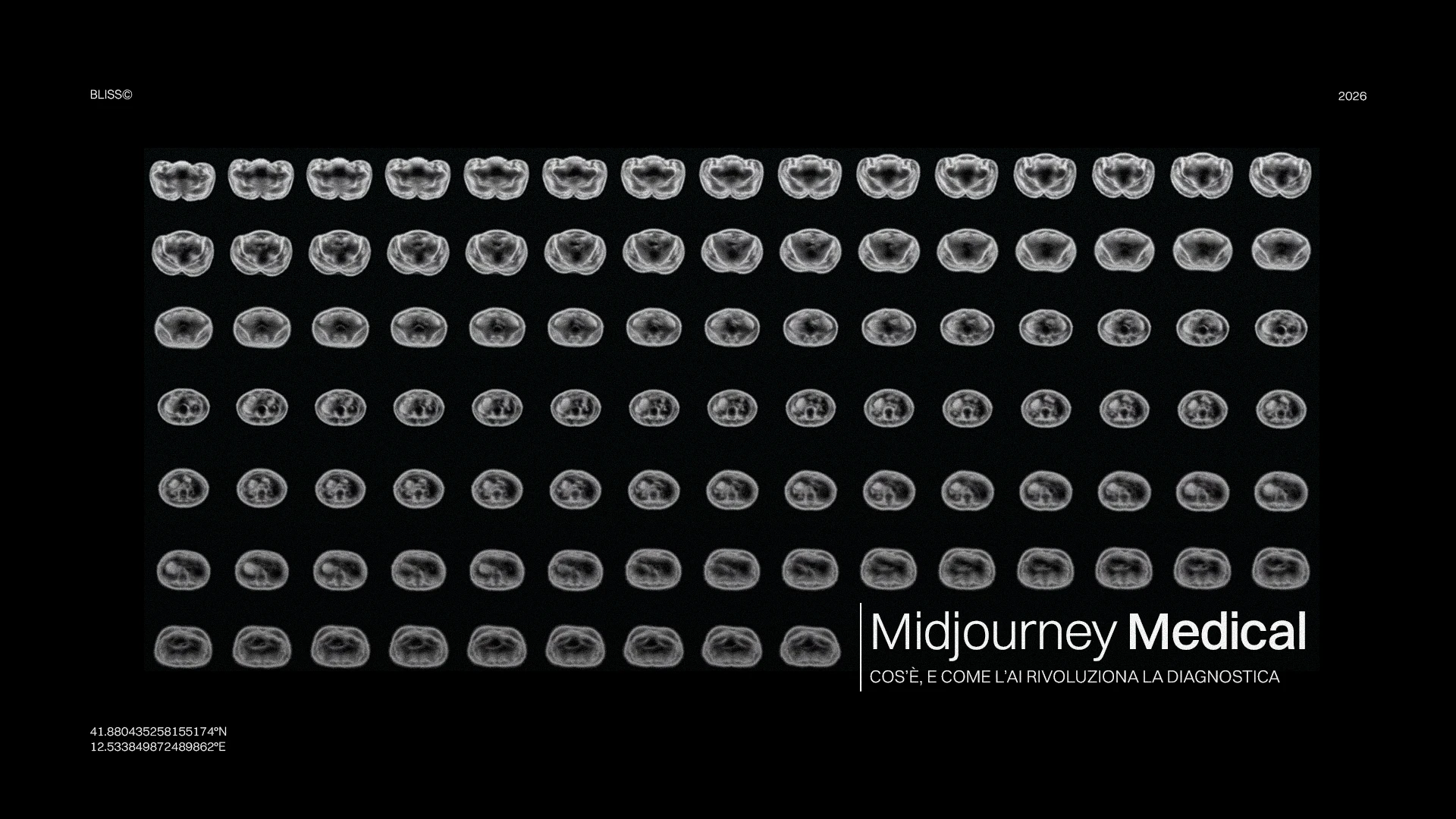
Il 17 giugno 2026 l’azienda più nota per generare immagini con l’AI ha annunciato un dispositivo a ultrasuoni per la scansione del corpo umano.
Il salto sembra impossibile, ma non lo è, se si guarda a cosa Midjourney vende davvero.
On 17 June 2026, on stage at an event in San Francisco, founder and CEO David Holz announced Midjourney Medical, a new division of the lab that became famous for its image generators. Its first hardware product is called Midjourney Scanner: an ultrasound device capable of producing a detailed map of the entire body in around sixty seconds, without radiation, by immersing the patient in a tank of water.
The news stunned the tech sector, and rightly so.
Midjourney had never made a physical object, let alone a medical device. The leap from generating pixels to diagnostic imaging seems as arbitrary as a record label announcing it has started building aircraft. And yet the lesson it offers is surgical, and it shows that the real asset is not the product you sell but the expertise that allowed you to build it.
What the scanner promises
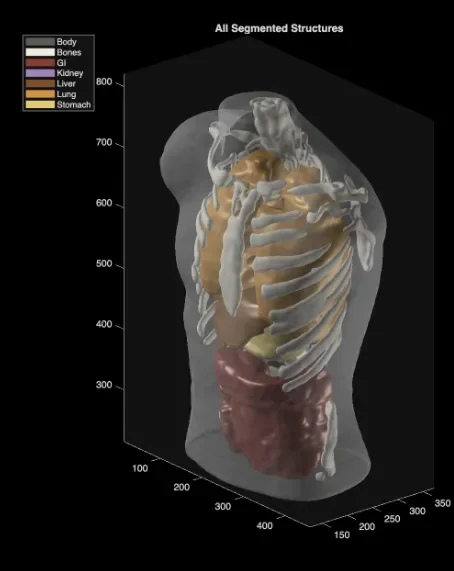
The Midjourney Scanner uses tens of thousands of ultrasound transducers immersed in water to produce, in about a minute, hundreds of three-dimensional cross-sections of the body: muscle, fat, bone, organs. The system generates several gigabytes of raw data per second, processed on-site with massive computing power. Compared with a traditional MRI scan, which takes 30-60 minutes in a noisy, claustrophobic environment, the promise is an experience comparable to a spa.
The expansion plan is equally ambitious: the first location, the Midjourney Spa in San Francisco, will open by the end of 2027. The goal is to reach 50,000 scanners worldwide by 2031, so as to reach one billion scans a month. All of it funded not by venture capital but by revenue from the image-generation product. Midjourney, in fact, has never had institutional investors, and is sustained by its own community of subscribers.

Butterfly Network and Midjourney
The core technology of the Midjourney Scanner was not built from scratch by Midjourney. It rests on a co-development and exclusive licensing agreement signed in November 2025 with Butterfly Network, the American company that made “on-chip” ultrasound famous, that is, transducers fabricated on silicon using the semiconductor industry’s standard processes.
The current scanner prototype incorporates 40 Butterfly Ultrasound-on-Chip imaging modules per system, as Butterfly itself confirmed in a statement published the day after the announcement. The physics of ultrasound, in other words, comes from a specialist partner that has been working on this technology for years.
Midjourney has not invented a new way of doing ultrasound.
It has taken an existing technology and built on it exactly what it does best: computing power, visual infrastructure, product design, and a brand able to make desirable an experience that until yesterday was seen as clinical and unpleasant.

What Midjourney sells
The most common misunderstanding when reading news like this is to think that a company sells the object it produces.
Midjourney does not sell ultrasound: the ultrasound belongs to Butterfly. Ultimately, Midjourney did not even sell “images” with its original product: anyone can generate images with dozens of competing tools, some of them free.
What Midjourney sells, in both cases, is a method. The expertise. The ability to take extreme computation, at enormous scale, and turn it into an experience people want to use. With image generators, that method produced a recognisable style and a community willing to pay a subscription. With the scanner, the same method is applied to an entirely different output: no longer a generated image, but a real map of the human body processed by petaflops of on-site computing.
The product changes. The expertise that makes it possible remains. And it is that expertise, not the specific product, that is the real asset the market is assessing when it reads this news.

A lesson in diversification
Organisations that remain tied to the category of their first product face a structural ceiling on growth: they can only improve that product, not move to where the market goes next.
Organisations that build their brand around a competence, a method, a specific way of solving problems, can instead apply that competence to entirely different categories while retaining the same perceived identity.
Apple does not sell computers: it sells an idea of design and experience that it has applied to phones, watches and headphones. Yamaha does not sell pianos: it sells a manufacturing philosophy that it has also applied to motorcycles. With this announcement, Midjourney is betting it can do the same: prove that its real asset was never “generating images with AI”, but a broader expertise in computational engineering and experience design, one that also applies to medical diagnostics.
Whether the bet pays off, the market will tell over the coming years. Not least because recent history is full of ambitious pivots that ended badly. But the question every organisation should ask itself when looking at this announcement is not whether the ultrasound will work, but whether its own brand is built around a product or around a competence that the product, today, simply represents.
New Connections (FAQ)
If the ultrasound technology belongs to Butterfly, what does Midjourney really bring to this partnership?
Three things that Butterfly alone would not have brought at the same scale: capital (Midjourney funds the project with revenue from its core product, with no need for investment rounds), computing infrastructure to process the volumes of data generated by each scan, and above all a brand capable of making a medical experience desirable by turning it into a spa-like format. Butterfly provides the physics. Midjourney provides the scale, the capital and the user experience.
Can any company enter a sector other than its own?
No. It works when the organisation has genuinely built a transferable expertise, not just a lucky product in a specific category. Midjourney has spent years investing in the computing infrastructure needed to generate high-quality images at scale: that same infrastructure, that same ability to process huge volumes of data quickly, is what makes the leap into medical imaging plausible. Without that pre-existing expertise, the leap would have been merely an announcement, not a working product.
What should an Italian SME learn from a case like this?
Not the specific leap into medical diagnostics, but the principle behind it: before planning expansion into a new category, it is worth asking what expertise your brand has truly built, as distinct from the current product that embodies it. A furniture manufacturer might discover that its real expertise is managing complex artisan supply chains, which also applies to other sectors. A communications agency might discover that its real asset is a method of brand governance, not the individual services it sells today. The product changes. The expertise that sustains it is what you build the next phase on.