


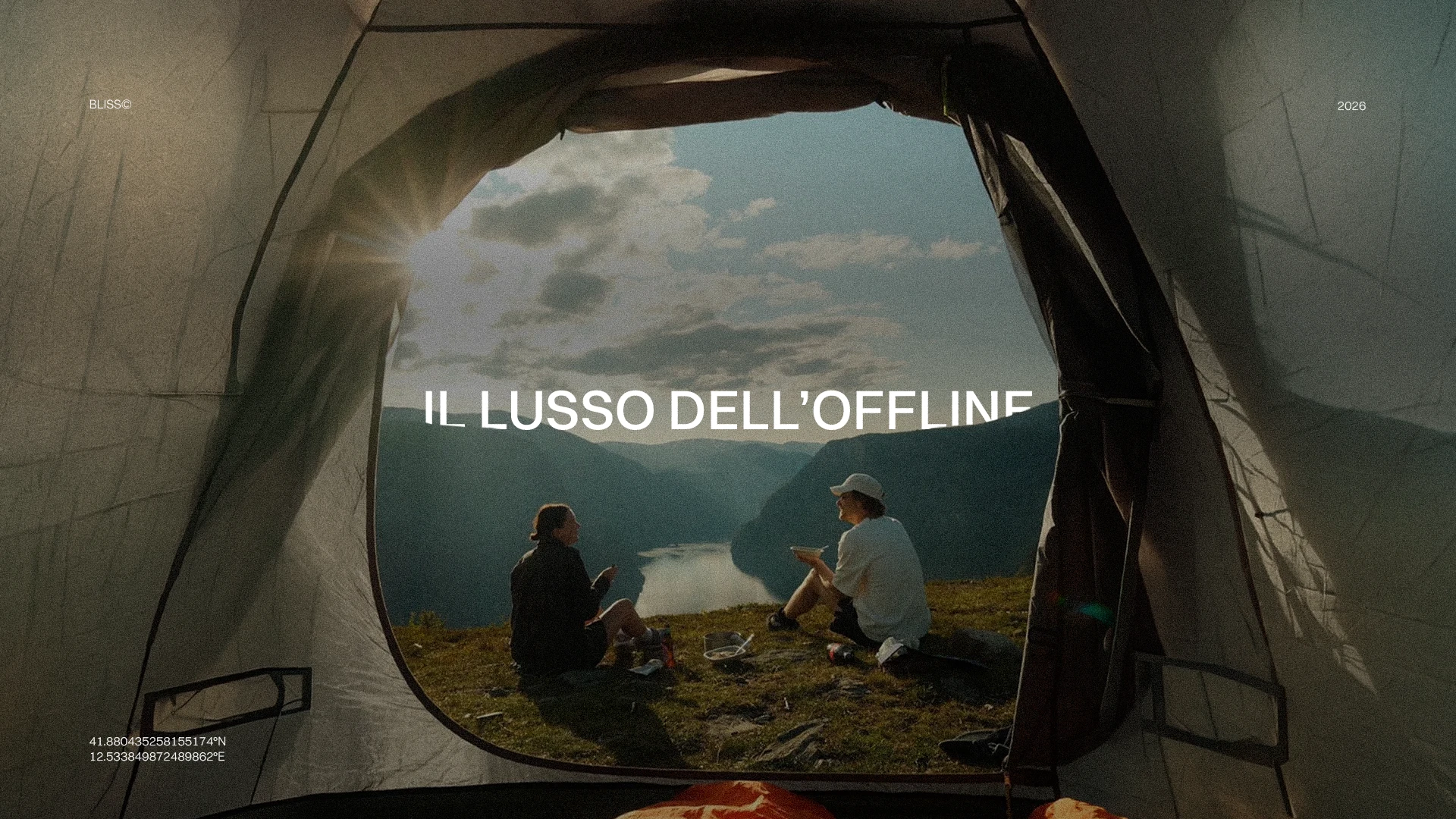
Offline is the new luxury, people have been saying for a while now.
A phrase that has been circulating on social media for some months as a critique, and that sounds like a genuine paradox in these interconnected times.
And yet it is true: in 2026, being offline is a luxury few can afford. Disconnecting from the algorithm has become a rare privilege. Nor is this an overstatement: the transformation of economic and symbolic value in recent years means that, for individuals and brands alike, neglecting one’s communication is unthinkable, even for a single day.
But how did we get here? And where will this process take us?
Let’s find out together.
How we got here
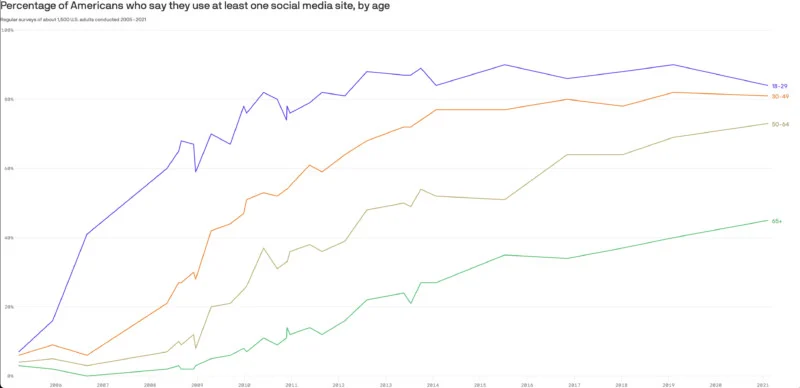
Average daily screen time among Gen Z has reached 7 hours and 43 minutes, the equivalent of a full working day. 70% of users acknowledge spending too much time on their smartphone: and let’s admit it, to varying degrees, this applies to all of us. 81% of Gen Z express a wish to make disconnecting from digital contexts easier, while 43% say they have already taken concrete steps to reduce their screen exposure.
An escape from screens that sounds almost like The Shawshank Redemption.
The popularity of board games has grown by 8% since 2023. Searches for ‘Martha Stewart aesthetic’ have risen by 2,889%. Searches for ‘farm cottage aesthetic’ by 911%. Those for ‘book club retreat ideas’ by 265%. These figures are not nostalgic: they describe active demand for physical, slow experiences that are not mediated by a screen.
Even offline needs online
The great irony of this offline revival, however, is that even it depends on online to generate social capital. The very tools used to disconnect people are in fact used to share how connected one is in the offline world. In 2026, being offline is fashionable: but even when one claims to be, one is never truly offline.
Even silence gets posted. The digital retreat, documented. And so the phone-free week becomes a Reel. For brands, this contradiction is an opportunity: those who can own the idea of ‘disconnecting’ with authenticity gain access to brand territory that most competitors have not yet colonised.
What brands leveraging offline are doing
Coach has reinvented itself: from mums’ handbag to one of the most desirable accessories for Gen Z. Its success stems partly from giving young people the opportunity to interact with the brand in real life, not through more sophisticated digital communication.
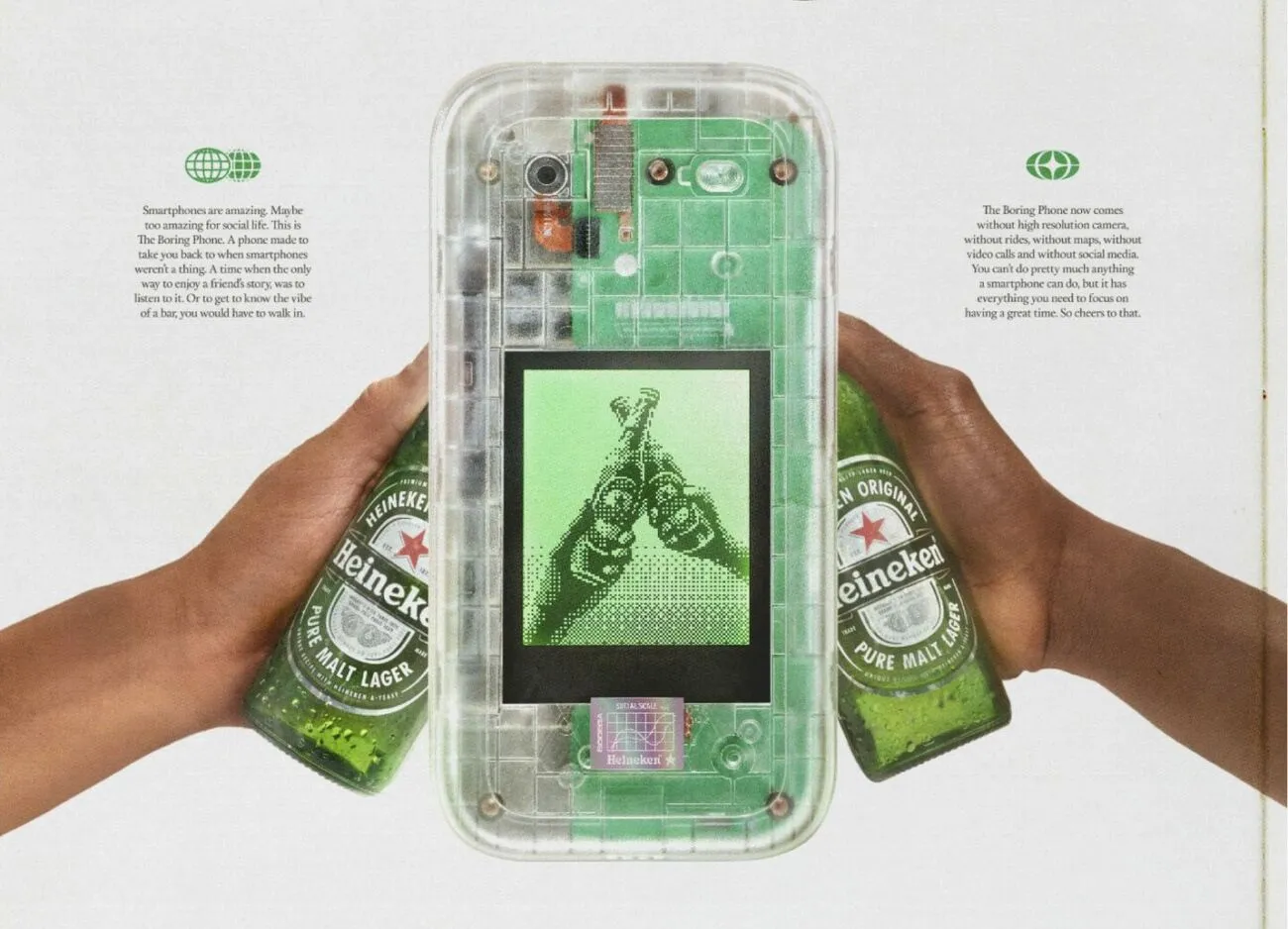
In a hyperconnected world, silence has become a monetisable luxury experience, driving a new segment of the economy. From exclusive digital detox retreats designed to help people disconnect, to premium travel destinations advertising ‘no Wi-Fi’ as a feature (and yes, there are plenty of them!).
Brands that move from daily posting to focused storytelling cycles every few days see interactions rise by up to 30%. Credit the magic of anticipation.
Silence as status
In the human brain, noise and silence produce different reactions.
Under chronic overstimulation, in fact, our nervous system remains in a persistent state of activation. The prefrontal cortex, responsible for deep reasoning and complex decisions, works less well. Silence, as has been known since antiquity, allows the brain to consolidate memories, process experiences and restore attentional capacity.
This is also why being unreachable has become a signal of power: it signals that one depends on no one’s instant approval, whether clients’, the algorithm’s or colleagues’.
Offline, for brands that can afford the luxury
Being offline has become a luxury because attention has become scarce. And when something scarce becomes desirable, whoever can offer it, or even just associate with it symbolically, builds value.
This phenomenon has three practical implications for anyone building a brand in 2026.
The first concerns the volume of communication. Those who keep posting every day because “you have to be there” are applying 2018 logic to a market that has developed an active allergy to undifferentiated presence.
The second concerns the quality of the physical experience. Brands with only a digital presence are losing access to territory of growing value: the experience that cannot be replicated on a screen.
The third, finally, concerns positioning itself. Brands that associate themselves with the quality of silence, with slowness, with presence, without pretending not to exist but without depending on the algorithm to be perceived as relevant, are building a positioning that withstands any platform shift.
In 2026, the most powerful signal a brand can send is choosing where to be.
The same applies to us as users and consumers: we are destined, over time, to rediscover the luxury of being offline more and more.
New Connections (FAQ)
Can only luxury brands align themselves with the positioning of silence?
No. Positioning built on quality of attention and slowness does not by definition belong to luxury: it belongs to any brand that wants to stand apart from undifferentiated presence. A mid-sized brand that chooses to publish less, better and with a consistent tone sends the same kind of signal. The difference is not budget: it is the discipline of not yielding to the pressure of volume.
How do you measure whether reducing posting frequency is working?
The signals to monitor are not those of reach but of quality of interaction: considered comments rather than reactions, saves rather than instant likes, unprompted mentions. The Sprout Social research cited in the article shows a 30% increase in interactions with reduced frequency, but the most reliable indicator is the rate of qualitative response. An audience that waits for the next post is an audience that has found it relevant.
If we communicate less, don’t we risk appearing to have disappeared?
The risk exists if lower frequency is not matched by higher quality and recognisable consistency. A brand that publishes rarely but with a precise tone and a distinctive point of view does not disappear: it becomes anticipated. A brand that publishes rarely because it does not know what to say, on the other hand, really does disappear. Frequency is the symptom. Consistency of positioning is the cause.