





A cluster has a precise conceptual meaning: a set of elements linked by shared characteristics, relationships or behaviours, similar enough to one another to form a recognisable group and distinct enough from others to be analysed separately. If we look for the Italian translation of cluster, the term corresponds to “grappolo” (bunch) or “gruppo” (group). In business it can include customers, companies, products, data or content.
For those wondering what clusters are and what the true definition of cluster is, they are aggregations of elements with strong affinities; understanding these concepts is essential when deciding to create a cluster that works for your own strategies. The principle runs through very different fields: in digital marketing it makes it possible to read customer groups and behaviours; in applied computer science and in Business Intelligence it helps identify structures in data; in SEO it organises pages and queries around a single topic.
Whether we are talking about statistical analysis or data analysis, the object changes, but the idea of the “cluster” (that is, units that acquire meaning when observed together) remains. Let’s explore everything there is to know on the subject.
Cluster: origin and history of the term
The term Cluster derives from the Old English clyster, used to describe things that grow naturally together. Since the 14th century it has referred to people or objects gathered in a compact body. Since 1727, star clusters as well.
The closest Italian translation is “grappolo” (a bunch), but the term also expresses structural or functional relationships. This is documented by the Online Etymology Dictionary and the Treccani. In 1939 Robert Choate Tryon published Cluster Analysis, one of the first works to formalise the grouping of data. In 1956 Wendell R. Smith consolidated the concept of market segmentation, and in 1967 John MacQueen presented the k-means procedure. Michael Porter would soon apply the term to territorial concentrations of companies and institutions; since 2017, HubSpot has helped spread the pillar-cluster model in SEO, made up of a general page and linked vertical content.
What cluster means in different fields
| Scope | Elements | Criterion | Purpose |
| Statistics and machine learning | Data | Similarity | Discovering unlabelled structures |
| Marketing | Customers or products | Needs and behaviours | Personalising offer and messages |
| Economics | Businesses and institutions | Proximity | Fostering innovation and productivity |
| Computer science | Servers and nodes | Cooperation | Increasing power and continuity |
| SEO | Pages and queries | Topic and intent | Building topical coverage |
| Science and music | Stars, atoms, notes | Proximity or structure | Describing concentrations |
“Creating a cluster” can therefore mean (i) developing a statistical model, (ii) defining a commercial group, (iii) reading a productive ecosystem or (iv) designing an editorial architecture. The common principle is organising complexity through relationships.
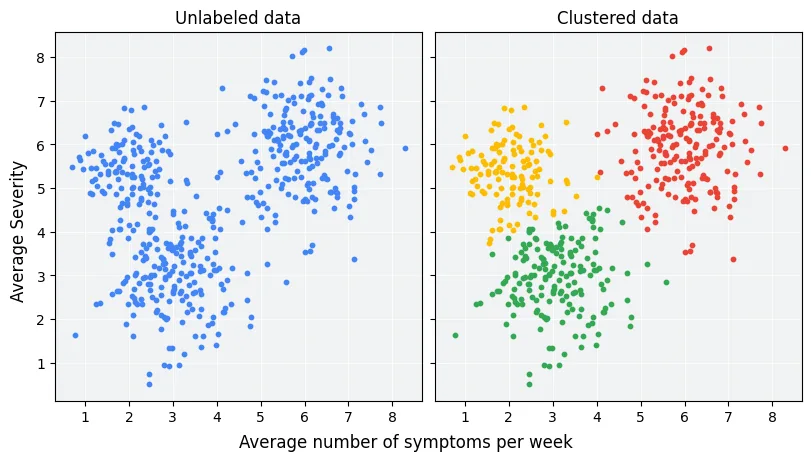
Cluster, clustering and cluster analysis
Let’s clarify things. A cluster is the resulting group. Clustering is the process of grouping. Cluster analysis is the set of statistical and algorithmic methods used to identify and evaluate those groups. Clustering generally belongs to unsupervised learning: the data does not already contain the correct label, and the algorithm looks for configurations on the basis of similarity. Supervised classification, by contrast, starts from known categories and learns to assign new observations to them.
Google’s guide to clustering clarifies this difference. The result depends on the variables, the scale of the data, the chosen distance, the method and the number of groups. Sound analyses of the same database can produce different solutions: a cluster is an interpretive model, not an automatic truth.
The distinction is operational for management too. Clustering explores the data and proposes a structure; segmentation decides which groups merit investment; targeting selects those to reach. Skipping these steps leads to treating the algorithm’s output as a ready-made strategy. In reality it takes interpretation, economic validation and input from those who know customers, products and sales processes.
How to build clusters that are useful for the business
The quality of a cluster is measured by the decision it enables.
| Approach | When to use it | Advantage | Limitation |
| Rules | With known criteria | Transparent | Confirms predefined categories |
| K-means | With large volumes of numerical data | Fast | Requires choosing k |
| Hierarchical | With small samples | Shows subgroups | Sensitive to the metric |
| DBSCAN | With irregular shapes | Detects anomalies | Depends on parameters |
| Fuzzy | With overlapping memberships | Handles hybrid profiles | More complex to activate |
The scikit-learn documentation shows that there is no single best algorithm: the choice starts from the problem. DBSCAN, for example, can identify outliers without requiring the number of groups to be defined in advance.
Clusters in marketing: from data to segments
In marketing, clusters group customers, leads, products, points of sale or territories on the basis of shared patterns. Analysis can reveal groups invisible to demographics alone: people of different ages may share the same sensitivity to price, frequency and loyalty. An e-commerce business might distinguish high-value customers, promotion-driven buyers, new customers with potential and inactive customers. The value lies in differentiating new releases, incentives, onboarding and reactivation. On this point, our article on database marketing explains how CRM and first-party data make these approaches actionable.
Cluster and segment are not perfect synonyms. A cluster is a grouping observed in the data; a segment is a portion of the market interpreted and chosen by the company. A cluster becomes strategic when it is measurable, distinct, reachable, relevant and serviceable with a specific offer. Without these requirements it may be statistically elegant, but commercially useless.
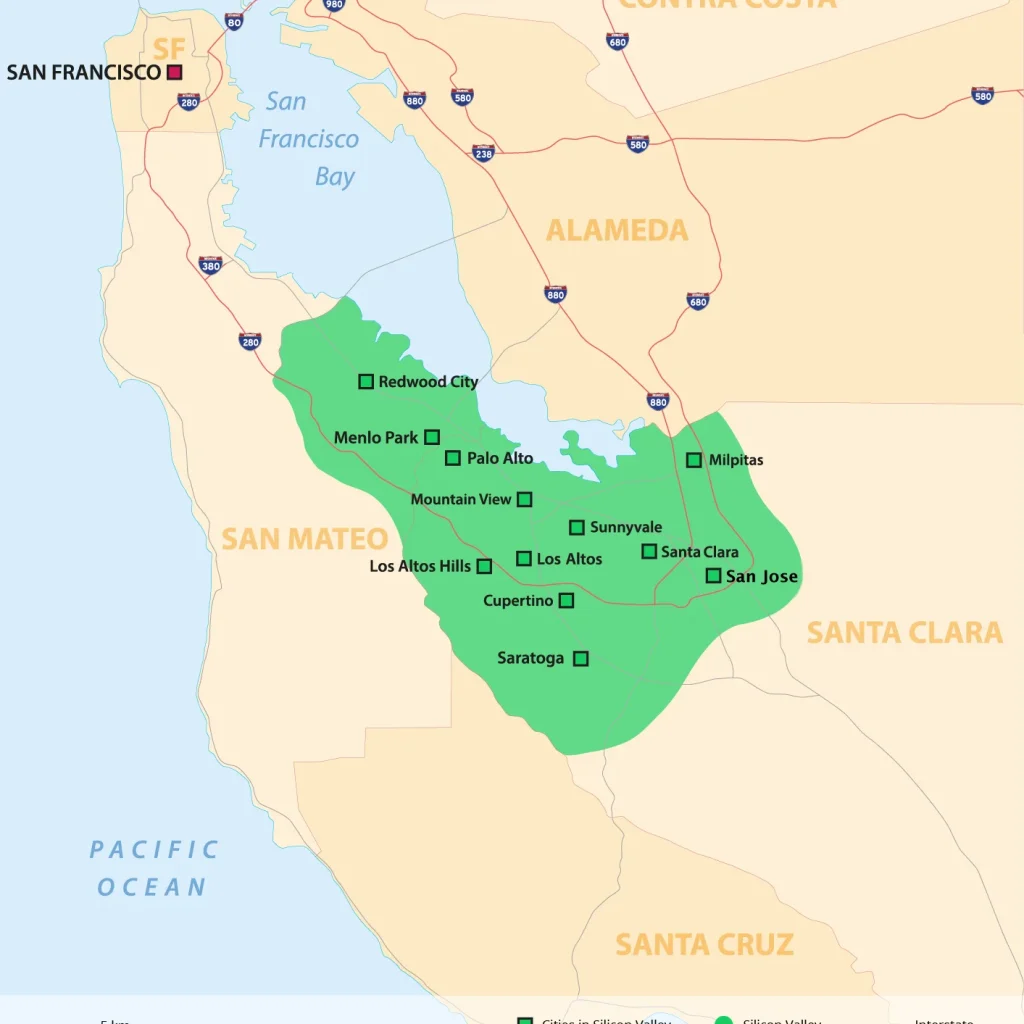
Industrial clusters: proximity as an advantage
For Michael Porter, an economic cluster is a concentration of interconnected companies and organisations: competitors, suppliers, universities, services and infrastructure. Proximity can foster productivity, innovation and the creation of new businesses, because skills and relationships circulate more quickly.
It combines cooperation and rivalry, and can exist before any formal structure.
Topic cluster: the meaning in SEO
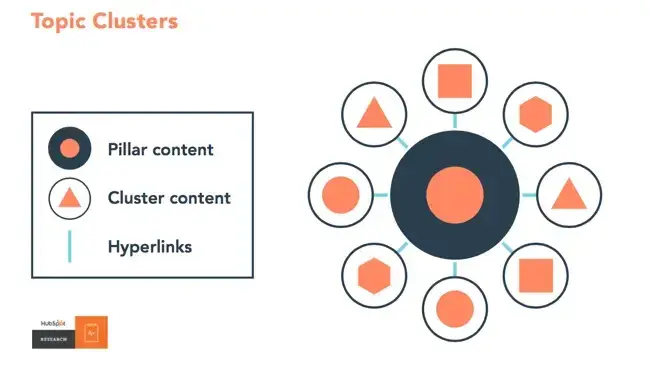
In SEO, a topic cluster is a network of pages that cover a subject through distinct intents. The pillar page offers the overall view; cluster content explores vertical questions in depth and links back to the pillar through coherent internal links. The SEO guide by the SEO agency Bliss Agency describes pillar and cluster as parts of an ecosystem, while the guide on Semantic Authority links coherent query coverage to topical authority.
The advantage does not come from publishing many similar texts, but from distributing intents: one page defines, one compares, one explains the process, one solves a problem. A poorly designed editorial cluster produces cannibalisation: several URLs compete for the same query and the pillar loses its role. Prevention requires an intent-based keyword map and links planned before publication.
We have covered the entire operational process, from the keyword map to the separation of search intents, in an exclusive guide on how to cluster.
Limits and risks of clustering
Grouping simplifies, but every simplification removes information. Assigning a person to a cluster does not mean they share every trait. Behaviours change, so groups must be re-examined. Poorly chosen variables can also replicate stereotypes or turn correlations into judgements.
When clustering uses personal data to predict preferences, behaviour or economic situation, it may fall within the profiling covered by the GDPR. The European Commission highlights the safeguards on automated decisions that produce legal effects or significantly affect the individual. Data minimisation, legal basis, transparency and human oversight must be safeguards built into the project.
The decisive question is not only “how distinct are the clusters?”, but “what better decision can we make thanks to this distinction?”. If the result does not change product, service, priorities or communication, the analysis has not yet generated value.
Domande frequenti
What is the difference between cluster, target and buyer persona?
A cluster emerges from observable relationships, such as similar purchasing behaviour. The target is the audience the company decides to reach. A buyer persona is a narrative representation of needs, objections and decision-making context. A sound process starts from clusters, selects the priority ones as targets and translates them into personas. Inventing personas first and then looking for data to confirm them, by contrast, invites stereotypes and bias.
How many clusters should a company create?
There is no universal number. The right solution balances statistical separation and operational capacity. Each group must have enough size, value and difference to justify dedicated action. Five clusters may be appropriate if there are offers and workflows to manage them, but excessive if they produce variants of the same message. The best solution is the one the business can actually use and update.
Can a customer belong to more than one cluster?
Yes. Hard models assign each observation to one group, but real memberships can overlap and change. A customer can be high-value, interested in innovation and temporarily price-sensitive. Fuzzy clustering assigns degrees of membership; dynamic CRMs update segments based on events. It is useful to distinguish structural clusters, which are more stable, from behavioural clusters, which can change after a purchase or a period of inactivity.
Fonti e riferimenti
- Online Etymology Dictionary, Cluster
- Treccani, Cluster
- Robert Choate Tryon, Cluster Analysis: Correlation Profile and Orthometric (Factor) Analysis for the Isolation of Unities in Mind and Personality
- Wendell R. Smith, Product Differentiation and Market Segmentation as Alternative Marketing Strategies
- J. B. MacQueen, Some Methods for Classification and Analysis of Multivariate Observations
- Michael E. Porter, Clusters and the New Economics of Competition
- Google for Developers, What is clustering?
- scikit-learn, Clustering
- Mimi An, Topic clusters: The next evolution of SEO
- European Commission, Information for individuals: automated decision-making and profiling