


Price is one of the hardest promises to hide.
A campaign can change in a few weeks. A claim can be rewritten. A store can be redesigned.
The price tag, however, cannot: it arrives unfiltered and never comes unstuck from people’s perception.
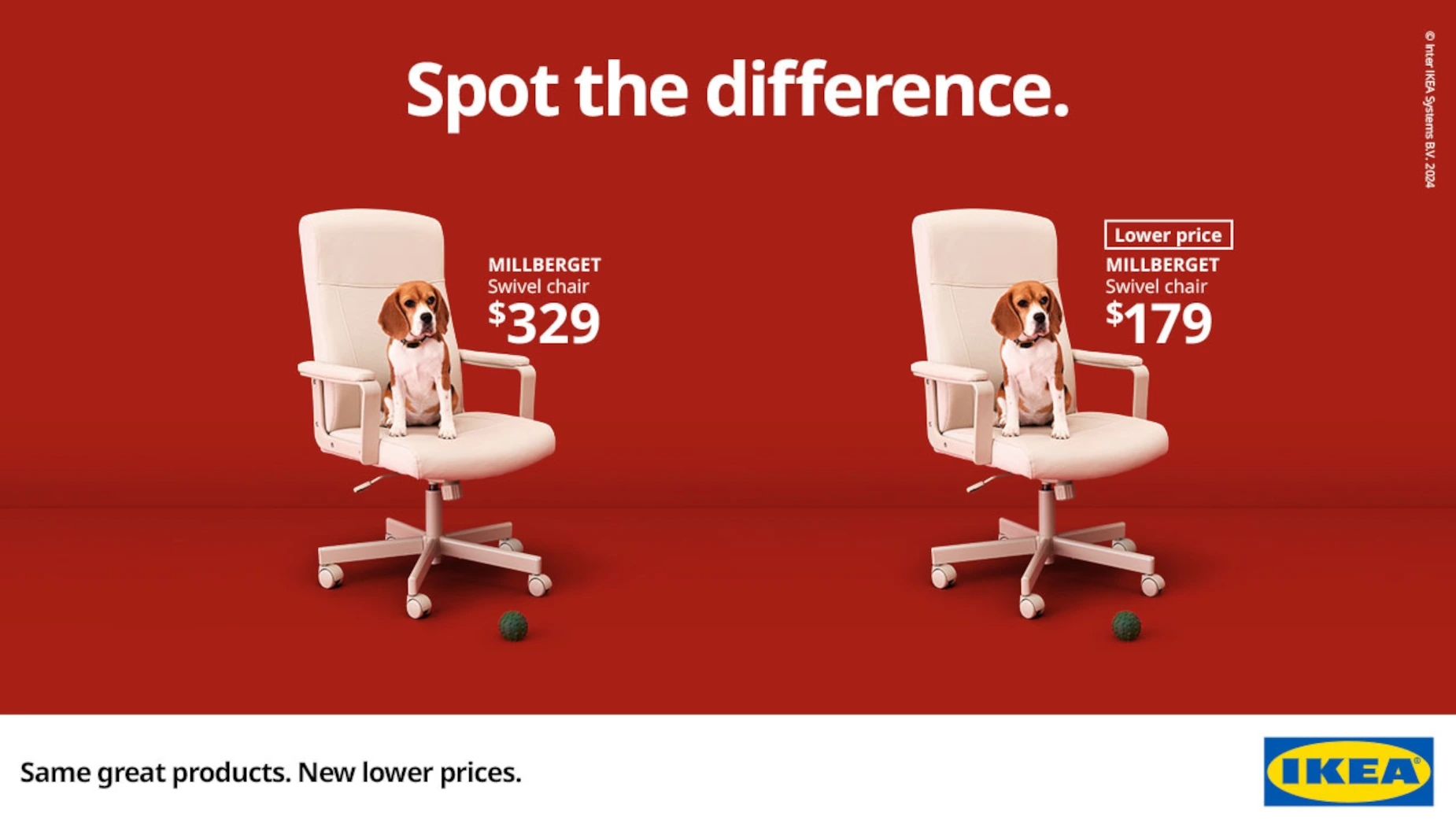
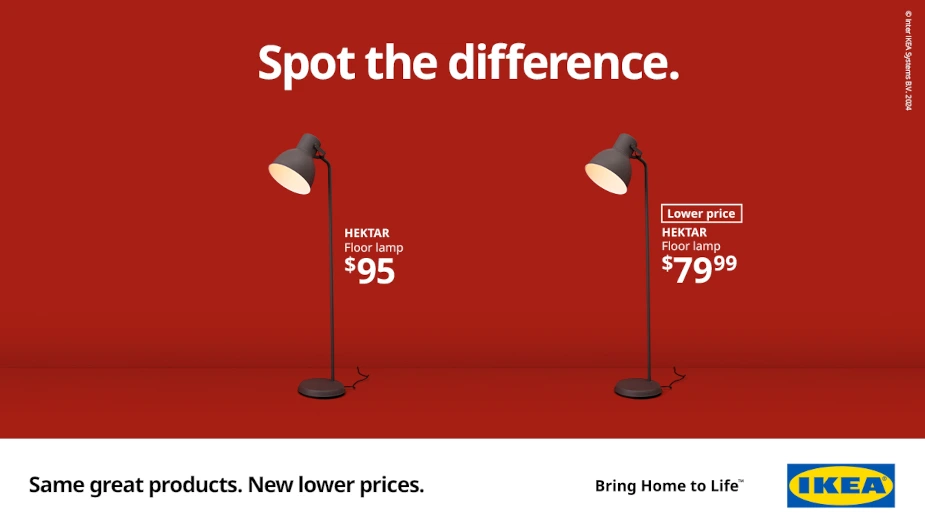
That is why, from 1 September 2026, IKEA has cut prices on hundreds of products by 22% (on average). KALLAX is down by up to 29%, BESTÅ by an average of 26% and the POÄNG armchair by 12.5%. The move is part of a 1.2 billion euro European investment backed by Ingka Group, the other IKEA franchisees and Inter IKEA Group.
These prices, senior management insists, are not temporary but set for the long term, accepting lower margins. This is where the news becomes relevant for anyone running a business: pricing shows publicly how far a brand is willing to back its promise financially.
In light of this news, then, it is fair to ask what conditions allow IKEA to lower prices and turn the reduction into a confirmation of its positioning. And what prevents everyone else from doing the same.
Price is a signal
Price is a thesis.
It steers demand, selects the audience, sets expectations and places the offer within a competitive territory. That is why it enters brand strategy with the same force as it enters the income statement.
A price cut can be read as affordability, commercial aggression, inventory clearance or a need to prop up demand. Its meaning depends on the story that precedes it. In IKEA’s case, low prices have for decades been part of the system that makes the brand recognisable: functional design, scale, logistics, self-assembly by the customer and a promise built around the possibility of furnishing better while spending less.
Brand positioning is therefore what makes the price cut readable. In IKEA’s case, price confirms the affordability already associated with the brand. In markets founded on scarcity and exclusivity, a price change feeds directly into expectations of rarity and perceived value.
Seventy years of consistency make the move credible
Accessibility has been part of IKEA for over seventy years and is built into the way the company designs products, sources materials, builds distribution and organises the shopping experience. The final price comes at the end of a chain of decisions that begins long before the price list.
The latest figures also show the cost of this choice. In the 2025 financial year IKEA Italia reached €2.2 billion in revenue, with a 1.5% decline in value and 3.4% growth in volumes. Italian management linked the fall in revenue to the earlier price reductions on the most popular products.
Globally, in FY25 IKEA retail sales fell by 1% to €44.6 billion, while volumes rose by 2.6%. Inter IKEA Group also attributes this trend to the lower prices introduced in previous years.
The logic is straightforward: the company accepts some loss of unit revenue in order to increase accessibility, volumes and its customer base. A decision of this kind becomes credible when it repeats a promise the public already associates with the brand and when the organisation has the system needed to sustain it.
Timing amplifies the message
The announcement comes at a time when prices are once again a central issue. According to ISTAT’s preliminary estimates, Italian inflation rose to 3.3% year on year in August 2026, driven mainly by energy. Core inflation fell to 1.5% and the so-called shopping basket held at 1%. The details are in ISTAT’s press release of 1 September.
These figures describe different pressures within the same picture. The cost of living continues to occupy a significant place in public debate, and attention to value for money remains high. A permanent investment in prices therefore arrives at a moment when consumers can read it particularly clearly.
IKEA’s announcement and the ISTAT figures came out on the same day. The coincidence made the message even clearer: inflation was once again at the centre of the debate, and IKEA was presenting a concrete commitment to affordability.
The advantage that shows beyond the price tag
The price reduction also rests on levers that many competitors possess to varying degrees. IKEA has cited product redesign, automation and greater use of renewable energy among the tools it uses to keep reducing costs. Reuters has pieced together the European plan and the operational levers cited by the group.
The price tag thus becomes the visible part of an advantage built along the value chain. Anyone competing in the same segment has to contend with brand awareness, purchasing power, distribution, depth of range and a cost structure that allows price to be consistent with the promise.
A credible Brand Strategy sets the direction and establishes which economic trade-offs the company is prepared to accept to sustain it. The operating model must then make that choice sustainable over time.
The real question for the board
The IKEA case offers a useful criterion for assessing any pricing decision. Before changing a price list, a board should check four conditions: consistency with the brand’s historical promise; economic sustainability over time; clarity about the meaning the market will attach to the decision; continuity between price, distribution, service, communication and innovation.
This is where Brand Governance comes in: the system of criteria that holds identity, commercial decisions and operational behaviour together. When these elements move in the same direction, price becomes public proof of consistency.
When the promise meets the income statement
Many brands declare who they want to be. The test comes when that declaration carries a real cost.
IKEA has chosen to accept lower margins to make a large part of its range more affordable and to strengthen a promise that has accompanied the brand for decades. The 22% reduction on the products involved thus takes on a meaning beyond the percentage itself: it makes a long-term choice visible.
Price is the point at which a promise becomes an economic decision. It is also the point at which the market understands how much a brand is willing to invest to stay true to what it stands for.
Domande frequenti
When does cutting prices strengthen a brand rather than devalue it?
When the reduction makes a promise the market already associates with the brand more credible, and is backed by an economic structure capable of sustaining it over time. In IKEA’s case, greater accessibility and affordability have been part of its positioning for decades: lower prices can therefore reinforce what the public expects from the brand.
The problem arises when price changes without an equally clear rationale. This is one of the aspects Bliss considers in its Brand Strategy and Brand Governance programmes: understanding what meaning the market will attribute to a commercial decision and whether product, distribution, communication and operating model will be able to sustain it. A lower price creates value when it confirms the positioning; it destroys value when it forces the public to reinterpret it.
What is the competitive advantage of IKEA’s strategy?
The advantage comes from the integration between brand and operating system. Scale, purchasing, design, automation, distribution and brand awareness allow IKEA to sustain price levels that raise the competitive threshold for smaller players. The price cut makes this infrastructure visible.
Does the same strategy work for smaller companies too?
The principle can also work for smaller companies. The lever depends on the business model: an essential line, an included service, greater transparency or a simpler offer can make the promise tangible. The choice must be built on positioning and cost structure.
Fonti e riferimenti
- Ingka Group, IKEA makes a major investment in affordability, lowering prices on hundreds of products
- IKEA Italia, Nuovo prezzo più basso
- ISTAT, Prezzi al consumo - Agosto 2026, dati provvisori
- Inter IKEA Group, IKEA year in review - FY25
- Reuters, Ikea invests €1.2 billion in Europe price cuts to lure cautious consumers
- Il Sole 24 Ore, Italia centrale per Ikea: in due anni investiti quasi 200 milioni
- Alessandro Pulcini, Adnkronos, Kallax ma non solo, Ikea in Italia abbassa fino al -29% i prezzi di alcuni prodotti