



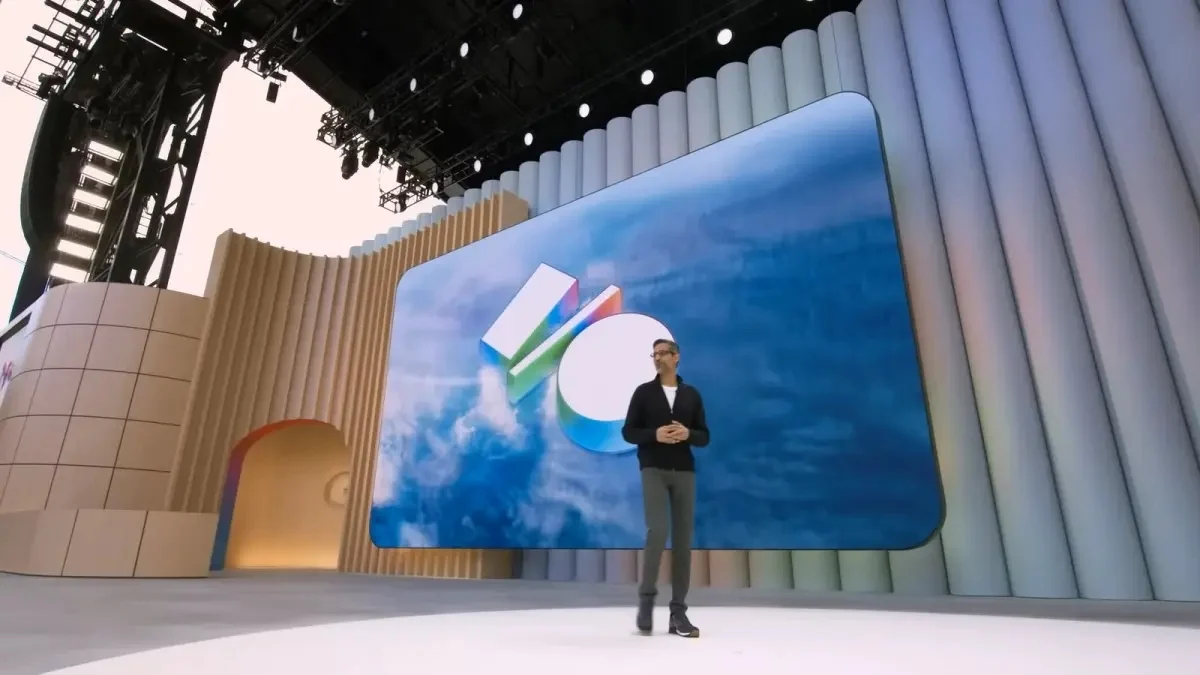
Yesterday, May 19, 2026, Sundar Pichai opened Google I/O with four simple words.
“Welcome to the agentic era.”
An announcement, or a eulogy?
Google Search, the product that has organized human access to information for thirty years, has irreversibly changed its nature. Some of these changes are already live today; others will roll out in the coming months. But the crux of it all is clear: the new system won’t search for us. It will act on our behalf.
The numbers of the new world
The transition from the old world to the new one can be perfectly described by the numbers presented in Mountain View, which mark a point of no return.
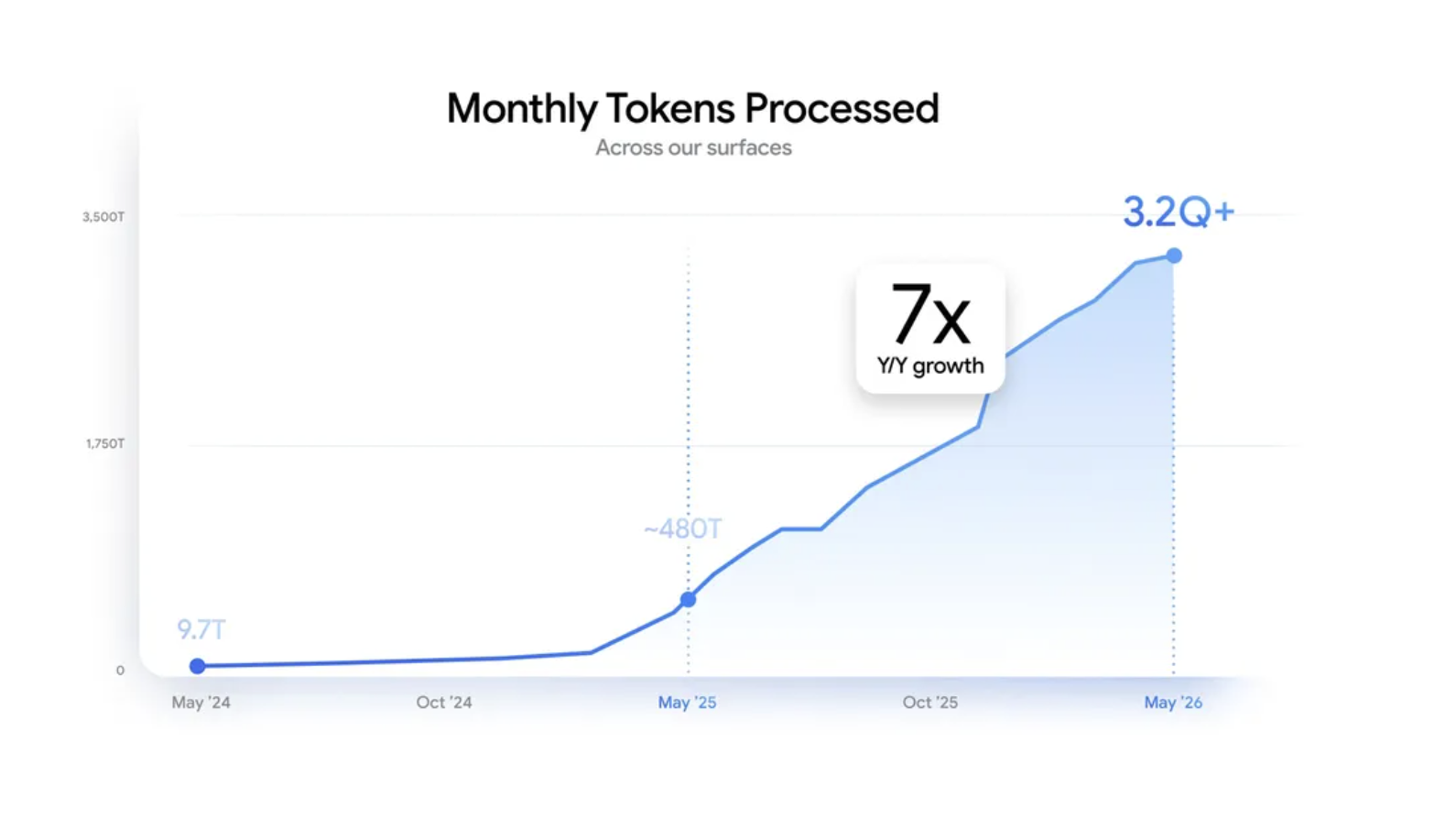
Just two years ago, Google processed 9.7 billion tokens per month, which for non experts are the basic units into which text is divided before being processed, and which have now become a kind of digital currency in the AI world. A year ago, consumption had grown to 480 billion.
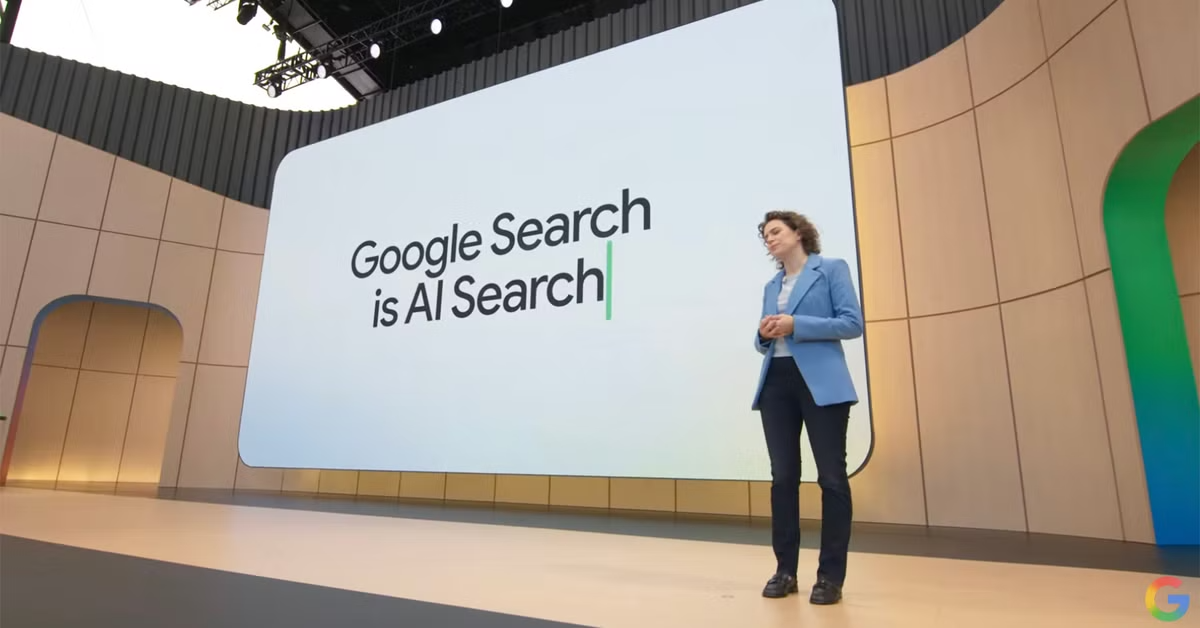
The most important figure, however, may be another one. AI Mode, the new form of search based on Gemini, has reached one billion monthly users in less than a year. Pichai called it the biggest update to Search ever made. And it was not a compliment.
If anything, it was a farewell to the previous version.
To support this infrastructure, Google will invest between $180 and $190 billion in Capex this year. Six times the $31 billion invested in 2022. No company in the world has ever invested this amount over this timeframe in a single technological direction.
The clearest sign that the world has changed.
Here’s Gemini Spark
The central product of the opening speech, however, was not this, but an agent. Gemini Spark.
Starting in the next few weeks, Gemini Spark will be available to AI Ultra subscribers in the United States as Google’s personal agent. Active 24 hours a day, 7 days a week, it runs on dedicated virtual machines in the Google Cloud and is capable of managing long-horizon tasks in the background without the user having to keep a device open. It integrates with Gmail, Calendar and Tasks, operates directly inside Chrome, and acts as an agent on any website. In the coming weeks, it will connect to third party tools through the MCP protocol.
At the same time, Google announced Information Agents in Search: personalized agents that will soon work in the background 24 hours a day to find relevant information at the right moment and suggest the resulting actions. Always active. Always listening. Always ready to act before the user even formulates a search.
The new era is at the door. And while until recently the user had to search and decide, now they will simply be able to enjoy the final result, because an agent will search, filter, evaluate, and act on their behalf.
An agent always beside you
Alongside Gemini Spark, Google presented Daily Brief: an agent that every morning summarizes the most relevant information from the user’s inbox, calendar and tasks, suggesting the day’s priority actions in a concise digest designed to be skimmed.
A productivity tool? Rather, let us see it as a second filter, positioned even before the user decides what to search for. A brand that does not appear relevant in that morning filter does not exist at the moment when the priorities of the day are formed.
The end of the click as a unit of measurement
In traditional Search, the brand competed for the user’s attention. This translated into positioning on the results page, achievable through titles capable of generating clicks, or landing pages designed to convert.
The architecture of digital visibility as we have always known it responded to one precise paradigm for years: a person read, and then chose.
With Google I/O 2026, that person has definitively left the room.
In their place, there is now a system. Gemini Spark will not read page titles with the curiosity of someone exploring. It will evaluate entity consistency, data structure, authority built over time through external citations, and the consistency of the brand’s representation across the ecosystem indexed by Google.
The metrics that matter now are not CTR or ranking for a keyword. They are the readability of the brand as a recognizable entity within the system that decides.
A brand can occupy the first position on Google Search and not exist for Gemini Spark. The two systems evaluate different signals. And the second is growing at a speed the first never experienced.
Beyond current logic
The scale of the change goes even beyond Gemini Spark itself. Google announced Antigravity 2.0, the platform that makes it possible to build and manage ecosystems of autonomous agents. More than 8.5 million developers are already building applications on Google models every month. Each of those agents, designed for specific industries and precise tasks, will operate according to the same logic: finding the best options for the user who activated it.
And so, every brand will have to face an ecosystem of agents. And none of those agents has ever seen an advertisement.
There is another announcement from Google I/O 2026 that reinforces this interpretation. With Generative UI, Search will build dynamic layouts and personalized interfaces for every single query, in real time. There is no longer one SERP that is the same for everyone. There is no longer one shared first position. Every user sees a page built for them, at the very moment they search. The very idea of positioning on an ordered list of results is becoming an abstraction.
What this means for anyone governing a brand
Google I/O 2026 made official a trend that had been consolidating for months. The selection process that guides purchasing, partnership and supplier decisions is progressively moving inside systems that operate autonomously on behalf of people.
In this context, a brand’s visibility will depend on what the system is able to read at the moment it searches through its own archives. Consistency, frequency, data structure. Authority.
All of these will be signals that no technical function will ever be able to produce on its own. And this is because they require brand governance that spans identity, reputation, information architecture, and ownership of presence across all digital touchpoints.
In other words, one single direction.
The CEO who reads yesterday’s event as an SEO update is reading the wrong signal. Google has just invested six times the Capex of three years ago to build the infrastructure that will mediate the decisions of almost one billion people. The brand that is not structured to be read by that infrastructure will not be present when the choice happens.
The combination announced in Mountain View (Gemini 3.5, Antigravity, Gemini Spark, Information Agents in Search) is the infrastructure destined, starting today, to replace large-scale human selection processes. Anyone who built their digital presence around how a human being finds things will have to start again from scratch, learning to think about how a system evaluates them.
In short, Search as we have always known it is over.
The age of agents has just begun.
New Connections (FAQ)
Will Gemini Spark replace Google Search?
It will progressively replace it in high-value decisions. Simple informational searches will continue to exist in their traditional form. But decisions that require evaluation, comparison, and action (those with the greatest commercial impact for brands) will migrate towards agentic systems. Pichai said it explicitly: the objective is for Search to become less a series of individual queries and more a continuous conversation with an agent that acts. The click as a unit of measurement loses relevance in that conversation.
Should I stop investing in traditional SEO?
Traditional SEO remains necessary as a technical foundation. But on its own, it is not enough to be present in the system Gemini Spark is building. The signals an agent evaluates (entity consistency, external authority, data structure, reputation management across multiple platforms) require work that begins with brand governance and reaches digital structure. Those who invest only in technical optimization are optimizing for a system that is losing centrality.
How much time do I have to adapt to the new Google?
Less than current numbers might suggest. Agentic systems tend to stabilize their preferences over time. Positions acquired while the terrain is still open become difficult to challenge once they consolidate. Gemini Spark is in beta today for AI Ultra subscribers in the United States. In twelve months, it will be available to hundreds of millions of people. The window for building authority before the system stabilizes it is now.
BLISS®
© 2026. ALL RIGHTS RESERVED