



The fifth instalment of everyone’s favourite thirty-year saga could have simply lived on nostalgia.
Instead, on 19 June 2026 Toy Story 5, the fifth instalment of the Pixar saga and the studio’s thirty-first feature film, was released, and its plot is built around an antagonist that is not a rival toy. Not a cruel child. Not an obsessive collector.
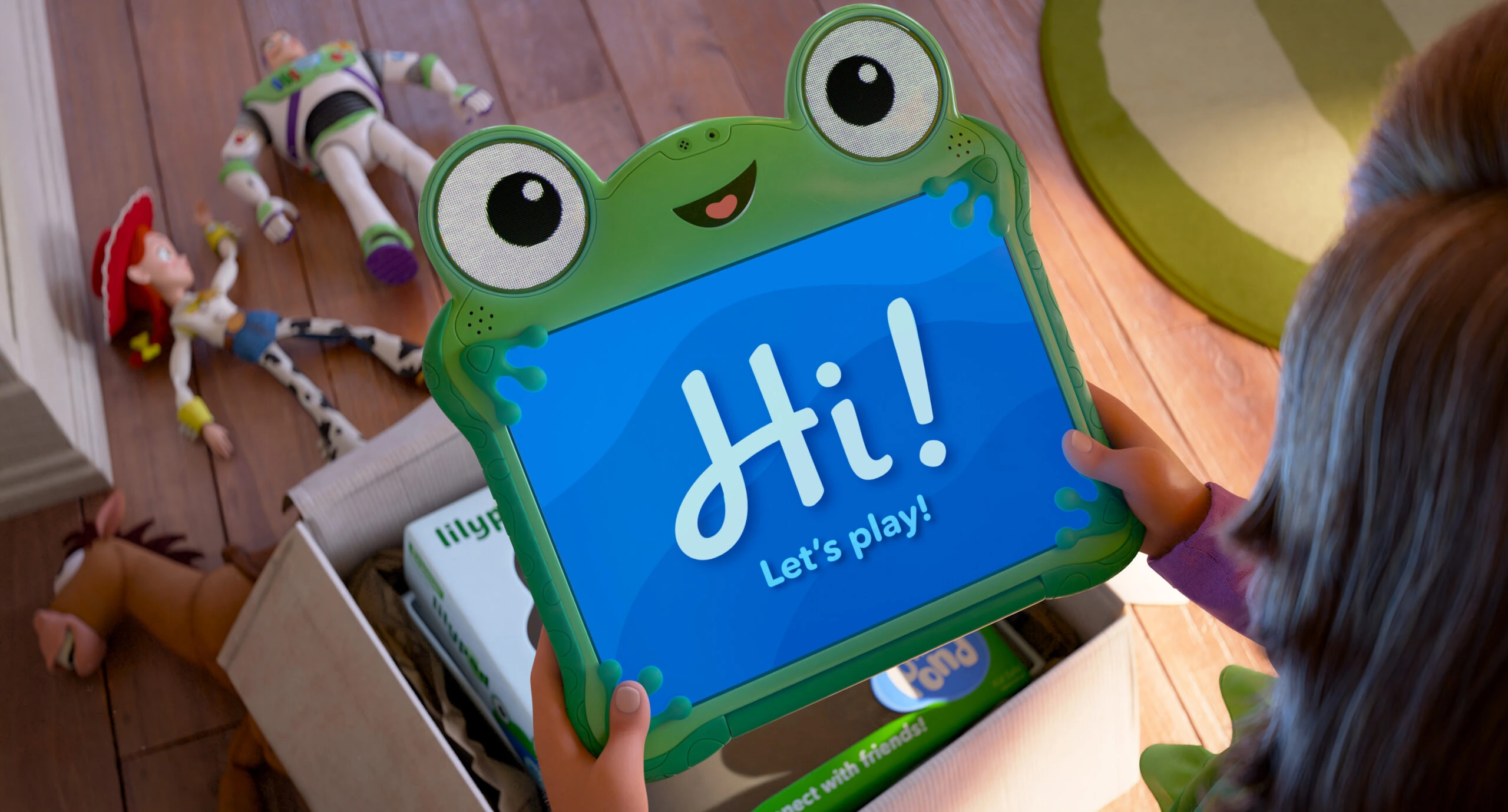
It is a tablet.
And so Toy Story chose instead to tell exactly what threatens the franchise in the real world: the screen replacing physical play. Technology displacing the toy from its role as a cultural object.
A bold choice, which shows once again that not all franchises are negative, or have nothing to say.
After all, reaffirming is different from repeating.
The plot of Toy Story 5
After the events of the previous instalments, the toys now belong to Bonnie, an eight-year-old girl who struggles to make friends with her new neighbours, who are more interested in tablets than in toys and dolls.
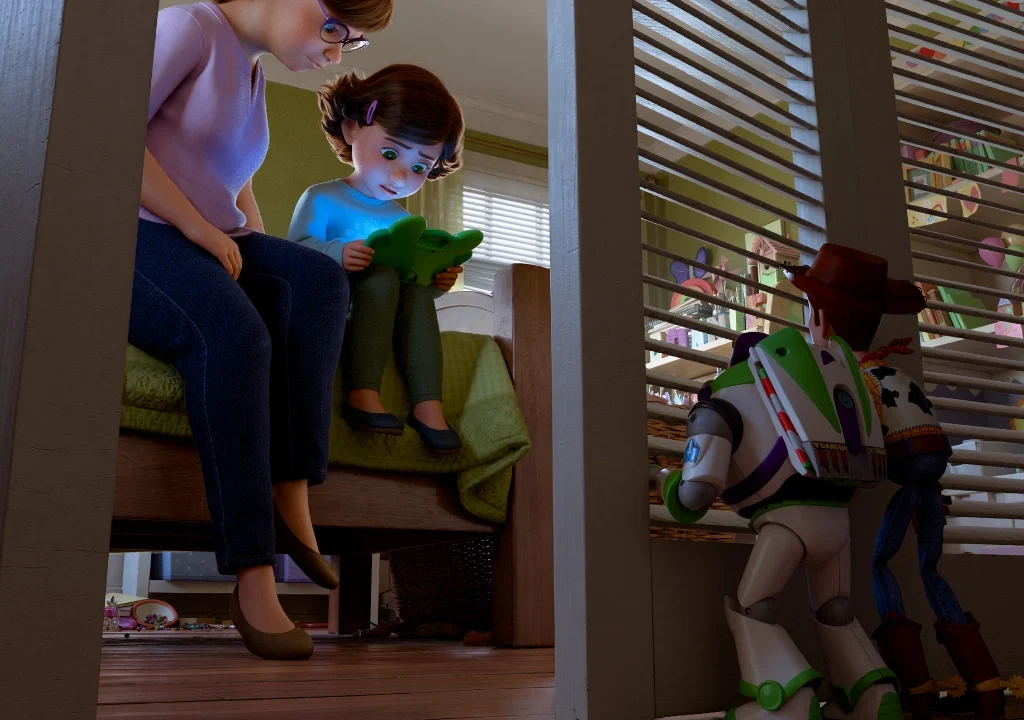
Partly for this reason, her parents give her Lilypad, a frog-shaped tablet designed for children, to which Bonnie soon becomes addicted, ending up neglecting Woody, Buzz and the rest of the gang.
A very simple, linear plot, born (as director Andrew Stanton himself has admitted) from the realisation that hardly any children play with traditional toys any more, and from asking what this means for childhood.
Woody and Buzz’s enemy in the fiction is, therefore, what threatens the Toy Story franchise in reality.
Why franchises become diluted
What usually happens is this: a successful instalment generates a sequel. The sequel performs well enough to justify another. And at some point, the sequence stops responding to a narrative need and starts responding to a scheduling need: the franchise has to produce a new instalment because the market expects one, even if by now there is little left to say.
And so the sequel becomes an exercise in managing nostalgia. Every film repeats itself. And repeats. And repeats. The best-loved characters are brought back; the dynamics that worked are reiterated. The visuals are updated to look contemporary, but at the centre sits the same empty core. Sooner or later the audience notices, recognises the pattern and loses interest (right, Marvel?).
Dilution, in essence, is what happens when a brand keeps extending without having anything new left to say, living off the emotional capital accumulated in the past.
An income that is drawn down chapter after chapter, until it runs dry.
The difference between repeating and reaffirming
Toy Story 5 avoids this trajectory by choosing a riskier and smarter path.
Instead of shielding the franchise from the threat that technology poses to the toy industry (perhaps by continuing to set the series in a world where toys are still relevant), Pixar made that threat the narrative heart of the film. Lilypad is not a villain in the classic Pixar sense, with evil plans and schemes. It is, in the studio’s own words, a device with its own logic about what is best for Bonnie: a non-caricatured portrayal of what every family with children is experiencing today.
From this perspective, then, Pixar managed to identify the threat to its own product and turn it into a story, rather than ignoring the issue and carrying on as it always had.
Many franchises choose the opposite path. They repeat themselves. They do not seek fresh energy: new narrative stimuli and impulses. Reaffirming, by contrast, means looking change in the face and building around it the most urgent story that could be told at that moment.
The difference between these two approaches may not show at the box office on the opening weekend, but in the long run it will.
The lesson for those managing a brand with a long history
Every organisation that has existed long enough to have a recognisable story faces, sooner or later, the same choice Pixar faced with this fifth Toy Story instalment. Keep communicating as if nothing in the world had changed, or open up to that change: confront openly the tension that threatens its relevance, and make it the central theme of its communication.
The first path is more comfortable in the short term and riskier in the long term: sooner or later, the audience senses the gap between the brand’s message and the reality it is living, and that gap is called irrelevance. The second path requires publicly admitting that a threat exists, building an honest argument around it, and accepting the risk that not every customer will want to hear about it.
Toy Story 5 bet on its audience, and on its own ability to tell stories.
But if we are here talking about it today, the bet has already been won.
New Connections (FAQ)
Does this strategy only work for cultural brands like Pixar, or does it also apply to more traditional companies?
It applies to any organisation whose relevance depends on how its audience perceives it over time, which means virtually every brand. The principle is not about cinema as such: it is about the choice between ignoring the threat the market is facing and naming it openly in one’s own communication. A manufacturer facing the digital transition, a retailer facing competition from e-commerce, a bank facing fintech disintermediation: all of them face the same choice Pixar faced with Lilypad.
Isn’t there a risk that talking openly about one’s own existential threat will frighten the audience rather than reassure it?
The risk exists, and it is precisely why this path is harder than simple repetition. The difference between frightening and reassuring lies in how the threat is told: Toy Story 5 does not demonise technology simplistically, but builds an honest conflict in which even the antagonist has its reasons. A company that confronts its own existential threat with the same narrative honesty, without victimhood and without convenient scapegoats, builds credibility rather than anxiety.
In practice, how do you tell a brand extension that reaffirms from one that dilutes?
The question to ask is whether the new brand extension introduces a real, contemporary tension that the audience recognises as its own, or whether it merely brings back the elements that worked in the past, hoping they will be enough. A sequel, a new product line, a campaign that harks back to the brand’s past: in every case, the question is the same. Without a new and genuine tension, the audience will perceive the repetition even when the execution is technically flawless.