



A quantum computer (the field is known as quantum computing) is a machine that processes information according to the laws of quantum mechanics: instead of bits, it uses qubits, which can exist (rather like Schrödinger’s famous cat) in several states at once.
Clearly, this tool will not replace the computer on your desk. It is designed for a narrow family of problems, such as simulating molecules and materials, optimisation and cryptography, where a classical computer gives up. Today there are prototypes of around a hundred qubits or slightly more, and the goal is a machine capable of correcting its own errors.
The news of the moment, however, concerns precisely that milestone. On 15 October 2026 Google published a result in Science that makes machines of this kind less costly to build. Are we at the dawn of quantum computers? Perhaps not yet, but one of the heaviest cost items has just come down, and this could be an early sign that the world is about to change.
This is also why investing in quantum computing today means dealing with the things whose lead times are longer than the technology’s path to maturity: the cryptography to be made resistant, the skills and use cases to be identified, and one’s own position in an ecosystem that Europe and Italy are building. In this guide we explain the reason for each.
Il computer quantistico in 3 punti chiave
Non è un computer più veloce
È una macchina diversa, utile su problemi specifici: soprattutto la simulazione della materia, l’ottimizzazione e la crittografia.
Non è ancora pronto per l’uso generale
Il passo decisivo è la correzione degli errori, e i risultati più recenti la rendono più economica senza ancora completarla.
Per un’impresa cambia la domanda
Non «quando arriverà?», ma:
«Che cosa ha un tempo di preparazione più lungo di quello della tecnologia?»La risposta riguarda la crittografia, le competenze e la partecipazione all’ecosistema.
Quantum computers: what they are and how they work
What a quantum computer is becomes clear, first of all, by starting from what it is not. Today’s computer, from the phone to the data centres that power artificial intelligence, is based on transistors, that is, switches that can be on or off: and in doing so, they produce a series of 0s or 1s. Bits, in other words.
All this, however, has structural limits. Limits that a quantum computer tries to overcome by seeking to replicate the behaviour of the infinitely small: a world made up not so much of molecules as of atoms, electrons and photons, where the rules change. That is why, with a quantum computer, we no longer speak of bits but of a new basic unit, the qubit: an element that is not obliged to choose between 0 and 1, because until it is measured, it can be a combination of both (INFN).
Qubits, superposition and entanglement
To understand how a quantum computer works we need to explain two phenomena. The first is superposition, the ability of a qubit to be in a combination of two states. The second is entanglement, a correlation between qubits whereby the state of one depends on that of the other. They matter because of how computing power grows. Adding a bit to a classical computer means adding a little capacity; adding a qubit, by contrast, doubles the space of states the machine can manipulate. Two qubits equal four states, ten qubits 1,024.
Exponential growth.
Beyond fifty or so qubits, simulating the machine on a classical computer becomes prohibitive. This is why the quantum computer is not designed to be “faster”. What will change are the very problems we ask the machine to tackle.
The art of quantum algorithms lies in making possibilities interfere like waves, so that wrong answers cancel out and right ones are reinforced. Before, we could not represent the ocean: all we had were Lego bricks. Now the possibilities are far vaster. As many as the atoms in nature.

The difference between a classical computer and a quantum computer
The difference between a conventional computer and a quantum computer lies, then, in the very nature of the problems the machine sets out to tackle. The classical computer is ideal for any task that can be described by deterministic rules: spreadsheets, databases, artificial intelligence. The quantum computer promises an advantage where the problem is itself quantum, such as a molecule, or has a mathematical structure that algorithms can exploit, such as factorisation. One, therefore, will not replace the other. The most likely scenario is integration, with quantum acting as an accelerator alongside supercomputers, as is already being tested in Italy.
What a quantum computer is for
The insight dates back to Richard Feynman, who in the early 1980s observed that simulating nature would require a machine that worked the way nature does (INFN). After all, a molecule is a quantum system, and describing it with a classical computer becomes progressively more expensive as its size grows. Once optimised, quantum computers will be able to design drugs and materials, more efficient batteries and catalysts, as well as optimise areas such as logistics and finance, or cryptography (which we will return to later).
An Italian example: researchers from Banca d’Italia and Intesa Sanpaolo tested algorithms on financial problems using the quantum computer in Naples, and Intesa reported a successful trial (Il Sole 24 Ore, 10 March 2026). This is a laboratory trial, admittedly, but the future is drawing ever closer.
Does the quantum computer already exist?
Quantum computers already exist, but they are prototypes, and the gap to a useful machine is still very wide. In December 2024 Google unveiled the Willow chip, with 105 qubits, showing that the error rate halves with each increase in the size of the error-correcting code, from 3×3 to 5×5 and 7×7 qubit grids (Google): adding qubits can improve reliability rather than worsen it. In October 2025 the Quantum Echoes algorithm reported an advantage of around 13,000 times over the best known classical simulation, with a verifiable result; it remains a highly specialised task, still to be validated by other groups (Postquantum.com).
The term to handle with care is “quantum advantage”: demonstrations use problems chosen because they are hard to simulate, and classical computers have repeatedly caught up. Google’s 2019 estimate was later cut from ten thousand years to under fifteen seconds (Physics World).
Qubit technology: superconductors, neutral atoms and more
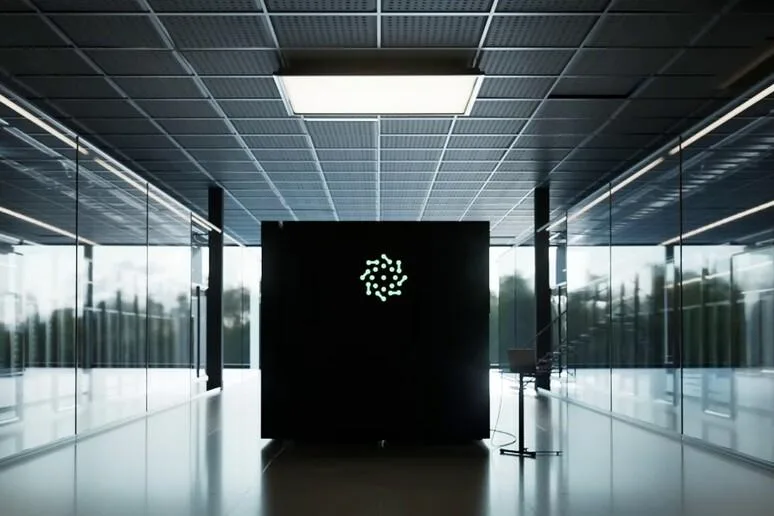
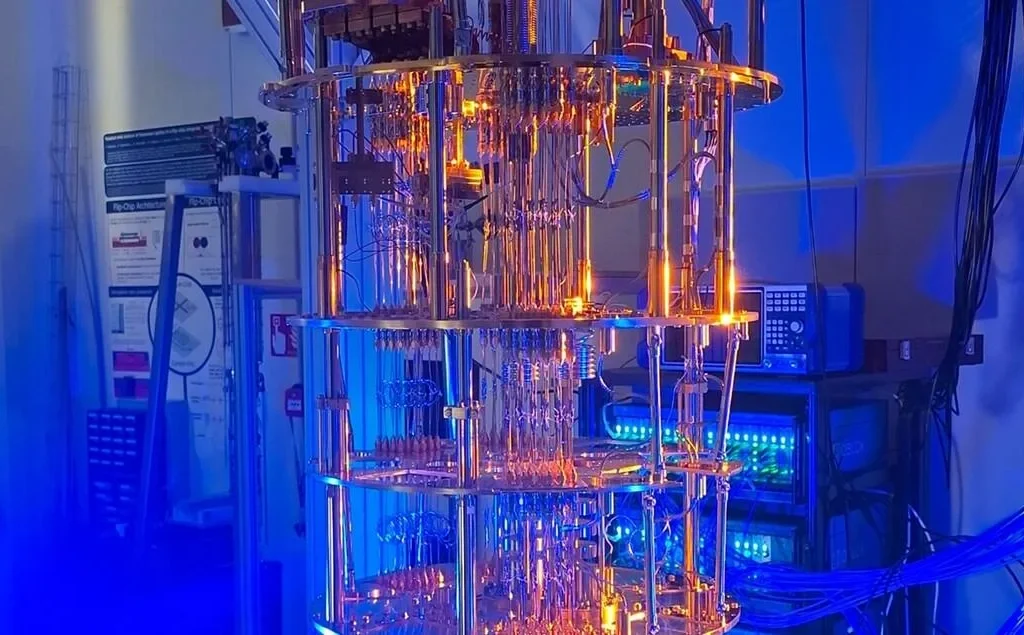
The photonic quantum computer, which uses light, is one of the routes to building qubits. Superconductors, circuits cooled to fractions of a degree above absolute zero, are the choice of Google, IBM and the systems in Naples and China. Neutral atoms, held in place by laser beams, are Pasqal’s technology. Microsoft’s topological approach is the most uncertain.
Why we don’t have it yet: errors and correction
A quantum computer only works if it corrects its own errors, and this is the real obstacle. Qubits are fragile: a vibration, a change in temperature or a cosmic ray can cause the information to collapse, a phenomenon known as decoherence. Every operation also has an error rate, and a calculation of thousands of steps with one error in every hundred produces nothing but noise. The solution is to group many imperfect physical qubits into a single reliable logical qubit, and the most demanding applications will need many hundreds of thousands of them.
Google’s announcement: what 99.99% means
Google’s quantum computer is back in the spotlight after achieving an extraordinary result. On 15 October 2026 Sundar Pichai announced the publication in Science of “magic state cultivation”, demonstrated on the Willow chip: the production of magic states, the building blocks needed to perform complex operations, with a logical fidelity of 99.99% and an error rate reduced by around forty times (Investing.com). The preprint, released in December 2025, specifies that 99.99% is the fidelity of a single state and that only 8% of attempts are retained after post-selection (arXiv 2512.13908).
The reason it matters is cost. Magic states are consumed with every use, and producing them cleanly can absorb, by some estimates, up to 95% of a machine’s capacity (Investing.com). Reducing that burden means fewer qubits are needed for a reliable calculation, and this already shows in cryptography estimates: Craig Gidney’s 2025 study, which brings the number of qubits needed to break RSA-2048 below one million, cites magic state cultivation among the factors (arXiv 2505.15917).
This is an experimental demonstration, admittedly: we do not yet have a ready-to-use computer. Moreover, the figure does not describe “the precision of an operation”, but the fidelity of one type of state under selected conditions. Those who cite it as “99.99% precision” are simplifying, and the simplification suggests the technology is closer than it actually is.
Who builds quantum computers: Google, IBM, Microsoft and China
The quantum computers of Google, IBM, Microsoft and China differ in technology and in measurement method.
IBM quantum computer
The IBM quantum computer has a public roadmap: in June 2025 the company announced Quantum Starling, expected by 2029 in Poughkeepsie and designed to run one hundred million operations on two hundred logical qubits (The Quantum Insider).
Microsoft quantum computer
Microsoft’s quantum computer follows a different approach: on 19 February 2025 the company announced what it described as the first topological qubits. The results published in Nature are not enough to prove their topological nature, and several physicists have called for stronger evidence (Scientific American).
Chinese quantum computers
The Chinese quantum computer most often cited is Zuchongzhi 3.0, a 105-qubit superconducting processor from the University of Science and Technology of China, which performed in a few minutes a calculation that, according to its authors, would take the Frontier supercomputer billions of years (Physics World, 25 March 2025). Comparison with Google remains difficult: Willow has no peer-reviewed results on this same test.
Quantum computers in Italy
Quantum computing in Italy is today a research reality. At the Federico II University of Naples runs Partenope, Italy’s first public superconducting quantum computer: launched in 2024 with 25 qubits, in February 2026 it received a 64-qubit processor, pending verification (Il Sole 24 Ore, 10 March 2026). In Bologna, at the technopole that hosts CINECA, a Pasqal neutral-atom computer with more than 140 qubits has arrived; it will be integrated with the Leonardo supercomputer in a hybrid system co-funded by EuroHPC and the Ministry of Universities and Research (The Quantum Insider, 17 February 2026).
At European level, on 2 July 2025 the Commission presented its Quantum Europe Strategy: global leadership by 2030, five pillars and a proposed legislative act expected in 2026 (European Commission). All with the aim of setting out funding, infrastructure and shared access in advance.
How much does a quantum computer cost
There is no price list that can truly say how much a quantum computer costs. The largest systems are purchased through dedicated agreements: IBM has delivered five to client sites, including universities in Japan and the United States (DatacenterDynamics). The common route is the cloud: on the IBM Quantum platform, the free plan offers up to ten minutes of machine time every 28 days, the Flex plan requires the advance purchase of at least 400 minutes for one year and, for an on-site machine, you contact IBM (IBM Quantum Platform).
Portable and commercially available quantum computers
A portable quantum computer, remarkably, does exist: these are desktop devices with two or three qubits, based on nuclear magnetic resonance and intended for teaching, such as those made by SpinQ (SpinQ, which does not list prices on its page). They are for learning, not for solving problems a classical computer cannot solve. Anyone who finds a quantum computer “for sale” at a consumer-electronics price is almost certainly looking at a teaching tool.
Quantum computers and cryptography: a risk to be governed
Quantum computing and cryptography are linked by a mathematical fact: the algorithms that protect much of our communications, such as RSA, rely on the difficulty of factoring very large numbers, which a sufficiently powerful quantum computer could do quickly. According to Craig Gidney’s 2025 estimate, a computer with fewer than one million “noisy” qubits could factor a 2048-bit RSA number in under a week; the previous estimate, from 2019, put the figure at around twenty million (arXiv 2505.15917). That machine does not exist today, and the estimate rests on error assumptions that have yet to be achieved.
The reason this is a matter for the Board of Directors is time. Information encrypted today and kept for years, such as a contract, a medical record or a patent, could be intercepted now and decrypted once the machine becomes available: the risk exists before the machine does. On 13 August 2024 NIST published the first quantum-resistant cryptography standards (FIPS 203, 204 and 205) and selected a further algorithm, HQC, in March 2025; document NIST IR 8547 provides for vulnerable algorithms to be removed from the standards by 2035, with tighter timescales for high-risk systems (NIST). Migrating requires knowing where cryptography is used, and this inventory is the longest piece of work: it falls within risk management and is best started before someone makes it mandatory.
Quantum computing and artificial intelligence
The computer of the future, as it is often called, works best when paired with artificial intelligence, and the relationship runs in two directions. The first is already real: AI helps build these machines. AlphaQubit, Google DeepMind’s neural-network decoder published in Nature in November 2024, made 6% fewer errors than tensor-network methods and 30% fewer than correlated matching, while remaining too slow to correct errors in real time (Google DeepMind).
The second direction is a scenario. Today AI learns chemistry and physics from approximations; with a useful quantum computer it could propose molecules, have them simulated exactly and learn from those results, in a continuous cycle of discovery. It is a research hypothesis, but it explains why the two subjects must be governed together, with the same rigour on data and accountability that artificial intelligence governance requires.
When quantum computers will be available
There is no date for when quantum computers will be available. There are declared milestones: 2029 for IBM’s Starling, 2030 for the European Commission’s leadership goal, 2035 for NIST’s retirement of vulnerable algorithms. These are planning dates, not forecasts of operation. To judge progress, it is worth watching three signals: how far the logical error rate falls, how many reliable logical qubits exist and whether a useful advantage, verified by others, emerges on a real problem.
Why invest in quantum computing today
Investing in quantum computing today makes sense for reasons other than buying a machine. The reasoning rests on an asymmetry: the technology is distant, but the preparation time is not. Cryptographic migration takes years, skills are built slowly, and access and public funding are opening up now. Waiting for the technology to mature before starting means setting off late compared with those who have built something in the meantime.
For a Board of Directors, the decision breaks down into three parts, each with its own criterion (see also the guide to corporate governance):
Tre decisioni che non aspettano la macchina
| Che cosa decidere | Perché adesso | Un primo passo proporzionato |
|---|---|---|
| Crittografia | Il rischio di intercettare oggi e decifrare domani esiste prima della macchina | Inventario dei sistemi e dei dati con una vita lunga, con un responsabile |
| Competenze e casi d’uso | La capacità di formulare problemi è scarsa e richiede tempo | Una piccola squadra che sperimenta via cloud su un caso del proprio settore |
| Ecosistema | Infrastrutture e finanziamenti italiani ed europei si stanno definendo | Un contatto con atenei, centri di calcolo e programmi europei |
La colonna di destra è l’unica che richiede una decisione questo trimestre: sono tutti passi che si possono fare senza sapere quando la tecnologia sarà matura.
The figures help explain why the subject is reaching board agendas. McKinsey estimates the quantum computing market could be worth between 28 and 72 billion dollars by 2035, and in 2024 start-ups in the sector raised almost 2 billion dollars, 50% more than in 2023 (McKinsey). These are estimates, and industry estimates tend to be optimistic: they indicate the order of magnitude, not a basis for calculating a return.
The criterion that holds up over time is a small, stable budget, with every increase tied to a verifiable signal rather than to the enthusiasm of the moment. If the logical error rate falls, if the first useful advantage appears in your own sector, if a roadmap such as IBM’s stays on schedule, you accelerate. If the signals do not arrive, you have spent little and learnt a great deal. It is the logic of any capital allocation under uncertainty: size the bet according to the cost of getting it wrong.
Domande frequenti
What is a quantum computer?
It is a computer that uses the laws of quantum mechanics. Instead of bits it uses qubits, which can be a combination of 0 and 1, and it can link them together through entanglement. It is useful for specific problems, such as molecular simulation, optimisation and cryptography, not for everyday tasks.
How does a quantum computer work?
It uses qubits that are in superposition and linked to one another. A quantum algorithm makes the possibilities interfere, so that wrong answers cancel out and right ones are reinforced, and on measurement it returns a single answer. It does not try every solution in parallel and only works for certain types of problem.
What is the difference between a conventional computer and a quantum computer?
A conventional computer processes bits that are either 0 or 1, deterministically, and is excellent for most tasks. A quantum computer uses qubits and promises an advantage only on specific problems, such as simulating molecules. It does not replace the conventional computer: it will work alongside it as an accelerator for particular tasks.
What is a quantum computer for?
It is mainly used to simulate quantum systems, such as molecules and materials, which matter for drugs and batteries, to solve certain optimisation problems and to run algorithms that threaten current cryptography, such as factoring. It is of no use for office work, websites or generative artificial intelligence.
Do quantum computers already exist?
Yes, but they are prototypes of around a hundred qubits, prone to errors. Google, IBM and other laboratories have built them, and in Italy they are running in Naples and Bologna. What is still missing is a machine with error correction large enough to solve a useful problem, something the most recent announcements bring closer.
How much does a quantum computer cost?
There is no price list: the largest systems are bought through dedicated agreements with the supplier. For experimentation, the most common route is the cloud, with pay-as-you-go plans and a free tier of a few minutes a month. Desktop devices with two or three qubits are teaching tools and do not solve real problems.
When will useful quantum computers arrive?
There is no fixed date. IBM points to 2029 for a fault-tolerant system with two hundred logical qubits, and the European Union to 2030 for leadership. These are stated goals. The signals to watch are the reduction in logical error and the first verified useful advantage on a real problem.
What has Google announced about quantum computers?
On 15 October 2026 Google published in Science its demonstration of magic state cultivation on the Willow chip, with a logical fidelity of 99.99% on magic states and errors reduced roughly fortyfold. It is a step towards less costly error correction, not a ready-to-use computer.
Can a quantum computer break cryptography?
A sufficiently large quantum computer could break algorithms such as RSA. A 2025 estimate puts the requirement at fewer than one million qubits to break 2048-bit RSA in under a week; no such machine exists today. NIST has already published quantum-resistant cryptography standards, and it is worth starting the migration.
Is the quantum computer a good investment?
It depends on what is meant. For a business, it makes sense to invest in preparation: cryptography, skills, use cases. That is a different matter from the sector’s listed shares, which are highly volatile. This guide is not an investment recommendation: assessing shares is a matter for a financial adviser.
Fonti e riferimenti
- INFN, Computer quantistici
- Google, Meet Willow, our state-of-the-art quantum chip, 9 dicembre 2024
- Rosenfeld E., Gidney C. et al., Magic state cultivation on a superconducting quantum processor, arXiv:2512.13908, 15 dicembre 2025
- Investing.com, Google demonstrates quantum computing breakthrough, cuts errors 40-fold, 15 ottobre 2026
- Gidney C., How to factor 2048 bit RSA integers with less than a million noisy qubits, arXiv:2505.15917, 21 maggio 2025
- Postquantum.com, Google’s Quantum Advantage (Quantum Echoes, Nature, ottobre 2025)
- Physics World, Quantum computers extend lead over classical machines in random circuit sampling, 25 marzo 2025
- The Quantum Insider, IBM Offers Roadmap Toward Large-Scale, Fault-Tolerant Quantum Computer, 10 giugno 2025
- DatacenterDynamics, IBM claims to have booked $1bn of cumulative quantum business
- IBM, Quantum Platform plans overview
- Scientific American, Microsoft Claims Quantum-Computing Breakthrough, but Some Physicists Are Skeptical
- Il Sole 24 Ore, Quantum computers: Federico II boosts Partenope to 64 qubits, 10 marzo 2026
- The Quantum Insider, Pasqal Delivers Neutral Atom QPU to Italy’s CINECA, 17 febbraio 2026
- Commissione europea, La strategia dell’UE per diventare leader mondiale nel quantistico entro il 2030, 2 luglio 2025
- NIST, Post-Quantum Cryptography
- Google DeepMind, AlphaQubit tackles one of quantum computing’s biggest challenges, 20 novembre 2024
- McKinsey, The Year of Quantum: From concept to reality in 2025
- SpinQ, World’s Cheapest Quantum Computer, 26 dicembre 2024