


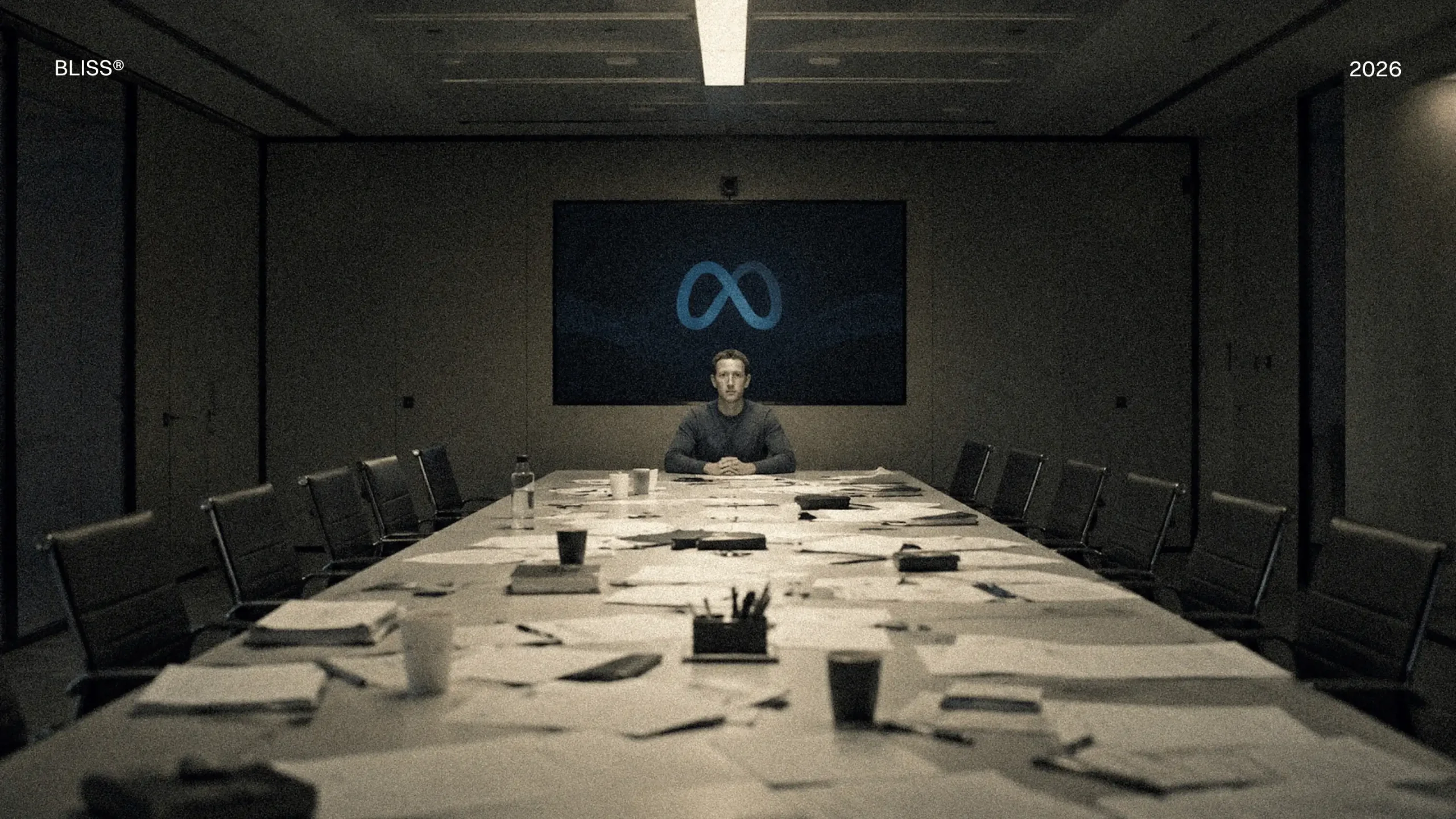
The Idea Behind Project OT
Meta had already signalled this direction in its financial filings. In its first-quarter 2026 Prepared Remarks, the company described a future in which employees would manage agents capable of generating ideas, running experiments, executing tasks and contributing to product development. In this model, the worker’s role changes. Part of the execution shifts to agents. People become increasingly responsible for setting objectives, checking outputs, spotting errors and deciding what should actually make it into the final product. Project OT attempted to translate this logic directly into the company’s structure. If an employee supported by AI can handle more tasks, the way teams are built inevitably changes too. And it is precisely here that Meta began to run into difficulties.The +220% that told only part of the productivity story
Among the internal data cited in the Reuters investigation, one figure stands out. Code changes made across Meta’s platforms and infrastructure reportedly rose by 220% on the previous year. New features and improvements that actually reached users, by contrast, had grown by 36%, as also reported by Computerworld. The gap between these two figures raises a very practical question: how do you measure AI’s productivity? Generating more code represents an increase in output. That code, however, has to be reviewed, tested, integrated into existing systems and maintained over time. According to Reuters’ account, Project OT also reportedly surfaced problems of reliability, security and management of some changes produced by the agents. A greater capacity to generate work can therefore shift the load onto other activities: control, verification, coordination and correction.More output does not automatically mean more value
It is one of the most useful lessons to emerge from the case. A company can measure how many lines of code are produced, how much content is generated or how many documents are processed, but if far fewer improvements actually reach users, the metric becomes less useful. With AI, attention to the final outcome matters even more. How many features actually reached users? How much time was genuinely saved? How many errors were avoided? AI makes producing ever easier. The organisational challenge shifts to the ability to select, verify and make good use of what is produced.AI Productivity Depends Heavily on Context
Research already shows how difficult it is to attribute a universal productivity effect to AI. A study by METR involved 16 experienced open-source developers working on 246 real tasks in repositories they knew very well. The developers expected AI to reduce the time needed to complete their tasks. In that specific experiment, using the tools available in the first half of 2025, they instead took on average 19% longer. METR subsequently updated its research method, highlighting how quickly tools and ways of using them are changing. In another sector, a very different result emerged. The study Generative AI at Work, conducted on 5,179 customer support agents, found an average productivity increase of 14%, with particularly high benefits for less experienced workers. The study is available on the National Bureau of Economic Research website. The two studies also help us read Meta more clearly. The value AI generates depends on the task, on people’s level of experience, on the quality of the tools and on how they are built into the process.Technology Changes Fast. Organisations Far Less So
Microsoft’s 2026 Work Trend Index reaches a particularly useful conclusion. The research, carried out among 20,000 workers in ten countries, attributes 67% of the impact on AI adoption to organisational factors (culture, managerial support and talent management), compared with 32% associated with individual factors. The problem, then, also concerns everything that surrounds the tool. Processes. Skills. Roles. Metrics. Leadership. A recent McKinsey analysis highlighted a similar dynamic: companies that had redesigned their workflows before introducing agentic systems were more than twice as likely to report productivity gains above 20%. Project OT appears to have collided with precisely this gap. AI can improve within a few months. Changing the way thousands of people work together requires timelines, rules and responsibilities that are far harder to compress.There Is Also a Trust Problem
During the project, Meta also began collecting certain information on the activity of selected US employees to help train the agents. According to an earlier account by Reuters, the system could capture mouse movements, clicks, keyboard use and occasional screenshots. Meta had explained that the data would be used to teach agents to interact better with computers and applications, and would not be used to assess individual performance. The measure nonetheless raised concerns among employees. In June the company scaled back the system, introducing greater scope for suspension and exemption. This detail matters because it shows how far AI adoption is also a question of internal trust. The people involved in developing the new systems need to understand what role they will play once those same systems become more autonomous. A technology strategy that is unclear on the human side can end up slowing the technology itself.Meta Keeps Investing
Project OT has been scaled back, while Meta’s investment in artificial intelligence continues. In its official first-quarter 2026 results, the company forecast capital expenditure of between $125 billion and $145 billion, largely earmarked for the infrastructure required for AI development. Over the same period, more than eight million advertisers were using at least one of Meta’s generative tools for ad creation. The company therefore continues to back AI with enormous conviction. Project OT points to a different difficulty: turning technological capability into a new, sustainable organisational model.What the Meta Case Leaves Behind
The Stanford AI Index 2026 shows rapidly growing adoption of artificial intelligence across organisations. Fully autonomous agents, however, are still uncommon in many business functions. We are therefore at a particular stage. Companies already see AI’s potential and are starting to redesign roles and processes, while still working out how reliable, productive and autonomous these tools really are. The Meta case shows clearly where the difficulty lies today. AI can increase an individual’s productive capacity. From that moment, the organisational questions begin. Who checks the result? Which skills become more important? How does team size change? How is productivity measured? Who remains accountable for decisions? And above all, what role is left to people when a growing share of execution passes to machines? This is the question Project OT leaves behind. More AI can mean fewer people in some activities. The outcome depends on how everything around the technology is designed. Meta tried to do this on an enormous scale. And its experiment shows how far the AI transformation has now become, first and foremost, an organisational transformation.Domande frequenti
What is Meta’s Project OT?
Project OT, short for Organization Transformation, is an internal project developed by Meta in 2026 to study an organisation more heavily based on AI agents. According to Reuters, some scenarios envisaged smaller human teams supported by artificial systems capable of handling a growing share of activities.
Did Meta want to lay off 60% of its employees?
No. The 60% related to certain scenarios for specific teams, not a 60% reduction in the company’s entire workforce.
Why was Project OT scaled back?
Reuters’ account cites operational difficulties, reliability and security problems, below-expectation results in some workflows and internal tensions during the transformation.
BLISS®© 2026. ALL RIGHTS RESERVED
Scritto il · Aggiornato il