


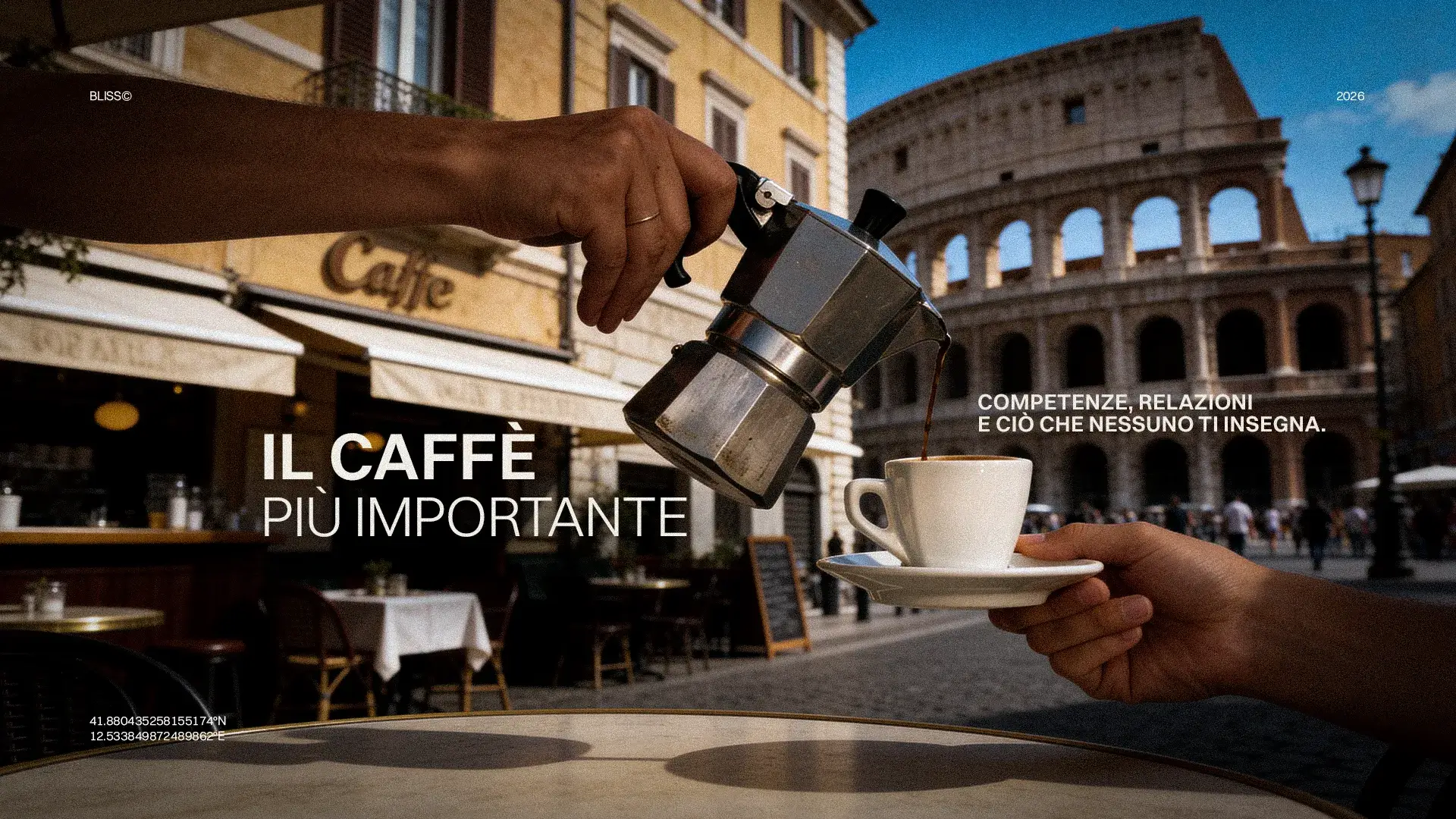
There is a precise moment in the life of anyone working in design when everything seems to make sense. You have spent years studying grids, working out why a sixteen-pixel margin works better than a twenty-pixel one, obsessing over the colour consistency of a palette that no one will ever consciously notice but everyone will perceive. You have worked your way up from the bottom. You have laid out catalogues at three in the morning. You have redone logos twenty-six times because the client “didn’t recognise themselves”. You have learnt by heart the rules of typography, the golden ratio, the psychology of colour. You have built, brick by brick, an expertise that has earned you a seat at the top table.
And then one day someone looks you in the eye and tells you something you hadn’t seen coming.
They tell you the project wasn’t won by the best portfolio.
Intelligence is not enough
I know that young man well. The one with a fire inside every time a layout falls perfectly into place, every time a presentation holds the room in suspense until the final slide. The one who gives up everything to chase the definitive version of a concept nobody asked him to perfect. The one who believes, with almost religious conviction, that excellent work will eventually get noticed on its own.
That being good is enough.
That quality will speak for itself.
Massimo Vignelli, one of the greatest designers of the twentieth century, said that design is intelligence made visible.
He was right. But he never said that making intelligence visible would be enough.
Because there is a step that no design school teaches you; no YouTube tutorial warns you about; no creative brief prepares you to face. It is the moment you discover that the world does not follow the rules you have learnt. That pure meritocracy, the kind where the best always wins, is a beautiful idea we all cling to, but one that in reality collides with far subtler dynamics.
Far more human ones.
I am talking about relationships. I am talking about trust. I am talking about that coffee with the right person at the right moment, which carries as much weight as six months of flawless work.
And I do not say this cynically. I say it with the clarity of someone who has been there.

Never Eat Alone
Keith Ferrazzi, in his “Never Eat Alone“, tells an uncomfortable truth for those who come from a culture of doing.
He says that success depends as much on who you know as on what you can do. Not because the world is unfair, but because people entrust their most important projects to those they know, those they have seen in action, those they have looked in the eye over an espresso at the bar and thought “yes, I trust them”.
There is a moment in the career of Virgil Abloh that captures this tension perfectly.
Abloh was not the most technically skilled designer of his generation. He did not come from Central Saint Martins. He did not have the classic fashion-system pedigree. But he had grasped something that many of his more technically gifted peers had not: that design does not exist in a vacuum.
It lives in conversations. It lives at dinners. It lives in airports at six in the morning, with the people who then decide what will become culture and what will remain a nice file on Behance.
His collaboration with Kanye West did not begin with a portfolio sent by email. It grew out of proximity, out of time spent together, out of trust built over time.
So the question arises: does everything I have learnt count for nothing?
No. It counts, absolutely. But it counts as a necessary condition, not a sufficient one.

Lessons from Rand and Picasso
Pablo Picasso was already painting like a Renaissance master at fourteen. But his career (the real one: the one that made him Picasso) was built as much in the cafés of Montmartre as in his studios. Evenings at the Bateau-Lavoir with poets, writers, art dealers. Friendships with Gertrude Stein, with Apollinaire, with Kahnweiler.
Picasso was an absolute genius; nobody disputes that. But he was also someone who understood the value of being in the right room, with the right people, at the right time.
Paul Rand, the man who designed the logos of IBM, ABC and UPS, maintained that design is the method of putting form and content together. But if you think about it, his career is also proof that content alone is not enough. Steve Jobs chose him for the NeXT logo because he wanted to work with him. Full stop.
Reputation, relationships and personal positioning came before any technical assessment.

Conclusion
When you reach the summit of Everest and look down, you realise that the route was never a straight line. It was made of makeshift bivouacs, of rope partners sometimes chosen and sometimes simply met; of moments when technique saved your life, and others when it was someone’s hand that pulled you up.
The climber who reaches the summit alone is the exception. The rule is the expedition.
The team. The network of people who supported you, believed in you, opened a door.
So perhaps the real skill, the one nobody teaches you but all the greats possess, is not choosing between being good and being connected. It is understanding that the two feed each other. That coffee with the right person is not a betrayal of your talent. It is how your talent finds its way into the world.
To that young man, to anyone still laying out pages at three in the morning convinced that perfection is the only possible strategy, I would say just one thing. Never stop being obsessed with quality. It is the rarest and most precious thing you have.
But look up from the screen now and then. Step out of the studio. Because the project of your life may come not from a brief, but from a coffee.
BLISS®
© 2026. ALL RIGHTS RESERVED