




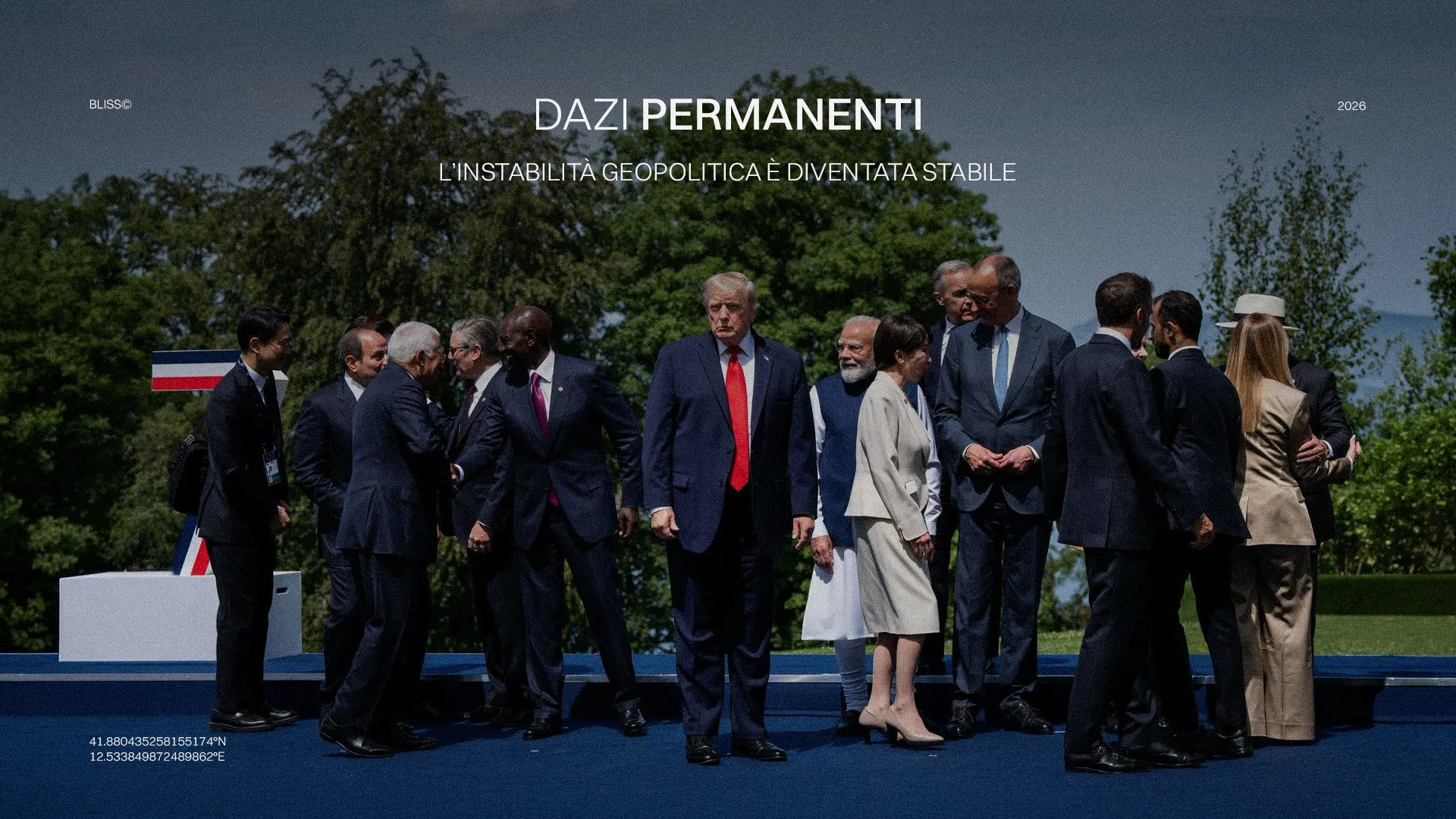
Harvard Business School lo ha messo al primo posto tra le sfide del 2026.
I Dazi sono qui per restare, e le organizzazioni devono smettere di trattarli come un’eccezione temporanea.
In its customary review of the eight trends that will define 2026, Harvard Business School identified managing the costs generated by the 2025 tariffs as the central challenge of the year. The framing offered by Alberto Cavallo, HBS professor and founder of the Pricing Lab, is quite clear: even though the impact is emerging gradually, its effect will be persistent and widespread.
In short, in 2026 tariffs will be a structural condition to be managed.
And brands need to prepare for this prospect.
Persistence in numbers
Pricing Lab data show that the 2025 tariff increases pushed retail prices of imported goods up by around 5.4% relative to the pre-tariff trend.
Over the same period, domestic goods in import-intensive sectors rose by around 3%. Only a fifth of the tariff cost reached the shelves: the rest was absorbed upstream, by manufacturers and wholesalers.
This means that most of the impact of Trump’s strategies has yet to be felt.
The estimated cumulative contribution of the 2025 tariffs to headline inflation is around 0.7 percentage points, a figure that keeps the consumer price index close to 3% and complicates the task of the Federal Reserve in bringing inflation back towards its target.
In April 2026, the Tariff Tracker estimated that American consumers had absorbed up to 43% of the total cost of tariffs in the first seven months, with companies bearing the rest. Most of the cost pass-through has probably already taken place, provided that tariffs do not rise further.
Will that really be the case?
From emergency to constant
For much of 2025, tariffs were treated as an event, and the expectation was that the situation would settle.
That is no longer possible.
Treating this situation as an exceptional condition, however, risks causing long-term difficulties for brands with an international presence.
Particularly when geopolitical upheaval drives price adjustments.
Every reactive decision, in fact, risks looking like a change of course to those observing from outside: investors, partners, customers in different markets who see different behaviour over the same period. The perception of operational instability carries over to the perception of the brand, even when the underlying decisions are entirely rational.
Organisations that build tariff risk into their structural planning, by contrast, can communicate their adjustments as part of a coherent strategy, defined in advance.
The difference is enormous, even when the concrete actions are identical.
What to do, in practice
The same HBS researchers advise companies to map tariff exposure for every product, monitor cost drift more frequently and review sourcing and pricing plans over shorter horizons.
The most import-intensive sectors, such as home furnishings and electronics, will feel the strongest pressure.
Those who govern communications for an organisation with an international presence need a communication framework prepared in advance: what is said if the price changes, to whom, in what tone, in which markets first and which later.
In the current climate, tariff risk can be addressed through structured governance, capable of absorbing volatility without transferring it to the perception of the brand.
New Connections (FAQ)
Our company does not import from the United States. Do the 2025 tariffs still affect us?
Indirectly, yes, if your supply chain touches even a single supplier or end market exposed to US tariffs. Price rises on goods imported into the United States ripple through global supply chains: a European supplier selling components to an American company subject to tariffs on other inputs may face requests to renegotiate prices, even if its own product is not directly taxed. Mapping tariff exposure means looking beyond your direct relationship with the United States, to second- and third-tier suppliers and customers.
How long will it take for the situation to stabilise?
The same HBS estimates indicate that, barring further tariff escalation, most of the cost pass-through has already taken place. But this does not mean stability: it means the level reached becomes the new baseline, not a temporary peak from which things will return. Planning in anticipation of a return to the pre-2025 situation is the costliest risk an organisation can run at this moment.
How do you communicate a tariff-driven price increase without appearing simply to pass a cost on to the customer?
By communicating the rationale before the figure. A price increase announced as an isolated reaction is read as the company’s problem passed on to the customer. A price increase set within a broader narrative on the structural management of international costs, communicated in advance, is read as governance. The difference does not lie in the size of the increase. It lies in whether the customer sees it coming as part of a system or experiences it as a surprise.