



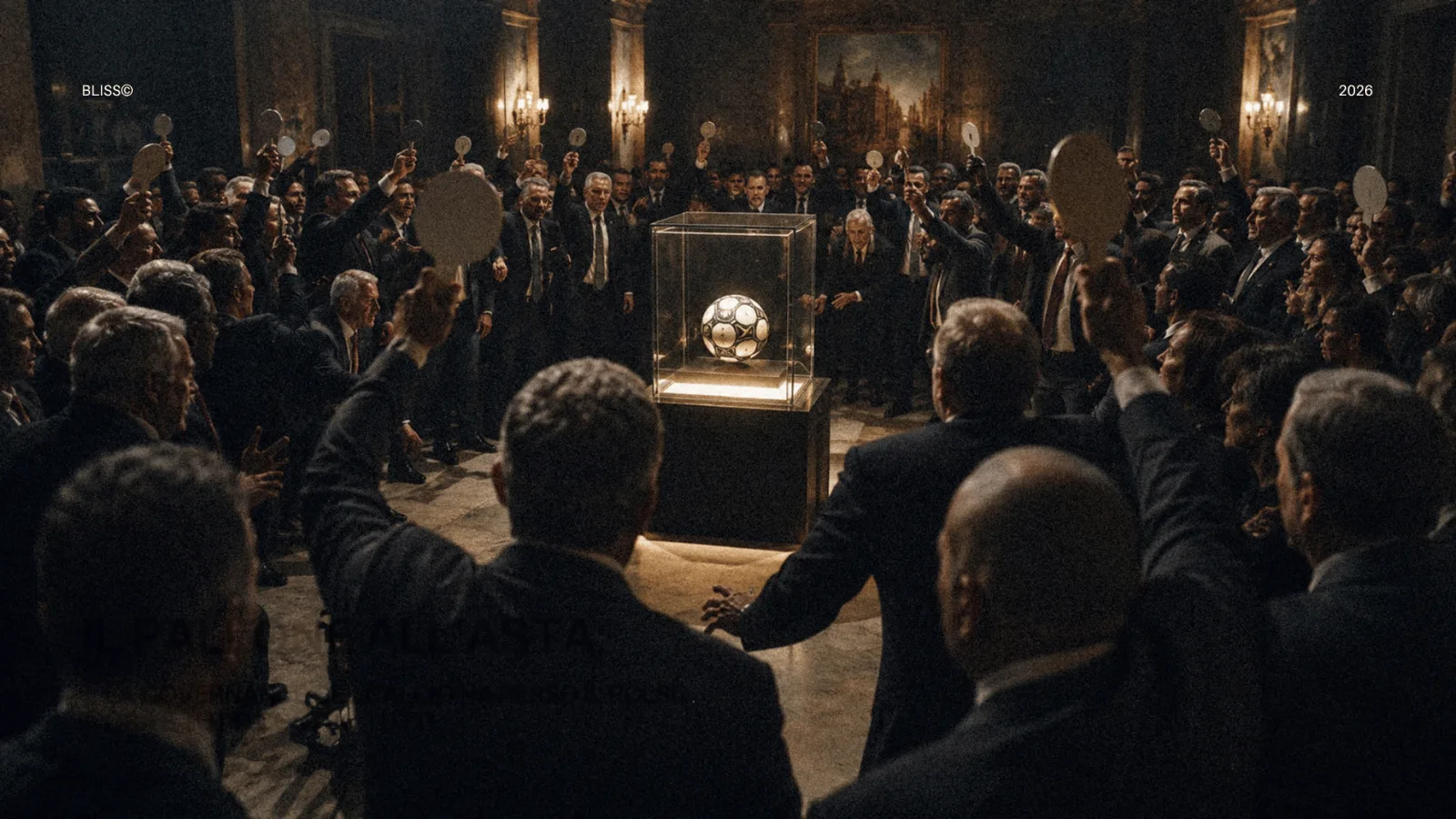
FIFA wants to sell a stake in the World Cup to private investors.
On 28 July, in fact, the creation of FIFA Forward Enterprise (FFE) was announced: a separate company that will collect and manage the commercial rights of the World Cup and the main international competitions, including the Club World Cup. Initial valuation: 20 billion dollars. Plan: sell up to 20% to minority private investors, raising around 4.2 billion. The transaction is being assisted by JPMorgan.
Among the potential investors is also Thrive Eternal, an investment vehicle connected to Joshua Kushner, brother of Jared Kushner, who is married to Ivanka Trump.
And so it is no coincidence that (according to The Times of London) FIFA consulted the Trump administration itself while preparing the plan.
News that has shocked public opinion and split the football world. UEFA, in fact, responded with a position of its own. And from all this emerges a problem that concerns any major public institution: who owns what no one built alone?
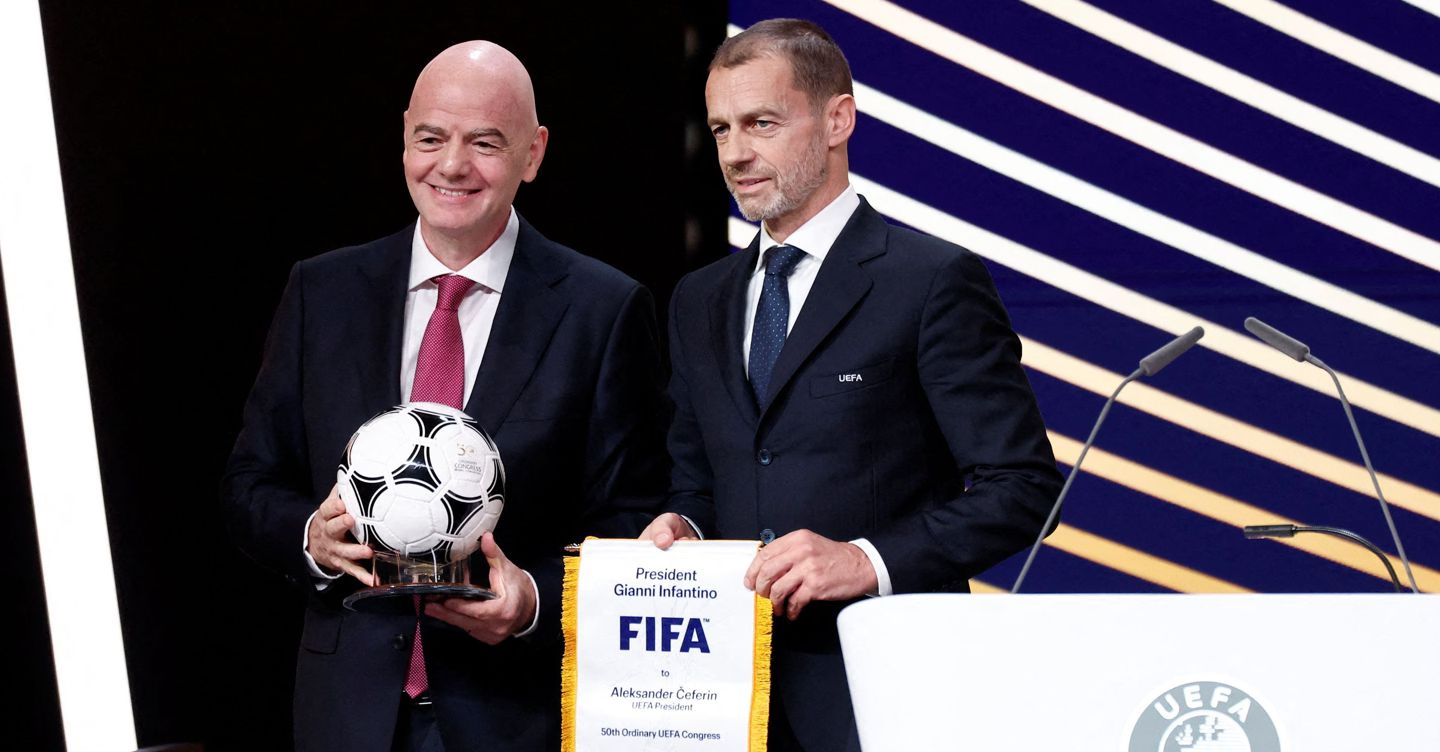
FIFA vs UEFA
UEFA’s reaction arrived on the same day as the announcement, with a statement that leaves no room for interpretation. “The soul and governance of football are not assets to trade, especially with zero transparency as to who gains financially.” And again: “Football does not belong to FIFA. None of us owns football.”
This statement is a governance thesis: the institution that manages football does not own its rights. It simply administers them on behalf of someone else. And that someone is the 211 national associations, the clubs, the players, the fans. The decision to sell a stake in the World Cup is not Infantino’s to make. If it happens, it will happen by agreement of everyone.
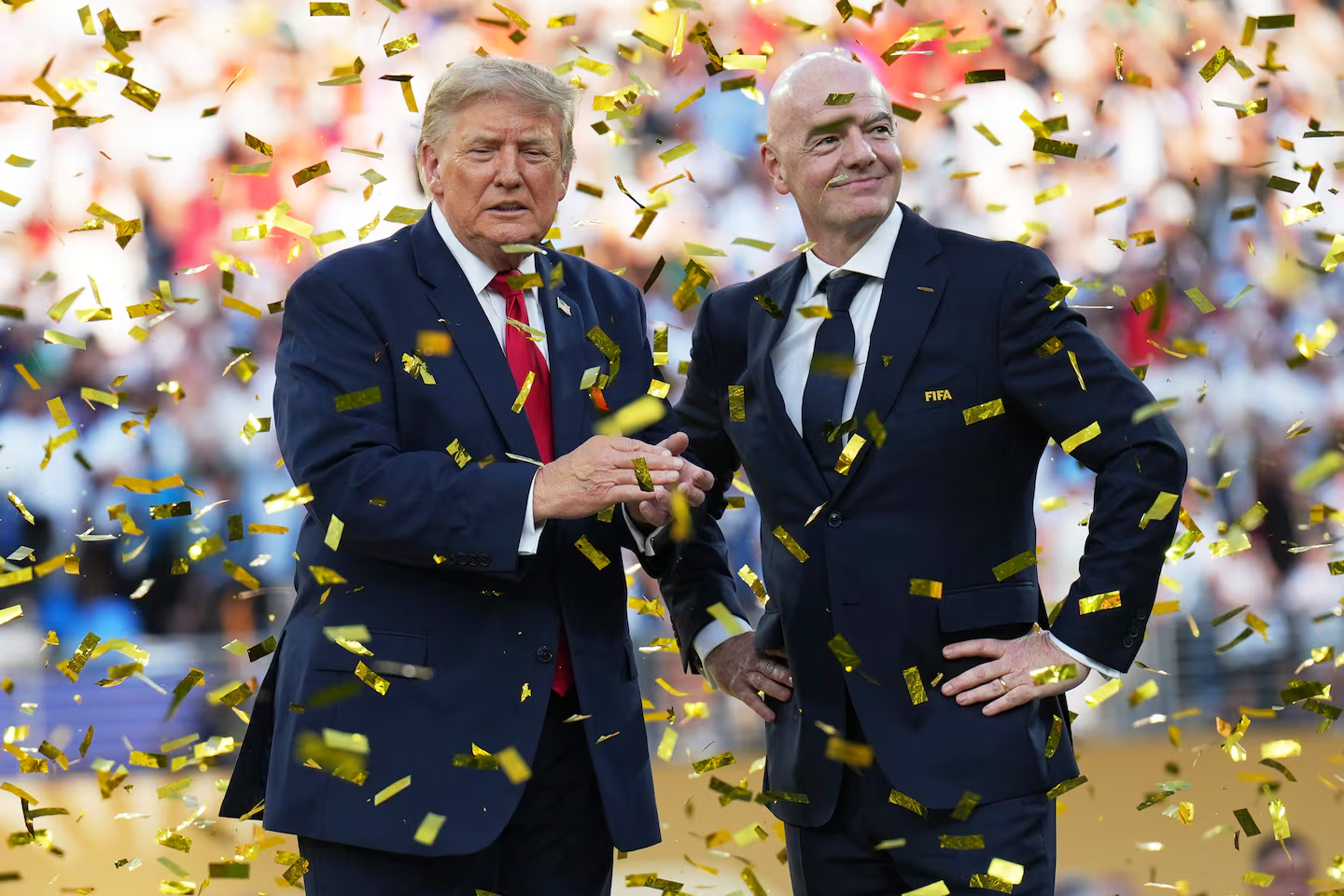
Not everyone agrees, however: above all Infantino, who is holding firm, steadfast in the support he receives from the White House.
The Political Context That Makes Everything More Complex
The relationship between Infantino and Trump did not begin with this announcement. In December 2025 FIFA awarded Trump a ‘FIFA Peace Prize’, an unprecedented recognition in the federation’s history. FIFA rented space inside Trump Tower in New York as an operational headquarters for the 2026 World Cup.
The FFE plan, read in this context, takes on the contours of a political-commercial axis. And if football were to turn into a commercial holding company with private shareholders motivated by returns, the consequences for how decisions will be made in the football world (and for who will have to answer for them) would change radically.
What This Case Says About the Governance of Global Institutions
FIFA is not the only global institution that governs a collective asset while facing pressure to privatize its revenues. It is simply the one that, at this moment, makes the mechanism most visible.
When an institution stops answering to its principals and starts answering to private investors, its ability to protect the collective interest erodes. Perhaps not out of bad faith, but it is natural for it to happen. It is a structural effect. Private investors optimize for returns. Public institutions should optimize for the mission. The two logics can coexist for a period, but they tend to diverge over time.
The lack of transparency is therefore the central risk. If no one knows for certain who will profit, how much and under what conditions, there is no longer control over what was previously the most valuable asset.
The World Cup does not belong to Infantino, just as a city does not belong to its mayor. The governance of a collective asset is a temporary mandate, not ownership. Anyone who forgets this distinction creates the conditions for a conflict of interest that democratic institutions will struggle to correct.
In football, right now, it is everyone against everyone. How this clash will be resolved is entirely a question of governance.
Domande frequenti
What Difference Does It Make That the Investors Are Minority Shareholders and Have No Voting Rights?
A minority stake without voting rights eliminates formal control, but it does not eliminate influence. Investors with significant economic interests in an organization develop relationships, expectations and informal pressures that, over time, can steer its decisions. The problem is not only what the FFE bylaws provide. Anyone investing four billion in a structure expects a return, and that return also depends on decisions that FIFA continues formally to control. Proper Brand Governance builds a serious system that does not stop at defining roles and voting rights: it makes dependencies visible, monitors external influences and establishes limits capable of protecting the organization’s decision-making autonomy.
Is the Link Between Kushner and Trump Direct Enough to Constitute a Conflict of Interest?
Joshua Kushner is not Trump’s direct brother-in-law: he is the brother of Jared Kushner, the American president’s son-in-law. The family connection is therefore indirect, but real. The most significant point, however, does not concern the individual investor. It concerns the set of relationships between FIFA and the Trump administration, documented over time through the Peace Prize, the Trump Tower lease, the consultation on FFE and the organization of the 2026 World Cup on American soil. Individually, each of these elements can be explained. Considered together, they build a system of political and economic proximity that would require greater transparency and stronger safeguards against conflicts of interest, even merely perceived ones.
Does UEFA Have the Tools to Block the Plan?
UEFA cannot unilaterally block a FIFA decision. It can, however, mobilize its 55 affiliated associations so that they vote against the plan at the congress called to approve it. It can also exert political pressure through European governments, build alliances with other confederations and threaten a reduction in cooperation with FIFA on international competitions. The statement of recent days therefore seems to be the first step of a coordinated campaign, rather than an isolated statement. The final confrontation will take place in the vote of the 211 national associations: that will be the venue in which UEFA’s real ability to build a majority against the plan will be measured.