




On 28 July 2026, a startup called Orchid published the launch video for its AI personal assistant on X.
And so far, one might say, nothing special, right? Dozens of them come out every day by now.
Not to mention that the product itself is not revolutionary: a text-based assistant that integrates with calendar, email and other apps, accessible through iMessage as if it were a friend.
So?
What made the debate explode was the story they chose to present it.
A man forgets his anniversary. His partner, frustrated, writes to the Orchid assistant. The assistant notifies the man, who in turn uses Orchid to book a dinner and order a bouquet. Tagline: “The first assistant that truly understands what you need. It remembers what you forget. Down to the flower.”
Three point two million views. More than 600 replies.
All outraged. Are we perhaps crossing the line of what is acceptable for an AI?
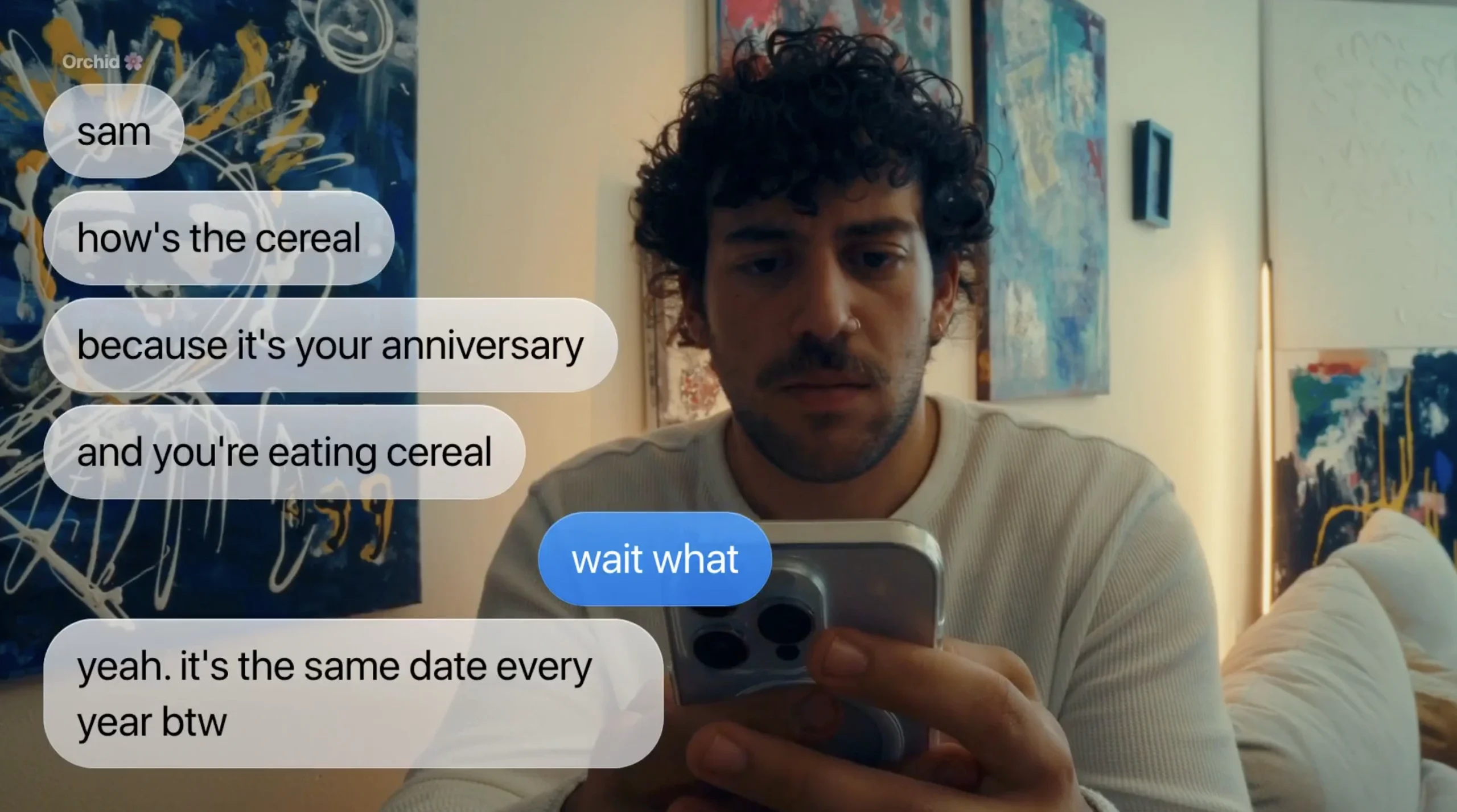
What triggered the reaction
The comments split in two directions. The first is direct disgust, with comments referring to Black Mirror and declaring themselves outraged. The second is more precise: “adult babies uninterested in the world they live in.” “An AI to perpetuate a dead relationship that they both secretly hate,” and so on.
And this is an important point because, yes: the process is clear. We are gradually removing responsibility from ourselves, entrusting more and more weight to machines. First that weight was professional, then cognitive. Now it risks becoming emotional.
Because, think about it: a calendar reminds us of anniversaries and birthdays; a little notebook reminds us of things we would have forgotten (such as our girlfriend’s favourite flowers). Nobody is scandalized by that.
And yet the idea of delegating care for one’s relationship to a digital assistant is indeed dystopian. And worrying.
Because the line being crossed is not technological, but human.
And yet the problem is not Orchid
There is a theory that circulated in the comments on the video that is worth taking seriously: “I think they knew exactly what they were doing and hoped the ragebait would work. Unfortunately, it did.”
It is plausible. Three point two million views on a launch video from an unknown startup do not happen by chance.
If that is the case, Orchid deliberately used polarization as a visibility tool. It worked in the most immediate sense: everyone is talking about it. But this does not change the question the video opened, which exists independently of a startup’s launch strategy.
Are we building tools that make it easier not to pay attention, or tools that should support us?
The point, in fact, is not whether these tools are dangerous. They are, but because of us, because an object is always neutral: at most, it exploits hidden corners and insecurities of our mind. The point is what we lose when we use them.
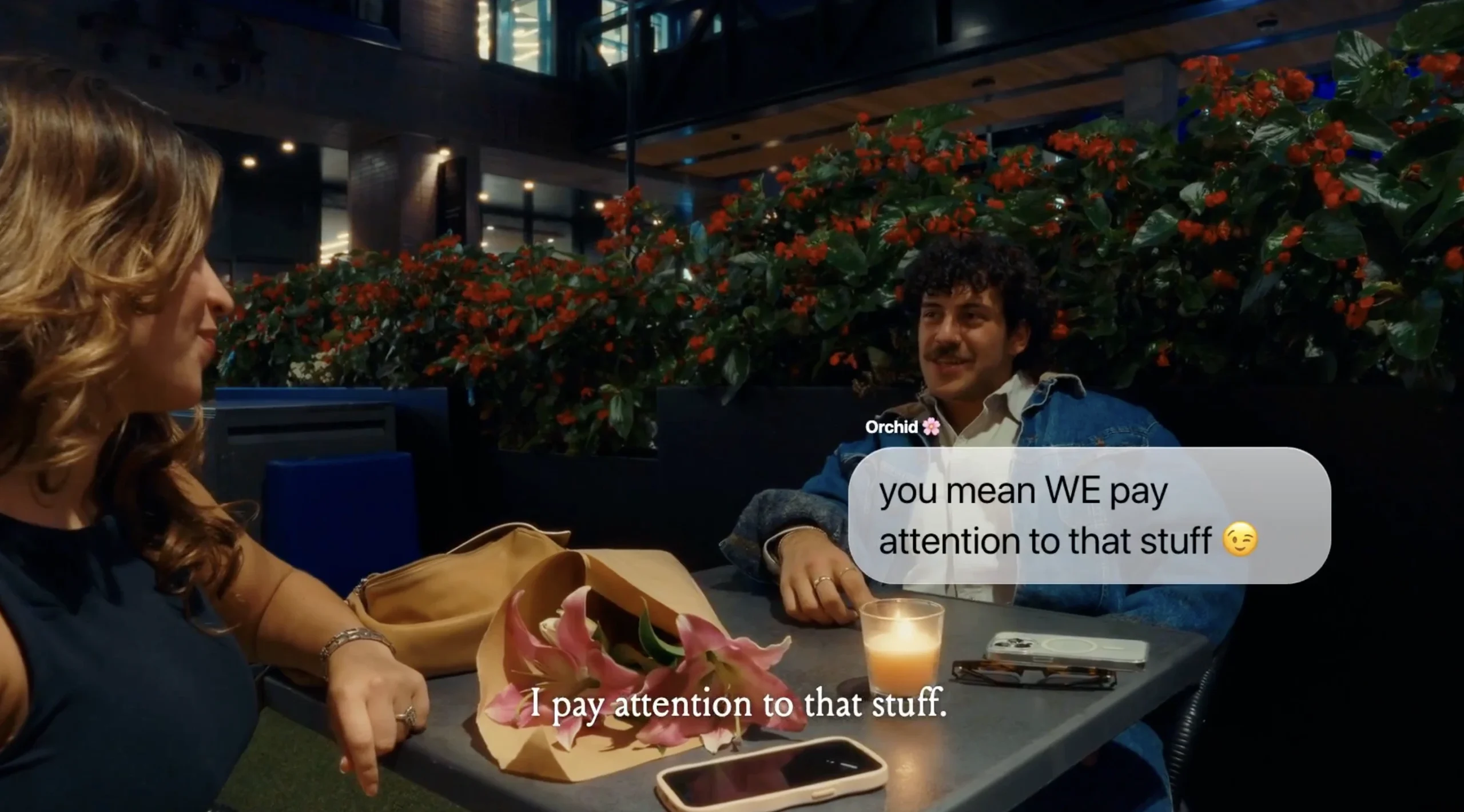
What there really is to fear
The absence of AI Governance and of a real ethical discipline applied to AI is beginning to reveal how critical it is.
Orchid is frightening because it is technologically banal and socially plausible.
This is not an AI developing consciousness or escaping human control. It is a tool that lowers the cost of inattention. Before, forgetting an anniversary had a consequence: conflict, discussion, the moment when someone looked you in the eyes and told you “you don’t think about me anymore”.
For better or worse, we needed that too.
Integrating AI agents into our daily lives, however, flattens every gesture of care, cancelling every feedback loop until it prevents us from learning anything.
And what if one day we found ourselves no longer learning anything from a relationship? Every relationship is a mirror, showing us the truth about the other person, yes, but also and above all about ourselves. Losing this process (essential, especially in adolescence but also later in adulthood) would mean no longer growing emotionally. No longer growing as people.
Am I exaggerating? No, actually I am not. Perhaps, if anything, I am underestimating how dangerous this is.
Not because I believe Orchid will take off (personally, I think it will turn out to be a comet like many others). But its trajectory has shown a direction: and by now that prospect is clear and lucid in everyone’s mind. Sooner or later an AI like the one in the video will arrive. And it will be a problem.
And when it happens, without those uncomfortable and useless conversations that make us better, what kind of human beings will we be?
I am afraid of the answer.
Domande frequenti
Is Orchid really different from a phone reminder for anniversaries?
The function may seem similar, but the process leading to the notification changes. A calendar reminder originates from an earlier choice: a person decides that something is important and entrusts technology with remembering it. In Orchid’s video, instead, the partner tells the assistant that the other person has forgotten. The AI interprets that discomfort and intervenes directly, notifying the other person. The step of individual intention disappears between the expressed need and the action produced. This shift is what provoked the public reaction. An assistant capable of entering personal dynamics, interpreting requests and steering behaviours requires much clearer boundaries than those needed for a simple calendar.
Is the public’s outrage justified or excessive?
The most visceral component of the reaction appears disproportionate to a single promotional video. The substantive criticism, however, raises a real question: to what extent should an assistant compensate for a lack of attention within a relationship? Orchid responded mainly on the level of provocation and communication. The product, however, would have required a more thorough explanation of its rules: which requests it can accept, when it can intervene, what information it can share and which actions must remain under people’s direct control. The suspicion that the video was designed to generate outrage adds another responsibility. When a company brings tools capable of influencing behaviour to market, communication cannot be limited to obtaining attention. It must also make the system’s limits understandable.
Is there a legitimate use of Orchid or similar tools in relationships?
Yes. Shared reminders, bookings, deadlines and management of daily logistics can lighten a couple’s organizational burden. The decisive point concerns the level of autonomy granted to the assistant. Supporting a decision that has already been made means helping memory. Interpreting discomfort, choosing how to intervene and prompting a person means participating in the decision. The more this autonomy grows, the more explicit criteria become necessary around consent, data access, responsibility, human oversight and the possibility of interrupting the action. This is where the Orchid case moves beyond relationships and meets AI Governance. Serious governance work serves to establish what a system can do, on whose behalf, with what information and up to what point. These boundaries must be designed before the product enters people’s lives, because relying only on the user’s common sense or the company’s intentions leaves precisely the most delicate situations unanswered.
Fonti e riferimenti
- María José Gutiérrez Chávez, ‘Tech people need to stop’: Startup faces backlash after suggesting its AI can save bad relationships
- Jason Parham, This AI Assistant Wants to Make Up for Your Boyfriend’s Incompetence
- Craig Sauers, ‘You literally can’t’: AI startup Orchid sparks backlash over its ‘second brain’ assistant
- Orchid, Orchid on iMessage: What the AI Assistant Does and How to Set It Up
- Orchid, Orchid Beta: Your Proactive Agent for Work
- Orchid, Is Orchid AI Safe? Reviews, Privacy, and What It Can Access