

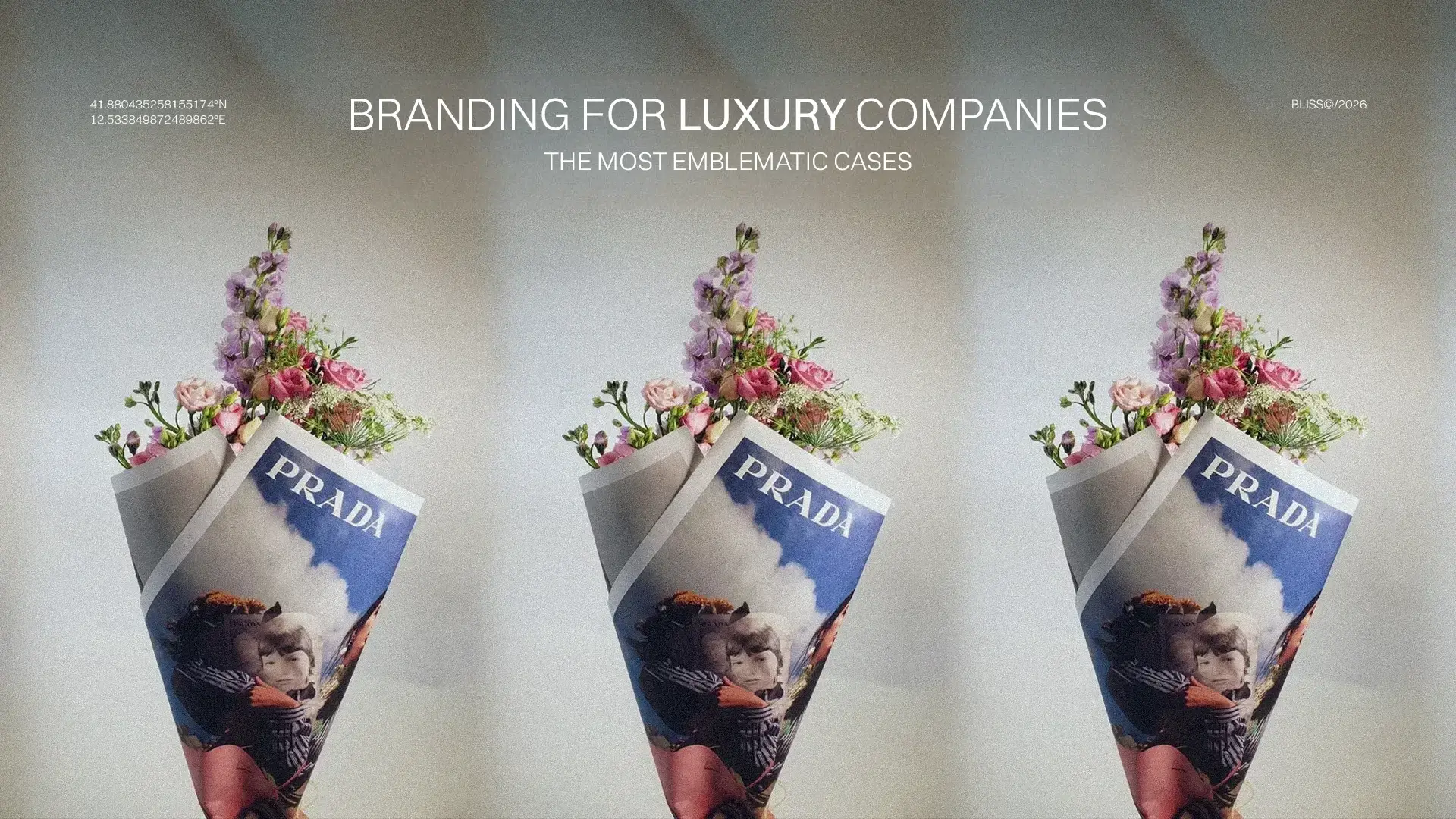
Luxury branding is the strategic discipline through which a high-end brand builds, oversees, and communicates its perceived value over time. It is not about advertising, nor is it an isolated visual identity: it is an integrated system of meanings—visual, narrative, experiential, symbolic—that defines a brand’s position in the elite consumer’s imagination and, more deeply, within the culture of its reference industry.
The term encompasses three distinct yet inseparable concepts: branding as a process (the strategic decisions that build identity), luxury as a territory (the market of goods and services with very high perceived value), and their intersection as a field where the rules of traditional marketing are systematically subverted. In luxury, scarcity is an asset, not a limitation. Price does not decrease demand; it often stimulates it. Communicative silence is worth as much as the most invasive advertising campaign.
The global market for personal luxury goods is currently worth over 360 billion euros, according to Bain & Company estimates updated to 2025. The experiential luxury segment—which includes high-end hospitality, gastronomy, wellness, and travel—surpassed 103 billion dollars in 2025, showing an 8% growth over the previous year (Euromonitor, 2025). But the real strategic news of 2026 is not growth: it is its selectivity. The luxury market is splitting into two divergent trajectories—brands that grow and those that lose ground—and the difference is played out almost entirely on branding.
In the world of luxury, branding is not just strategy: it is perception, emotion, desire. A high-end brand must speak even before the product is touched. It must be recognizable, consistent, and memorable. This is why branding in the luxury sector requires aesthetic sensitivity, a culture of detail, and a deep vision of the market.
Bliss
Talk to a
consultantTell us about your project. We will find the right path together.
contact us
Luxury Branding: Luxury is Not Sold, It is Told
Unlike the mass market, where the focus is often on functionality or price, luxury brands sell experiences, status, and values. The task of a branding agency in this context is to build a coherent imagination that spans every touchpoint: from the logo to the brand voice, from printed materials to packaging, and from e-commerce to physical boutiques.
Distinguishing Characteristics of Luxury Branding
An identity for a premium brand must respect several fundamental logics:
- Visual excellence: The design is curated down to the smallest detail. Nothing is left to chance.
- Cross-media consistency: Every channel—physical or digital—must tell the same story using consistent tones and languages.
- Perceived exclusivity: Branding must convey uniqueness, limitation, and intrinsic value.
- History and heritage: Many luxury brands are founded on a narrative of tradition, craftsmanship, and savoir-faire.
Strategic Matrix: Luxury Branding vs. Mass Market Branding
| Dimension | Mass Market Branding | Luxury Branding |
| Primary objective | Maximize penetration | Oversee perceived value |
| Price | Competitive lever to be minimized | Status signal to be protected |
| Distribution | Ubiquity and accessibility | Selectivity as a tool for desirability |
| Communication | Reach and frequency | Rarefaction and consistency |
| Heritage | Rarely relevant | Primary strategic asset |
| Target | Demographic and mass | Psychographic and value-driven |
| Innovation | Speed and iteration | Slow, codified evolution |
| Social media | Volume and virality | Curation and tone control |
| Measuring success | Market share and volume | Brand equity and pricing power |
The Great Luxury Reset in 2026: What is Changing
The year 2026 marks a structural turning point for luxury branding globally. After years of growth driven almost entirely by price increases—between 2019 and 2023, some maisons doubled the prices of iconic products—the market has begun to signal a fracture. According to Bain & Company, approximately 50 million buyers left the luxury market between 2023 and 2024, mostly aspirational consumers excluded by price increases unsupported by a proportional improvement in quality or creativity.
The result is a competitive SERP split into a K-shape: on one side are brands that hold or grow, and on the other are those losing value. In the Best Global Brands 2025 report, Hermès increased its brand value by 17%, while Gucci lost 35% (Advertising Week, 2026). The difference is not about the product: it is about the branding. Hermès never compromised on perceived scarcity, narrative consistency, or artisanal quality. It paid the price of slower growth but built a brand equity that proved to be recession-proof.
For brands working on luxury positioning—from large maisons to niche Italian excellences—the lesson is clear: branding is not a communicative expense; it is the infrastructure that determines the brand’s resilience over time.
The K-Shaped Luxury Market: Who Rises and Who Falls
LVMH recorded a return to 1% growth in the third quarter of 2025, signaling a possible turning point after several quarters of decline. Richemont, on the other hand, achieved 5% growth in the half-year ending September 2025, driven by jewelry maisons. This data confirms that there is no luxury crisis in an absolute sense: there is a crisis among brands that diluted their positioning by chasing volumes that luxury branding cannot sustain.
According to McKinsey, Gen Z spending is growing at twice the rate of previous generations and will surpass Boomer spending by 2029, supported by an inheritance wealth transfer estimated between 15 and 20 trillion dollars. This generation buys luxury for creativity and exclusivity, not for ostentation: which means that the luxury branding of the future must be capable of communicating uniqueness without falling into self-referentiality.
Exemplary Case Studies from the Italian Landscape
Italy, the homeland of aesthetic taste and manufacturing excellence, is home to entities that have successfully built a strong and distinctive identity. Among the projects managed by Bliss, an agency ranked at the very top among the best Italian firms specialized in luxury branding, we find:
- Profumum Roma: An artistic perfume brand that required a narrative capable of combining exclusivity, tradition, and a deeply Italian sensory identity.
- Risivi & Co.: Artisanal Italian jewelry, for which a minimalist yet deeply evocative branding was built, featuring a refined visual tone and packaging that communicates value even before opening the box.
In both cases, the work included the design of the visual identity, the coordination of digital channels, and the construction of a narrative aligned with the brand’s soul.

PROFVMVM ROMA: Analytical Focus
The approach was not limited to sales, but aimed to build a coherent “imagination,” achieving very high awareness metrics. Here is a detailed analysis of how the branding worked, broken down by channels and key metrics:
1. Massive Expansion of Brand Awareness on TikTok
The launch of the TikTok channel was the primary engine for brand discovery and the construction of the new visual positioning. The “Visual” campaigns, aimed purely at aesthetics and storytelling, were the core of the strategy:
- Massive Visibility: The Visual campaigns alone generated over 2.9 million impressions and 2.9 million video views.
- Overall Volume: In total, the TikTok ecosystem produced over 4 million video views (4,032,887) and 4 million impressions.
- Community Growth: The campaigns brought in 2,632 direct followers, contributing to a total of 11,600 followers and 11,600 “Likes” on the profile.
- Strategic Focus: The “Visual” category accounted for 35.3% of the entire advertising spend on TikTok, confirming the commitment to investing in image even before immediate conversion.
2. Consolidation and Quality on Meta (Instagram/Facebook)
On Meta, branding worked to elevate perception and retain user attention through immersive content (“ThruPlay”):
- Coverage: Reach increased by 380.1%, reaching 461,762 users.
- View Quality: With an investment dedicated specifically to “Visual” content, 35,284 “ThruPlay” views (utenti che hanno guardato oltre 10/15 secondi) were obtained out of 152,278 impressions. This indicates high interest in the new aesthetic.
- Fanbase Growth: Community campaigns generated 7,785 new followers (+172.3%).
- Interactions: Content interactions doubled (+100%), reaching 32,815.
3. Impact of Branding on Web Traffic
The success of the brand work is clearly reflected in how users reach the site. The increase in “Direct” and “Organic Social” traffic shows that users actively search for the brand or are attracted to it by unpaid content:
- Direct Traffic (Brand Equity): Sessions coming from the “Direct” channel (those typing the website URL directly, a sign of strong recognition) increased between 47.1% and 61.2%, with 23,373 total sessions.
- Social Traffic: Organic Social traffic grew by 107% (7,283 sessions); Instagram traffic increased by 79.3%; TikTok traffic (tracked as m.facebook or specific referral) marked a +90.7% boost.
Summary
The numbers prove that the branding strategy transformed Profumum Roma into a brand capable of generating massive volumes of attention: over 6.4 million overall views (2.4M on Meta + 4M on TikTok) and a net increase in users looking for the brand spontaneously (+147.1% in Direct sessions according to the data table).
International Case Studies: Models to Study
Hermès: The Art of “No” as a Branding Strategy
Hermès is the ultimate case study of consistent luxury branding over time. The maison never yielded to the pressure to increase volumes, never opened its distribution excessively, and never chased communication trends that were inconsistent with its aesthetic code. The result: while Gucci lost 35% of its brand value in 2025, Hermès grew by 17%. Hermès’ branding has never changed in its foundations—craftsmanship, scarcity, communicative silence—even as the luxury world accelerated toward fast fashion and massification.
Dior 2026: Heritage as a Resource for Innovation
In September 2025, Jonathan Anderson debuted as creative director of Dior with a collection that reinterpreted the maison’s heritage codes with a contemporary twist. Anderson’s debut at Dior resulted in the show with the highest share of voice in user-generated content during Paris Fashion Week SS 2026. The lesson for luxury branding is precise: innovation in historical maisons does not deny the past—it reinterprets it. Those who manage brands with a history must treat heritage not as a constraint but as the raw material for every evolution.
Charles Philip Milano: Accessible Luxury with a Strong Identity
Among Bliss’s Italian projects, Charles Philip Milano represents an emblematic case of how to build luxury positioning in an accessible luxury segment. The challenge—maintaining luxury codes (exclusivity, consistency, refinement) without the price points of the major maisons—requires even more precise branding work. Every touchpoint must earn the premium perception that price alone cannot guarantee. The project included cross-channel brand identity, digital communication, and visual direction.
Bliss
Talk to a
consultantTell us about your project. We will find the right path together.
contact us
The Role of Branding Agencies in Luxury Positioning
An agency working in the luxury sector must know how to:
- Dialogue with CEOs, art directors, and designers.
- Understand the cultural codes of excellence.
- Build visual silences, white spaces, and rarefied messages.
- Maintain a subtle balance between emotion and control.
It is not about “hitting” the audience, but seducing them. Not about invading space, but persisting in memory.
The 5 Emerging Trends in Luxury Branding in 2026
1. From Product to Experience: Experiential Luxury as the New Branding Frontier
According to Euromonitor, 55% of high-income consumers prefer spending on experiences rather than material goods. The experiential luxury segment—including travel, wellness, and hospitality—grew by 8% in 2025, reaching 103 billion dollars. Luxury branding now extends far beyond the physical product: it governs how the brand manifests at every experiential touchpoint—a hotel check-in, a private dinner, an invitation-only event. Packaging becomes set design. A boutique’s scent becomes an olfactory signature. The experience is the brand.
2. Sustainability as a Luxury Code, Not a Concession
Sustainability is no longer a differentiator but a baseline: B Corp certifications and verifiable sustainability credentials have grown significantly since 2020. For luxury brands, this does not mean communicating eco-friendliness with mass-market codes—it means integrating it into the narrative of craftsmanship, durability, and heritage that already constitutes the DNA of luxury. A product made to last decades is inherently more sustainable than a fast-fashion product: luxury branding’s task is to make this value perceptible.
3. Gen Z and “Collective Connoisseurs”: Changing Who the Luxury Consumer Is
According to VML Future 100, Gen Z is rewriting the rules of aspiration: this new generation of “collective connoisseurs” rejects individual ownership in favor of fractional access—jets, vacation homes, high-end assets—prioritizing connection over accumulation. For luxury branding, this means rethinking the codes of exclusivity: no longer about who owns, but who has access. The brand must be capable of attracting this generation without diluting its identity for the previous generations that still form the main buyer base.
4. Monumental Luxury vs. Invisible Luxury
The 2026 luxury market finds itself navigating a split between consumers who desire extrinsic spectacle (luxe monumental) and those who seek something intrinsic, almost invisible to non-initiates. This tension is real and requires a strategic response in branding: brands with strong heritage can master both codes, adapting the communication tone to the channel and audience. Brands without a solid platform risk falling in the middle—neither exclusive enough for purists, nor accessible enough for those seeking luxury as a social experience.
5. GEO & AIO: Luxury Visibility in the Era of Generative Engines
With Google AI Overview, Perplexity, and ChatGPT directly answering user queries, luxury branding must now also govern its authority within AI response systems. When a consumer asks “which Italian artistic perfumery has the best reputation”, the brand that appears in the generative answer is not necessarily the one with the highest media budget: it is the one with the greatest editorial and semantic authority. Bliss has integrated this skill into its GEO & AIO area, building editorial architectures that keep luxury brands visible and authoritative even in the era of AI search.
FAQ: Most Searched Questions About Luxury Branding
What is luxury branding?
Luxury branding is the integrated system of strategic, visual, and narrative decisions through which a high-end brand builds and oversees its perceived value over time. It does not just concern the logo or communication: it includes competitive positioning, managing perceived scarcity, client experience architecture, and consistency across every physical and digital touchpoint.
What are the characteristics of a successful luxury brand?
The most robust luxury brands share certain constants: a credible and deep-rooted narrative heritage, absolute aesthetic consistency across all touchpoints, selective distribution that feeds desirability, pricing that signals positioning before generating margins, and a customer experience that transforms every touchpoint into a memorable moment.
How do you build a luxury brand from scratch?
Building a luxury brand always starts with defining an exclusive territory of meaning: what the brand represents, for whom, and why it cannot be replicated. This is followed by building the visual and narrative identity, selecting channels and touchpoints consistent with positioning, and strictly overseeing consistency over time. The process requires a brand advisory strategy to precede any communicative activity.
What is the difference between a luxury brand and a premium brand?
The competitive premium brand competes on the quality/price ratio: it offers more value for a higher price. Luxury does not compete on the quality/price ratio: it builds a perceived value that transcends rational comparison. A luxury brand does not answer the question “is it worth the money it costs?”—it answers deeper questions of identity, status, and meaning.
How do you manage luxury branding on social media?
Luxury branding on social media follows inverse rules to the mass market: less frequency, more care for each individual piece of content. Rarity applies to digital communication as well. The most effective brands use social media not to reach as many people as possible, but to build a recognizable aesthetic and narrative code that seduces those who belong—or want to belong—to their universe. As Profumum Roma’s results show, visual format and storytelling quality generate higher quality engagement than sheer quantity.
Does a luxury branding agency work differently from a generalist one?
Yes, substantially. An agency specialized in luxury branding knows the cultural codes of the sector, knows when “less” is more, knows how to dialogue with art directors and founders with a precise aesthetic vision, and knows how to build identity systems that withstand time and trends. The difference is not just technical competence: it is cultural sensitivity. Every detail in luxury—the choice of a font, the thickness of packaging, the tone of a caption—communicates even before the content is fully processed.
Does luxury branding work for Italian SMEs too?
Absolutely. In fact, small and medium-sized Italian excellences—artisanal perfumeries, fashion ateliers, premium food producers, independent jewelers—often possess a wealth of heritage, craftsmanship, and authenticity that global international maisons try to emulate. The problem is rarely the product: it is often the lack of branding to match. A brand advisory pathway builds the consistency that transforms manufacturing excellence into an internationally recognized luxury brand.
Conclusion: Relying on Those Who Live Luxury as a Language
In a market where perception matters more than the product itself, choosing an agency with experience in luxury branding is a strategic choice. From fashion to perfumery, from design to premium food, every detail communicates. And only those who have already curated identities for high-end brands can intervene with respect, vision, and precision.
Want to learn more? Read the complete ranking of the best Italian branding agencies by clicking here.
Luxury branding cannot be improvised and cannot be delegated to those who do not know its codes. It requires a method, a cultural sensitivity, and direct experience with brands operating at the height of excellence.
Bliss supports companies, SMEs, and founders in building luxury identities that withstand time, stand out in the market, and generate measurable brand equity. From artisanal Roman perfumes to high-end Italian fashion: we know what it means to build a brand that seduces before it even speaks.
Contact us for a luxury branding consultation →
Or explore our strategic approach to brand identity and brand advisory.