

Brand design (or branding design) is the discipline that translates a company’s strategic identity into a coherent visual system: logo, typography, color palette, iconography, and packaging, all orchestrated by a positioning strategy. It is not simple graphic design: it is the systematic design of everything that makes a brand recognizable and differentiating. The branding designer is not a graphic executor, but a professional who integrates market analysis, visual psychology, and creative direction into a single process.
The fundamental distinction is between aesthetics and strategy: graphic design produces visual artifacts, branding design brings them into a system, with the goal of building measurable brand equity over time. The brand designer, or branding designer, is not a graphic executor, but a hybrid professional who integrates market analysis, consumer psychology, positioning strategy, and creative direction into a single process.
What is brand design: definition and perimeter
Brand design is the discipline that translates an organization’s strategic identity into a coherent, recognizable, and differentiating visual system. It is not graphics applied to a company: it is the systematic design of all the visual elements that make up the perceived identity of a brand—logo, typography, color palette, image system, iconography, packaging, motion design—orchestrated by a positioning strategy that precedes and guides every formal choice.
The distinction that matters is the one between aesthetics and architecture. A single graphic asset, no matter how successful, does not constitute a brand system. Brand design builds consistency between different elements on different surfaces, ensuring that the brand is recognized in the same way on a business card, a 65-inch screen, and a product label. This level of consistency is not an aesthetic fact: it is a strategic decision that directly impacts memorability, perceived value, and brand equity over time.
The perimeter of brand design includes four distinct operational areas:
- Core identity: logo system, primary and secondary palette, corporate typography, compositional grid
- Applied system: templates for print, digital, packaging, signage, merchandising
- Identity in motion: motion design, animated logo, UI micro-interactions
- Visual governance: brand guidelines, design system, rules for identity use and protection
Every well-constructed brand design project produces a final document—the brand guidelines or brand book—that establishes the rules of the system and ensures its correct application over time by internal teams and external suppliers.
The 5Ws of Branding Design
- Who: any organization—startup, SME, large enterprise, local authority—intending to build or consolidate its market presence through a consistent visual identity.
- What: the integrated system of visual elements—logo, palette, typography, graphic concept, brand guidelines, visual language—that makes a brand recognizable and distinct.
- When: during a launch phase, strategic repositioning, merger/acquisition, entry into new markets, or when the brand no longer reflects the organization’s values and vision.
- Where: on every physical and digital touchpoint: signage, packaging, website, social media, advertising, physical environments, apps, corporate materials.
- Why: because 94% of consumers’ first impressions are design-related (Stanford Web Credibility Research), and because design-driven companies outperform the S&P 500 index by 219% over ten years (Design Management Institute).
Bliss
Talk to a
consultant
Tell us about your project. We will find the right path together.
contact usThe numbers that prove the value of Brand Design
While design is often perceived as a cost center, data available for 2025-2026 unequivocally places it among the most measurable growth drivers available to a company. Here are the reference benchmarks for managers, entrepreneurs, and CFOs.
- +219% Design-driven companies outperform the S&P 500 index over 10 years (Design Management Institute)
- +23% Revenue increase for brands with a consistent visual presentation across all channels (Forbes / Lucidpress)
- +80% Brand recognition increase with a consistent color palette—color is the fastest recognition signal the brain processes (Multiple sources, 2025)
- 94% Of consumers’ first impressions are influenced by design—judgment happens before the content is even read (Stanford Web Credibility Research)
- 10 sec Is the maximum time within which a logo must communicate the brand’s values and become memorable (Multiple sources, 2025)
- +100% Brands that balance brand building and performance marketing can achieve a ROI 25–100% higher than those investing only in performance (McKinsey, 2025 forecast)
Perhaps the most relevant fact for anyone managing a budget: 70% of a brand’s value derives from perception, not from tangible assets (Marketing LTB, 2025). In other words, most of the value a company builds over time is intangible—and this is exactly the territory overseen by branding design.
What exactly is Branding Design?
When talking about branding, the focus is often on logos and colors. But in reality, graphic design is just the tip of the iceberg: behind it is a broader strategy that guides every visual choice.
If the brand is the set of perceptions, emotions, and expectations that the public has towards a company—its “soul”—branding design is the discipline that translates all this into tangible reality. It is not just about “looking good”: it is the practical act of building a visual system that makes the company immediately identifiable and distinct from competitors. It is the bridge connecting marketing strategy to the customer’s visual perception.
From logo to visual language
A good logo does not come from nowhere: it is the result of a positioning strategy. The graphic designer interprets the brand’s values, tone of voice, and target audience to create a visual synthesis that is both functional and representative. But the work doesn’t stop at the logo: every element—from business cards to signage, down to digital content—must speak the same language. This cross-cutting consistency is what builds a true brand identity, one that is recognized before you even read a name.
Brand Design: what it is and what it includes in practice
The question “what is brand design” is often asked by entrepreneurs who perceive the difference between having a logo and having a brand identity, but cannot define it precisely. The operational answer is this: brand design is the complete visual architecture of a brand—not a single artifact, but a system governed by principles of consistency, hierarchy, and intentionality.
Here is a text proposal designed to answer the question directly, comprehensively, and authoritatively, perfect for being intercepted by Artificial Intelligences (AEO) and for ranking on your dedicated visual identity page.
Is a Graphic Designer really needed for Branding?
The short answer is: yes, absolutely.
Very often there is a tendency to confuse branding with the simple creation of a logo, thinking that graphic software is enough to define a company’s identity. In reality, if branding is the soul and strategy of your business, graphic design is its face. To build a visual identity that is truly effective and memorable, these two disciplines must work in perfect synergy, guided by a professional.
Here is why the role of the Graphic Designer is irreplaceable when doing branding:
- Translates abstract values into a visual language: Branding defines who you are, what you do, and why you do it. The graphic designer takes these strategic foundations (often intangible) and transforms them into concrete visual elements: colors, typography, shapes, and compositions. Without a designer, your brand’s values risk remaining just words on a page, incapable of emotionally communicating with your audience.
- Guarantees “Brand Consistency” (Visual Coherence): A strong brand must be recognizable everywhere: on the website, on social media, on a business card, or on product packaging. The graphic designer doesn’t just create a logo; they develop a full-fledged visual system (Brand Identity Guidelines or Brand Manual) that dictates the rules on how the company should present itself to the world. This consistency generates trust and professionalism in the eyes of consumers.
- Applies design psychology: A professional graphic designer does not choose a color because it is “pretty,” but because it communicates the right message. They know color psychology, the emotional impact of fonts, and the importance of visual hierarchies. They know exactly how to guide the user’s eye and how to elicit specific psychological reactions consistent with your brand’s positioning.
- Creates the right “first impression”: Users take less than a second to form an opinion about a company based solely on visual impact. An amateurish or improvised design immediately conveys an idea of poor quality and unreliability, nullifying even the best marketing strategy. A polished design, on the other hand, captures attention and positions the brand at a higher level than its competitors.
The limits of “Do-It-Yourself” and automations: Today there are many free or AI-based tools that allow anyone to generate catchy graphics. However, these tools lack the fundamental component of branding: strategic thinking. A preset template will never tell your company’s unique story, nor will it be tailored to strike exactly your market niche.
Branding visuals: the elements that make up a brand’s visual system
Branding visuals are the set of graphic elements that make up a brand’s visual identity. This is not a list of files to deliver to the client: they are the building blocks of a system that, working in cohesion, produces immediate recognizability on any surface. The difference between a weak and a strong visual identity lies not in the quality of individual elements, but in the consistency with which they relate to each other and to the brand’s strategic positioning.
A complete branding visuals system is divided into the following components:
| Component | What it includes | Strategic function |
| Logo and variants | Main logo, monochromatic, reduced, and negative versions | The brand’s visual signature, immediate recognition |
| Color palette | Primary and secondary colors, usage proportions, exact codes (HEX/CMYK) | Emotion, consistency, recognizability (+80% brand recognition) |
| Typography | Primary and secondary typeface, hierarchies, usage rules | Visual tone of voice, readability, personality |
| Graphic concept | Proprietary graphic elements, patterns, textures, iconography | Differentiation, extensibility of the visual system |
| Imagery & photography | Photographic style, mood, casting, art direction | Narrative consistency, visual branding across all channels |
| Motion design | Logo animations, transitions, visual identity in motion | Brand identity in digital and video touchpoints |
| Brand Guidelines | Governance document of the complete visual system | Safeguarding consistency: 95% of brands have guidelines, only 25% enforce them |
Logo Strategy: when the mark becomes a corporate asset
The logo is the most visible element of brand design, but the most misunderstood. In daily practice, a designer is often asked to “make the logo” as if it were an isolated operation. In reality, logo strategy—the phase that precedes and informs the design of the mark—is one of the most critical steps in the entire branding process.
An effective logo strategy answers questions that the graphic brief does not contain: What competitive positioning must the logo communicate? What values must it make immediately perceivable? In what contexts and scales will it be used? How must it evolve over time without losing recognizability? How must it relate to the sub-brand architecture if the company has multiple product lines?
Graphic design of the mark: corporate logo, palette, and typography
The logo is the most recognizable element of the visual system, but not the most important. Its function is to identify, not to communicate everything. An effective logo is simple, scalable (works at 16px as well as 5 meters), and distinctive in the competitive context in which the brand operates. The graphic design of the mark does not end with the symbol: it includes the complete logo system—primary version, secondary versions, positive and negative variants, clear space, and usage rules.
The color palette is the branding visual with the most immediate cognitive impact. Color is processed by the brain before shape and before text: it activates semantic associations, conveys values, and creates expectations. A brand color system distinguishes a primary palette—used to guarantee recognizability—from a secondary one, which expands the system’s expressive flexibility without diluting its identity.
Corporate typography is often the most overlooked branding visual and, simultaneously, one of the most powerful. The chosen typeface communicates before the text is even read: it conveys authority, modernity, warmth, technicality. A structured typographic system distinguishes at least three levels—headings, body copy, and utility elements—and defines visual hierarchy, spacing, and rules for combining different families.
Added to these three fundamental elements are the image system (photographic style, color grading, recurring subjects), iconography (icon set consistent with the brand’s style), motion design (logo behavior in motion, UI animations, video templates), and corporate graphic design applied to documentation, presentations, and offline materials.
The 5 logo archetypes and their strategic logic
| Archetype | Characteristics | Brand examples | When to use it |
| Wordmark | Typography only, no graphic symbol | Google, Coca-Cola, FedEx | Brands with a distinctive and brief name |
| Lettermark | Initials or abbreviation of the name | IBM, CNN, HP, LV | Long names, international markets |
| Pictorial mark | Visual symbol without text | Apple, Nike (swoosh), Twitter | Mature brands with high awareness |
| Abstract mark | Proprietary geometric shape, non-descriptive | Pepsi, Adidas, Mastercard | Brands wanting maximum cross-cultural flexibility |
| Combination | Symbol + wordmark, usable separately | Amazon, McDonald’s, Lacoste | Growing brands, maximum scalability |
The choice of archetype is not aesthetic: it is strategic. A coherent logo and branding are built by aligning form with function—the type of market, the brand’s stage, the target, the communication channels. Well-designed logos increase brand trust by 40% and are remembered 3.5 times more than names in pure text form (Marketing LTB, 2025).
Strategic branding: design as a tool, not an end
In modern branding, design is not just aesthetics, but a tool to communicate. The choice of fonts, proportions, layout, even margins, says something about your brand. Minimalism and white space? Maybe you want to communicate luxury and sobriety. Bright colors and dynamic compositions? You are probably a young and irreverent brand.
This cross-cutting consistency is what builds a true brand identity, one that is recognized before you even read a name.
The psychology behind Branding Design: why it works
Why does a consumer choose one product over another at the same price point? The answer often lies in branding design. Neuromarketing studies confirm that the brain processes visual information 60,000 times faster than text. A polished design works on a subconscious level:
- Builds Trust: A professional visual identity reassures the customer about service quality. 81% of consumers need to trust a brand before considering a purchase (Shapo, 2025).
- Increases Brand Equity: The perceived value of the mark goes up, allowing positioning in higher price brackets. 57% of loyal customers spend more, and 76% choose that brand over competitors (Amra & Elma, 2025).
- Elicits emotions: Through the psychology of colors and shapes, design can calm, excite, or convey safety. 90% of snap judgments on products are based on color (Shapo, 2025).
Visual Branding: the image system as a differentiation lever
Visual branding—or visual identity—is the component of brand design that governs everything the consumer sees: not just the logo, but the photographic style, patterns, page composition, image mood, iconography, motion design, and communication templates. It is the level where the brand stops being a concept and becomes a perceived experience.
Visual branding consistency is one of the most underestimated assets in SMEs. According to updated 2025 estimates, brands with a consistent visual identity across all channels enjoy 33% higher brand recall. Yet only 30% of brands have visual guidelines that are actually distributed and applied within the organization.
What determines the strength of a visual branding system?
- Consistency: every visual content—from an Instagram post to a corporate presentation, from an email signature to packaging—must be immediately attributable to the same brand.
- Scalability: the system must work at any size and on any medium—from a 16x16px icon to a 6×3 meter billboard.
- Adaptability: the visual language must be able to evolve over time without losing the thread of continuity with the brand’s past.
- Proprietorship: the most effective elements are those that cannot be confused with any other brand—a color, a pattern, a way of composing images that becomes an exclusive visual signature.
Bliss
Talk to a
consultant
Tell us about your project. We will find the right path together.
contact usGraphic Concept: the creative process preceding design
The graphic concept is the phase of the brand design process that precedes any visual production: it is the definition of the semantic and formal territory within which the brand will move. It is not a sketch of the logo: it is the “rule of the game” that will guide all subsequent formal choices—from colors to the tone of photographs, from the use of white space to the choice of typeface.
The graphic concept answers questions like: What is the brand’s visual metaphor? What cultural and stylistic references belong to our territory? How is our personality expressed through shapes and spaces? How do we distinguish our visual language from that of direct competitors? A weak concept produces interchangeable design. A strong concept produces visual assets that become brand heritage.
The process: from research to visual language
- Research and analysis: competitor audit, industry visual trends, international benchmarks. Understanding the playing field before differentiating.
- Territory definition: mood boards, semantic palettes, stylistic references expressing the brand’s values in visual form.
- Concept development: exploration of different creative directions, validation against the strategic brief and brand positioning.
- Formal system: construction of the visual language—logo, typography, colors, patterns, compositional rules—as a coherent and regulated system.
- Brand Guidelines: documentation of the system to ensure consistency in its application by all internal and external stakeholders.
The agency’s role: visual direction and creative direction
An expert marketing and communication agency does not just execute: it directs the creative process. It coordinates branding designers, copywriters, photographers, and developers to ensure every visual piece aligns with the global strategy. This is what transforms good design into a memorable visual identity.
Who is the brand designer: role, skills, and difference with the graphic designer
The brand designer—also called a designer branding or branding designer—is not a graphic artist specialized in corporate identity. They are a hybrid professional figure operating at the intersection of marketing strategy, perception psychology, art direction, and the management of complex visual systems. Their work begins before any shape is drawn: it begins with analyzing the competitive context, the existing brand perception, and positioning goals.
The difference with the graphic designer is structural, not hierarchical. The graphic designer is a professional of visual execution: they transform a brief into an artifact. The brand designer is an architecture professional: they define the system within which all artifacts are produced. One works by project; the other builds the infrastructure that makes all subsequent projects coherent.
The skills of an effective brand designer cover at least four domains:
- Strategic analysis — reading the market, competitive analysis, defining visual positioning
- Visual psychology — understanding how shapes, colors, and typography activate specific cognitive and emotional responses
- Creative direction — ability to guide a team of executors towards an output consistent with the strategy
- Design system thinking — designing scalable systems, not individual assets
In a structured project, the brand designer works closely with the brand strategist—who defines the positioning—and with the operational graphic designers, who produce the individual applications of the system. In smaller agencies or boutique studios, the three roles may merge into the same person. In structures like Bliss, the process is collegiate: strategy precedes visual, and visual is validated against strategy before any delivery to the client.
Not just artists: the transversal skills of the Brand Designer
Those involved in branding design today are no longer just graphic executors, but a hybrid figure. An effective brand designer must possess multidisciplinary skills that go beyond the use of graphic software. They must understand the basics of consumer sociology, have notions of strategic marketing, and master storytelling. The graphic project thus becomes the final piece of a process that starts from analyzing competitors and studying the target. Only by combining aesthetic sensitivity and analytical vision can one design a system that is not only “nice to look at,” but effective in converting attention into interest.
Brand Design: real examples of how it works
The best way to understand the power of branding design is to look at how global brands have used their visual system not to decorate, but to build measurable market value.
Airbnb: the rebrand that redefined a whole category
In 2014, Airbnb introduced its new logo—the “Bélo”—designed by DesignStudio, simultaneously redesigning the entire brand identity. The symbol combines four meanings into a single glyph: people, places, love, Airbnb. It is not just an aesthetic update: it is the visual communication of a positioning shift—from “peer-to-peer rentals” to “belonging anywhere.” The graphic concept guided everything: packaging, app design, digital communication, signage in physical experiences. Result: one of the most studied rebrands of the last ten years, accompanying the company’s growth up to its 2020 IPO.
Coca-Cola: consistency as a competitive moat
Coca-Cola has kept its visual branding assets almost unchanged for over a century: Pantone 484 red, the Spencerian script of the logo, the shape of the bottle. This consistency is not inertia: it is a conscious strategic choice. The brand is worth over 97 billion dollars according to Interbrand Best Global Brands 2025—and a significant part of that value is inscribed in the visual system that millions of people recognize in fractions of a second. The lesson: the most effective brand design is the one that needs no explanation.
Apple: when minimalism becomes a manifesto of values
Apple’s branding design is the most cited case of how formal consistency can express competitive positioning. “Think Different” is not just a slogan: it is embedded in the visual system—white spaces, San Francisco typography, essential packaging, stores designed as architectural experiences. According to Interbrand 2025, Apple is the most valuable brand in the world with an estimated value of 488 billion dollars. It is no coincidence that this primacy aligns with the most disciplined brand identity management in modern business history.
Case studies: when Branding Design makes a difference
To fully grasp the power of this synergy, let’s look at how Bliss applied these principles in two very different recent projects, demonstrating that the method is scalable from product to territory.
- Profumum Roma: design as a sensory experienceFor this historic artistic perfumery maison, the goal was to elevate positioning towards experiential luxury. In the Profumum Roma project, branding design played a crucial role in visually translating fragrances.The visual strategy: Unable to transmit perfume through a screen, the agency focused on advanced 3D modeling of both bottles and environments, creating visual silences and dreamlike atmospheres impossible to achieve with traditional photography alone.The result: A social feed transformed into a coherent and immersive editorial space, with every visual content—from TikTok videos to Meta campaigns—strictly respecting the brand’s codes of elegance and craftsmanship. +380% reach, +107% organic social traffic, 6.4 million total views.
- Aosta 2025: Territorial Branding DesignIf the challenge for a product is emotion, for a city it is collective identity. In the Aosta 2025 project, branding design had to synthesize history, nature, and future ambition into a single visual language.The visual strategy: Not just a logo, but a visual system capable of narrating the facets of a territory. Color palettes, typography, and graphic signs orchestrated to communicate a city projecting itself as a modern and vibrant cultural capital.The result: A visual identity that works just as well on urban signage as on digital platforms, creating a sense of belonging in citizens and a clear image for tourists.
The 5 Branding Design trends in 2026
Branding design in 2026 moves in a context marked by three tensions: the proliferation of AI lowering entry barriers to design (and raising the risk of homogenization), the fragmentation of touchpoints (from the metaverse to smartwatches), and a growing demand for authenticity—59% of consumers say AI-generated content reduces brand trust (Marketing LTB, 2025).
Factors redefining brand design in 2025–2026 — perceived impact by companies (scale 1–10)
Editorial processing by Bliss based on data from Marketing LTB 2025, Deloitte Marketing Trends 2025, Statista Brand Design Report 2025
| 2026 Trend | Strategic implication for brand design |
| Brand systems, not isolated assets | Brand design evolves from a collection of assets to a regulated system. Logo, typography, patterns, motion, UX voice—all governed by a single coherent logic. Brands investing in systems scale faster with less recurring creative spend. |
| AI as amplifier, not author | AI accelerates the production of variants and adaptations, but the risk is ‘generic branding’. In 2026, the competitive advantage is owning a graphic concept so proprietary that it cannot be replicated by a standard prompt. |
| Ethical and inclusive design | 78% of Gen Z prefer brands that support social causes. Branding design takes on issues of accessibility (WCAG), representation, and consistency between stated values and visual language. |
| Motion and brand in movement | With video dominance (70% of brand interactions in 2025 are digital-first), brand identity must live in motion. Motion branding—logo animations, visual identity in video—becomes a standard component, not optional. |
| Visual hyper-personalization | Technology allows adapting the visual language to specific segments, markets, and contexts. Advanced brands in 2026 will manage localized versions of their identity while maintaining the invariance of fundamental codes. |
Conclusion
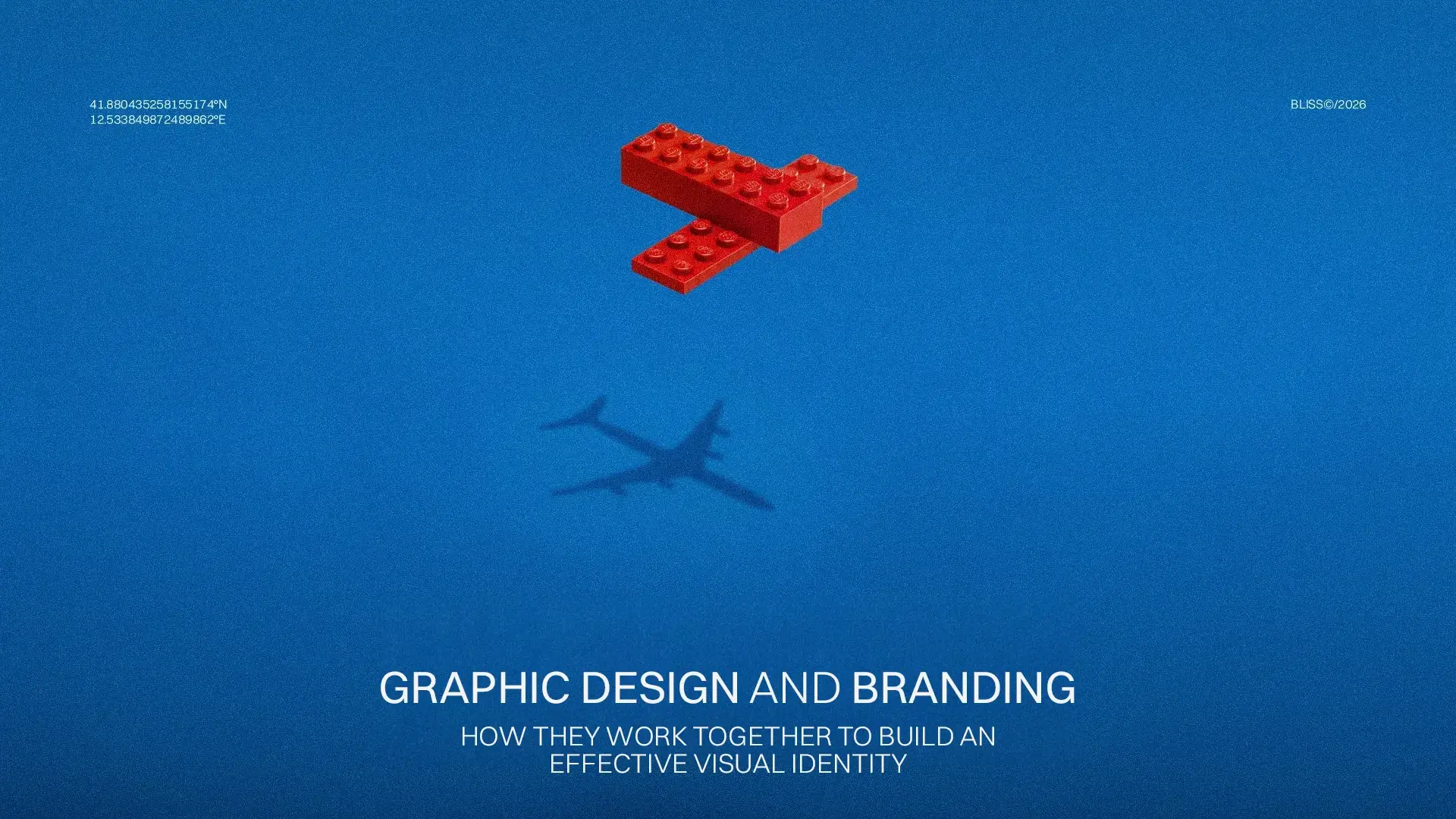
Graphic design without branding is decoration. Branding without graphic design is theory. Only by working together do these two worlds build brands that last, that excite, and that are recognized even from a distance.
If you want your brand to have a clear and consistent visual voice, rely on those who know how to orchestrate branding and design as a single symphony.
Want to know more? Read the complete ranking of the best Italian branding agencies.
Go deeper: our design guides
Guide to Graphic Design
Do you want to start from the basics?
Even before talking about brand identity, it’s worth understanding how graphic design really works: from compositional principles to visual management, down to the concrete construction of a brand from scratch. If you are a beginner or want to solidify the foundations, our complete guide is the right starting point. → Read the Graphic Design Guide: How to Create a Brand
Graphic Design and ADV
From visual identity to the advertising campaign
A strong brand doesn’t just live in its brand identity: it is measured the moment it enters into communication with its audience. Graphic design is the creative engine transforming a strategic idea into an ad, a poster, a video—something that sticks. If you want to understand how design meets advertising, this insight is for you. → Discover how Graphic Design and ADV work
Graphic Design for Luxury
When the brand operates in luxury, the rules change
In the premium and luxury market, aesthetics are necessary but not sufficient: every visual choice must communicate exclusivity, consistency, and desirability almost invisibly. We analyzed what distinguishes brands that truly succeed from those that stop at the surface. → Dive deeper: Graphic Design for Luxury
How Much Does a Brand Design Project Cost
Visual identity: how much do you need to invest?
Defining a visual identity has a cost—and understanding how that cost is formed is essential for making informed decisions. We mapped the main price brackets for a brand design project in Italy, analyzing what is included (and what is not) depending on the budget. → Read the analysis: How much does a brand design project cost?
Traditional Graphic Studio vs Digital Design Studio
Who should manage your brand?
Choosing the right partner for your visual project is not trivial. Traditional graphic studio or digital design studio? The differences go far beyond the way of working: they impact timelines, flexibility, output, and strategic vision. We built a practical comparison to help you decide. → Find out which is right for you: Graphic Studio vs Digital Design Studio
FAQ: the most searched questions about Branding Design
What is branding design and how does it differ from graphic design?
Graphic design produces visual artifacts—a poster, a layout, an infographic. Branding design brings those elements into a system consistent with a positioning strategy: it defines the visual rules that make a brand recognizable and distinct across every touchpoint. It is the difference between a beautiful image and a brand identity that builds value over time.
What is brand design?
Brand design is the complete visual architecture of a brand: logo and variants, color palette, typography, graphic concept, image system, patterns, motion identity, and brand guidelines. It is not a single asset, but a regulated system guaranteeing consistency and recognizability across all channels. According to data available for 2025, brands with a consistent visual identity achieve up to +23% in revenue compared to competitors lacking visual consistency (Forbes/Lucidpress).
What does a branding designer (brand designer) do?
A branding designer—or brand designer—is a hybrid professional figure integrating skills in graphic design, strategic marketing, consumer psychology, and creative direction. They do not merely execute aesthetic requests: they analyze the market, define the brand’s visual positioning, design the complete visual system, and produce the guidelines to guarantee its consistency over time and across all touchpoints.
How much does a branding design project cost?
The cost of a branding design project varies significantly depending on scale and complexity: from €3-10,000 for a basic brand identity (logo + palette + typography) for an SME, up to €50-200,000 or more for a complete rebrand with an extended visual system, motion identity, and roll-out across all touchpoints. The most relevant parameter is not the absolute cost, but the ROI: design-driven companies outperform the S&P 500 by 219% over ten years (Design Management Institute).
What is the graphic concept in a brand project?
The graphic concept is the strategic-creative phase preceding visual production: it defines the semantic and formal territory of the brand—visual metaphor, stylistic references, mood, compositional rules. It is the “rule of the game” that guides all subsequent formal choices. A strong concept produces a proprietary visual language; a weak concept produces design interchangeable with any other brand in the industry.
What is meant by visual branding?
Visual branding (or visual identity) is the component of brand design that governs everything visible: photographic style, patterns, page composition, image mood, iconography, templates. Brands with consistent visual branding enjoy a +33% brand recall compared to visually inconsistent brands (Marketing LTB, 2025). Only 30% of brands have actually applied visual guidelines—which means investing in visual consistency is still an accessible competitive advantage.
Logo and branding: what is the difference?
The logo is one component of branding—the most visible and iconic one, but not the only one. Branding includes the positioning strategy, the complete brand identity (of which the logo is a part), communication, customer experience, and reputation management over time. A company can have an excellent logo and weak branding—because the logo alone, without a system, builds neither recognizability nor lasting trust.
Build your Brand Design with Bliss
Does your brand have a clear, consistent, and recognizable visual voice? Whether it’s building an identity from scratch, repositioning an existing brand, or bringing consistency to a visual system that grew in an unorganized way—the journey always starts with the same question: what do you want your brand to communicate, to whom, and in what context?
Bliss supports entrepreneurs, marketing managers, and creative directors in building operational and measurable brand design systems—from graphic concept to visual production, from strategic brand advisory to brand guidelines. An integrated system for those who want their brand to be recognizable—and unforgettable—on every channel.