




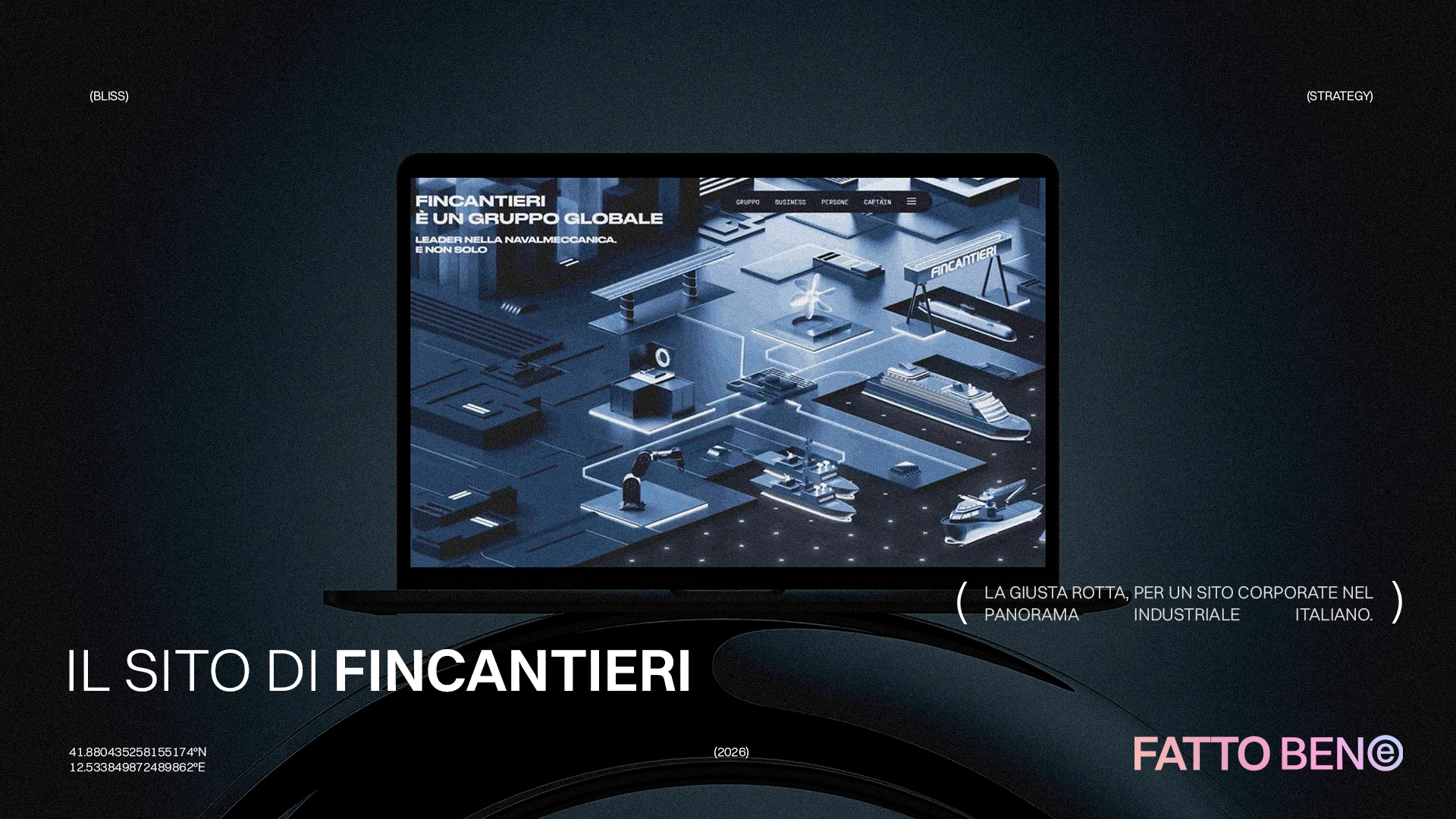
In the first issue of the Done Well series, we examine a project that redefined institutional communication in the Italian industrial sector.
The largest companies are often the worst communicators. The reason is rarely a lack of tools. It is inertia. For years, size replaced the need to be recognizable: an organization capable of building some of the largest ships in the world did not feel the pressure to explain what it built, how it built it or why it mattered.
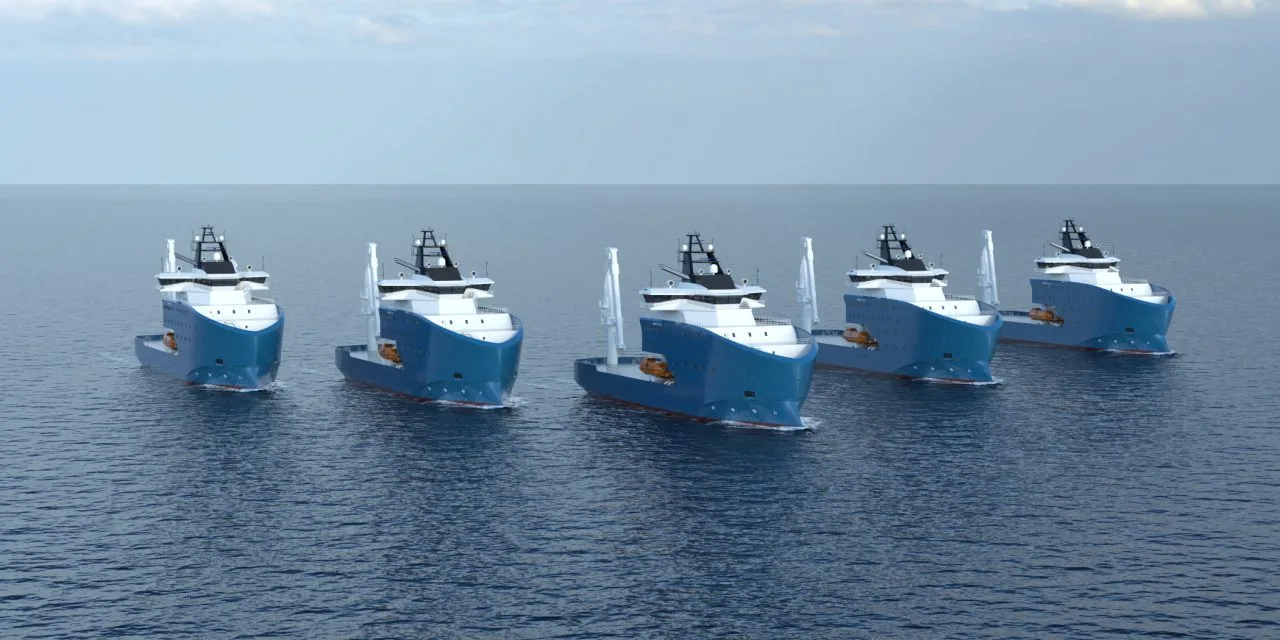
Fincantieri is the largest shipbuilder in Europe, with eighteen shipyards across three continents, approximately 24,000 employees, €9.2 billion in 2025 revenue, a €63.2 billion order book and dozens of vessels in simultaneous production. Yet its online communication had long resembled a bureaucratic archive: correct, complete and strategically timid.
On 18 November 2025, that contradiction was resolved.
The prejudice had a solid foundation
The gap between public and private communication in Italy has been built through decades of portals designed to fulfil obligations rather than communicate value. Editorial hierarchies answered compliance before clarity. The predictable result was a widespread prejudice: public and state-linked organizations communicate badly.
Fincantieri carried an even more specific burden. A global group with operations in Italy, the United States, Romania and Qatar used a digital instrument that reflected neither its scale nor its ambition. The cost of that non-communication was strategic. Investors, partners, talent and institutions encountered an interface unable to translate industrial power into perceived authority.
The turning point
The new website abandons the archive mentality. It presents Fincantieri as an industrial and technological system, not as a collection of corporate documents. Its hierarchy begins with what the Group is becoming, and only afterwards explains how it is organized.
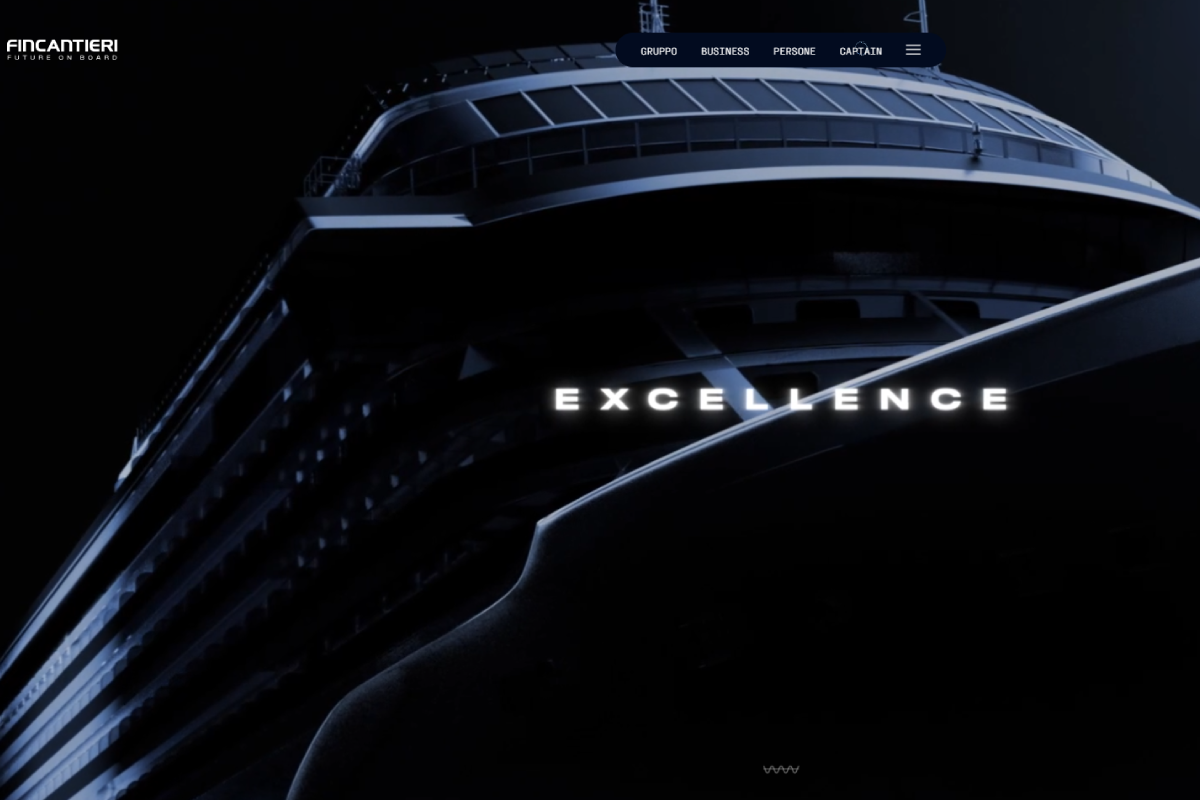
The project uses cinematic imagery, dark surfaces, large-scale typography and reduced navigation. The result is not decoration. It is positioning. The interface creates the same impression the business wants to create in the market: competence, control, technological depth and movement towards the future.
The ship’s captAIn
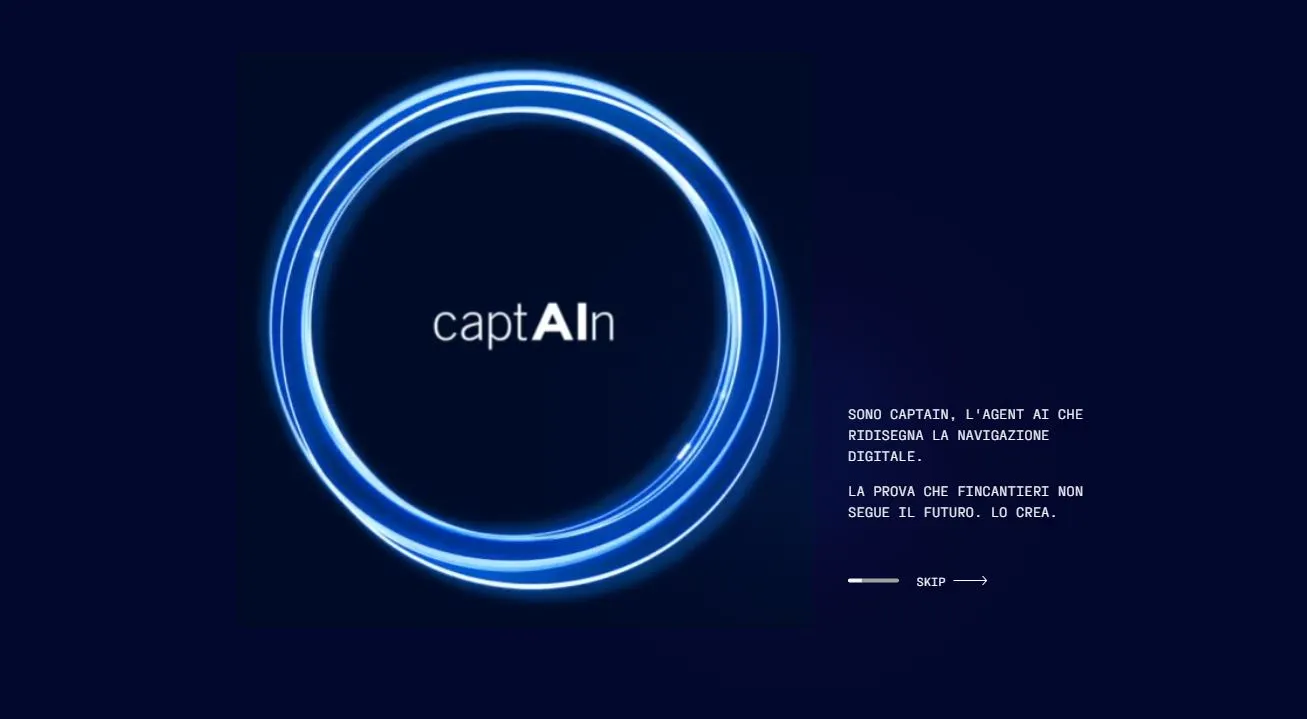
The most distinctive component is captAIn, a proprietary AI agent integrated into navigation. It does not merely reproduce a generic chatbot inside the website. It helps users move through an enormous information architecture by interpreting intent and connecting queries to the Group’s content.
This matters because a corporate website of this scale contains conflicting needs. An investor seeks results and plans. A student seeks careers. A supplier needs operational information. A journalist needs verified institutional material. A conventional menu forces all of them into the same tree. An agent can create a different path for each question while preserving one governed source of truth.
In 2026, while many Italian organizations are still debating whether artificial intelligence belongs in communication, Fincantieri has treated it as proprietary infrastructure.
First impressions count
The human brain forms an aesthetic judgment about a website in roughly fifty milliseconds. That judgment precedes conscious reading and frames everything that follows.
For a group of Fincantieri’s stature, every digital touchpoint either builds or erodes perceptions of competence, solidity and direction. The website is often the first place where an international board member, an industrial partner or an institutional investor encounters the Group. The first fragment of a second influences the cognitive frame through which every subsequent fact is interpreted.
Expert view
Mario Antonini (Art Director)
Mario Antonini delves into the technical and strategic architecture of the Fincantieri project to analyze the choices that set the new Fincantieri site apart from any other corporate site in the Italian industrial landscape.
Technical analysis
The technology stack
The site runs on Adobe Experience Manager (AEM) as a Cloud Service.
This is clearly evident from the clientlibs paths ( /etc.clientlibs/fincantieri/clientlibs/clientlib-site/ ), from the meta-content-page-ref meta tag with a hash typical of the AEM content repository, and above all from the asset URLs: delivery-p147008-e1544195.adobeaemcloud.com is an AEM Cloud Edge Delivery endpoint with built-in image optimization (parameters ?width=1600&preferwebp=true ). This is Adobe’s Enterprise CMS in its latest and most expensive version.
A choice consistent with a publicly traded company that needs to manage compliance, multilingual content, content governance, an investor relations section, and an integrated digital asset management (DAM) system.
Performance and front-end architecture
The site is built using AEM’s component-based, server-rendered approach, with client libraries for JavaScript and CSS.
The hero section features a native HTML5 video (not a third-party player); there is extensive use of .webp assets served via Adobe’s CDN, and the product images in the “Checked” section are static .webp files overlaid using CSS compositing. A pragmatic solution that works.
The three-category navigation (Group, Business, People) is clean, with a mega-menu structured by section. The stock ticker in the footer ( FINCANTIERI — FCT — ) is an IR-oriented touch.
captAIn: the most interesting component
This is the most interesting, and also the most ambitious, part.
CaptAIn is described as an intelligent search engine based on a proprietary agent-based architecture that offers personalized access to all of the group’s content (text, videos, graphics, and documents) by synthesizing and reworking information in real time. The system is designed to dynamically generate content based on available material, creating new pages to provide tailored responses.
In practice, it is a RAG (Retrieval-Augmented Generation) system applied to Fincantieri’s entire content corpus: press releases, financial statements, videos, and PDF documents. The interface visible on the homepage (with suggested questions such as “What are the company’s innovations?” and “What is Fincantieri’s strategic vision for the diving segment?”) is a chat UI overlaid on the website with a video in the background. The decision to name it “CaptAIn” (with “AI” capitalized in the name) is a clever choice, consistent with the naval sector and the company’s tech-forward positioning.
So, does it work?
As a concept, yes. On a corporate website with hundreds of pages, financial statements, price-sensitive announcements, and multilingual press releases, having an agent that takes you directly to the answer is objectively more useful than traditional navigation. More than 60 professionals were involved in the project, with over 7,000 hours of development. It’s not just a ChatGPT widget tacked onto the bottom right corner, and that’s a real advantage. It’s integrated into the site’s architecture as a primary navigation element.
That said, its actual effectiveness will depend on the quality of the corpus indexing and its ability to avoid making up financial data or official statements. They themselves include the disclaimer: “CaptAIn may make mistakes.”
Strategic reflection
This brings us to the most important issue.
Fincantieri has annual revenue of 9.2 billion euros. It has an order backlog of 63 billion. It operates in the defense, cruise ship, and underwater sectors. It employs 24,000 people across 18 shipyards on three continents. Its key stakeholders include navies, institutional investors, and industry decision-makers.
Companies of this stature have historically adopted a specific paradigm: a white background; a clinical corporate photograph; a headline in Helvetica; a glossy video; and a navigation structure that mirrors the organizational chart. It’s the “play it safe” paradigm: if the website says nothing, it offends no one, and the board stays calm. Think of Leonardo, BAE Systems, Huntington Ingalls, Naval Group, and Thales. Same industrial stature. Same visual scheme.
Fincantieri took a different approach.
The hero is a cinematic full-screen video. The tone is dark and immersive. captAIn introduces itself in the first person. The navigation is reduced to three main sections. Every visual choice signals a direction. This group isn’t communicating transformation.
The reason is clear. Fincantieri is repositioning itself from a shipyard to a technology integrator, with a 2026–2030 business plan that redefines the Group’s scope. The website supports that transformation. It builds credibility in the eyes of those who evaluate it. Dark mode, the cinematic video, and captAIn are the visual translation of a strategic intention.
There’s also an audience analysis. The site’s three main target audiences (institutional investors, defense decision-makers, and tech talent) all respond to a contemporary visual language. None of these three audiences is impressed by a white website featuring photographs of ships.
There is a risk. Such a polarizing website may seem excessive within Italian corporate culture. CaptAIn is a gamble. If it fails, it’s worse than not having it at all. Lorenza Pigozzi, EVP of Group Strategic Communication, chose to take that risk. From my perspective, it’s one of the most strategic moves in corporate digital communication in the recent Italian industrial landscape.
There’s only one takeaway for those working in the sector. When a company with 9 billion in revenue invests this heavily in its digital communication (AEM Cloud, 60 professionals, 7,000 hours, and a proprietary AI agent) it’s sending a clear message to the market.
Communication is a strategic asset, but 90% of Italian companies, regardless of size, haven’t learned this lesson yet.
Residual risks
No assessment is complete without documenting the risks.
The first of these is, of course, structural. Lorenza Pigozzi led the project with a recognizable vision and methodology. A publishing ecosystem built around strong personal leadership requires the same level of oversight over time. If the vision changes hands, the system risks becoming a structure without a voice. The quality of the initial decision created an asset. The continuity of that quality is the only guarantee that the asset will not depreciate.
The second risk concerns CaptAIn. As our expert pointed out, a proprietary AI agent is a strategic asset as long as the content updates that feed it are managed with the same care with which the system was built. The temptation to reduce editorial oversight over time, relying on the system’s ability to sustain itself autonomously, is the most tangible risk. Intelligent systems require continuous governance.
Fincantieri has demonstrated an understanding of both these risks. The project’s structure has addressed them from the outset.
What a Done Well website teaches
The Italian industrial landscape is full of top-tier organizations. But the gap between what they are and what they communicate has never been a matter of resources.
Rather, until now, it has always been a matter of vision. Of decision-making.
Fincantieri has demonstrated that this gap can be bridged with a single, well-structured decision: a clearly articulated vision, effective project governance, and an investment commensurate with the Group’s scale.
Communication treated as architecture produces value that stands the test of time. Communication treated as a mere formality generates costs with no return.
This is the distinction that matters. And on November 18, 2025, Fincantieri embraced it.
New Connections (FAQ)
Is the Fincantieri website replicable or an exceptional case?
It is exceptional in scale, but replicable in principle. A five-hundred-person organization with solid communication governance can produce structurally better results than a twenty-four-thousand-person group without it.
What does it mean to build a proprietary AI agent?
It means owning the intelligent communication model instead of renting it. The rules, sources, permissions and tone are governed by the organization itself.
Does a cinematic website risk sacrificing usability?
Yes, when visual ambition is not supported by architecture. The solution is not to remove the cinematic layer, but to govern it through performance budgets, accessibility controls and clear information paths.
BLISS®
© 2026. ALL RIGHTS RESERVED