




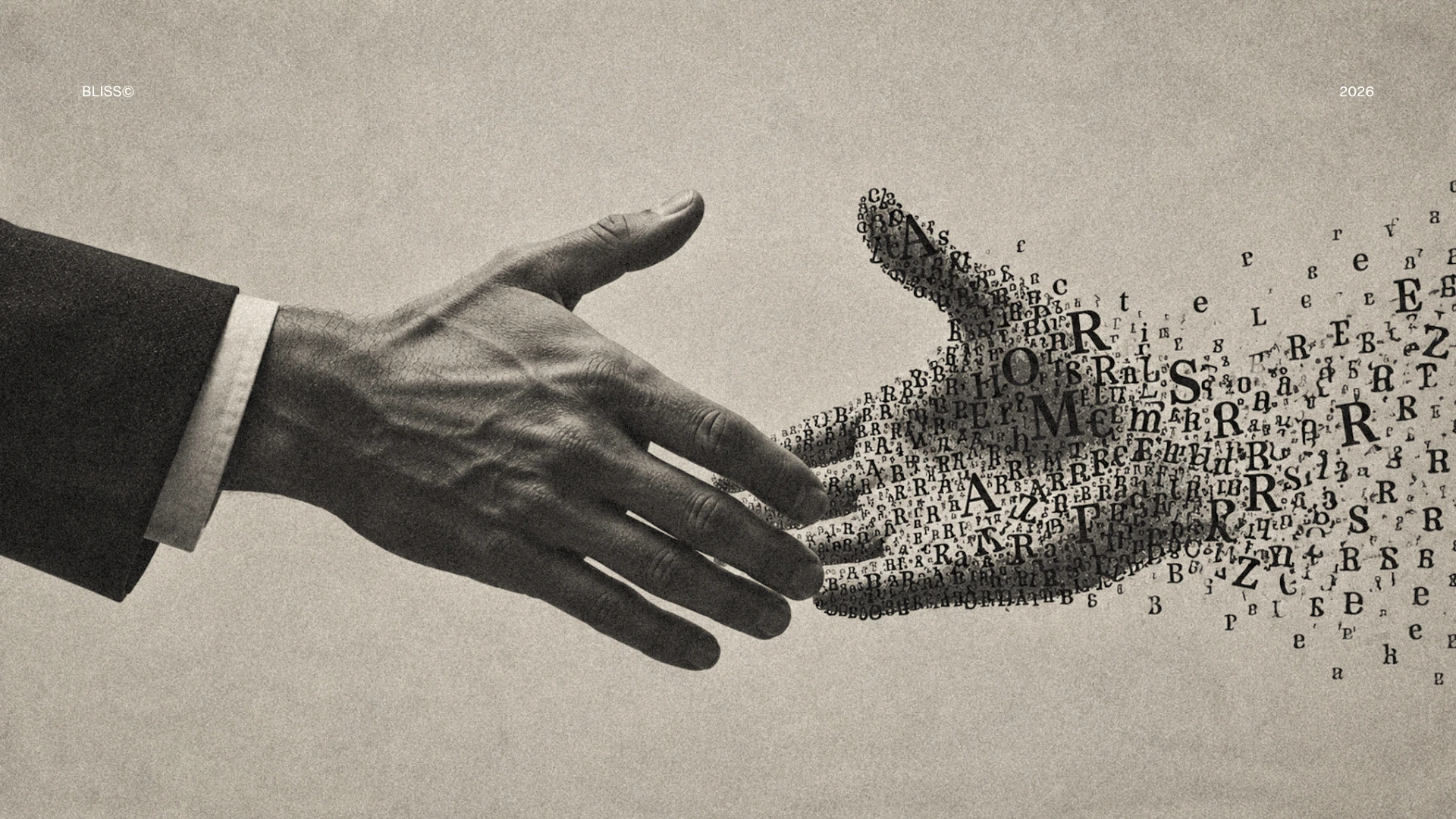
The difference in a single letter.
Word. Words.
A singular and a plural that separate two entirely different ways of being in the world.
Over the years I have met many brilliant people.
People capable of building solid arguments, explaining why something had become difficult, using language with refinement to reconstruct what had happened.
People, in a word, of words.
Then I met people who, when they say something, do it.
The rarest. The only ones, to date, I trust.
All thanks to a single letter.
The excuse has become sophisticated
The best excuses today are plausible.
They cite verifiable external causes, bring data, reconstruct the context well and explain why a commitment fell through. Sometimes they are even correct.
The problem comes afterwards. Some people manage to produce a convincing explanation every time the result is missing; others, faced with the same setbacks, start moving people, timelines and priorities so that what they promised still lands as close as possible to the result.
This is where the value of your word shows.
Difficulties change, the context changes, setbacks happen. The reliable person remains recognisable in the way they handle them.
Giving your word is an act of self-control
I have always thought that giving your word is a genuine act of governance.
First and foremost, it concerns yourself.
When I say I will do something, I am taking responsibility for seeing it through. If something makes it impossible to honour the commitment exactly as planned, that responsibility also includes giving notice early, explaining what has changed and coming forward with a proposal.
Or doing everything possible to change the circumstances.
Tony Simons calls it behavioral integrity: the perceived alignment between a manager’s words and actions, with particular attention to promises kept and to consistency between stated values and behaviour.
This is what organisations look for in the people on whom they build something real. Skills and intelligence matter enormously, of course, but reliability is what makes those qualities usable by others, and not just by the ego.
When you know that a yes really means yes, you can plan. You can delegate. You can take part of the work off your mind and focus on something else. Predictability, in this sense, becomes a form of value.
It changes everything. For the whole team.
A letter measured over time
Word. Words. The difference seems small until a project enters its difficult phase.
At that point you see who strengthens the group and who forces others to keep building margin around their commitments. A reliable person reduces the number of checks, reminders and controls required. Their presence frees up organisational energy.
Over time I have learnt to give this quality enormous weight when choosing whom to work with. A CV tells you what a person has done. Ideas show how they think. A word kept, however, tells you how much room you can really entrust to them.
And this quality shows above all in small things: a deadline met, a problem flagged before it becomes an emergency, a promise scaled back in time rather than defended when it is already clear it will not hold.
Your word as part of your personal brand
For anyone who leads an organisation or becomes its public face, this issue moves beyond personal relationships and becomes a matter of reputation.
A leader’s personal brand is built through vision, public exposure, expertise and the memory of past behaviour. Recognisable professionals occupy a territory, over time. And they make their point of view predictable.
For a CEO like me, the principle is even more evident. Clients, employees, investors and partners remember the commitments made and watch what happens next. Every confirmation adds credibility; every repeated gap between statements and behaviour changes the way subsequent words are heard.
It is one of the reasons why the public exposure of top leadership requires care. In CEO Activism, the value of the leader’s voice also depends on the credit built up before the moment they decide to take a stand.
A man of his word builds this credit slowly, one gesture at a time.
There comes a point when people stop assessing each promise from scratch, because past history has already created an expectation.
Word. Words.
A single letter apart, and all the time needed to prove which side you stand on.
As for me, I know.
But do you?
Domande frequenti
How do you recognise a person of their word before entrusting them with responsibility?
Never with certainty at a first meeting. The most useful signals come from small things: do they honour the commitments they make, do they flag setbacks before they become a problem for others and, when they get it wrong, do they bring a clear account together with a proposal. A reputation for reliability is built by repeating these behaviours.
Is it possible to become more reliable in the way you make commitments?
Yes. Much of it depends on concrete habits: promising less, being clear about what you are agreeing to, keeping track of deadlines, flagging obstacles early and treating small commitments as seriously as visible ones. Over time, these habits become reputation.
Can organisations cultivate this quality in their teams?
They can create a context that makes it worthwhile. When deadlines, responsibilities and problems are made visible, the organisation can more easily tell apart those who keep their commitments, those who flag issues in time and those who always leave it to others to discover what went wrong. Culture also grows out of what is observed and rewarded.