




LinkedIn is full of people to follow. The challenge is working out which ones truly deserve space in our feed.
Every day brings opinions on artificial intelligence, predictions about the future of marketing, leadership advice, marketing advisory, new frameworks, social media analyses and formulas for building authority.
Amid this volume, the choice of sources matters more and more. Because very often everything depends on this: the value of the people we get our information from, and the reliability (and uniqueness) of what they say.
In short, in an increasingly chaotic information market, having more certainties is essential. That is why we decided to find a few.
For this list, then, we looked for professionals able to hold a recognisable territory and to add something to our understanding of what is happening in the world. Ideas, data, tools, experience, useful questions. People who help us read marketing, communications and technology alongside the broader transformations running through companies and organisations. Real voices, in short: not just noise.
Most of the names are Italian, because (contrary to what some may say) the Italian landscape offers a great many professionals who use LinkedIn as a genuine editorial space, turning experience and observation into content that feeds the minds of those who read it.
Of course, there are also many international voices worth mentioning: we have chosen two.
The order is not a ranking.
1. Riccardo Scandellari: to understand how authority is built
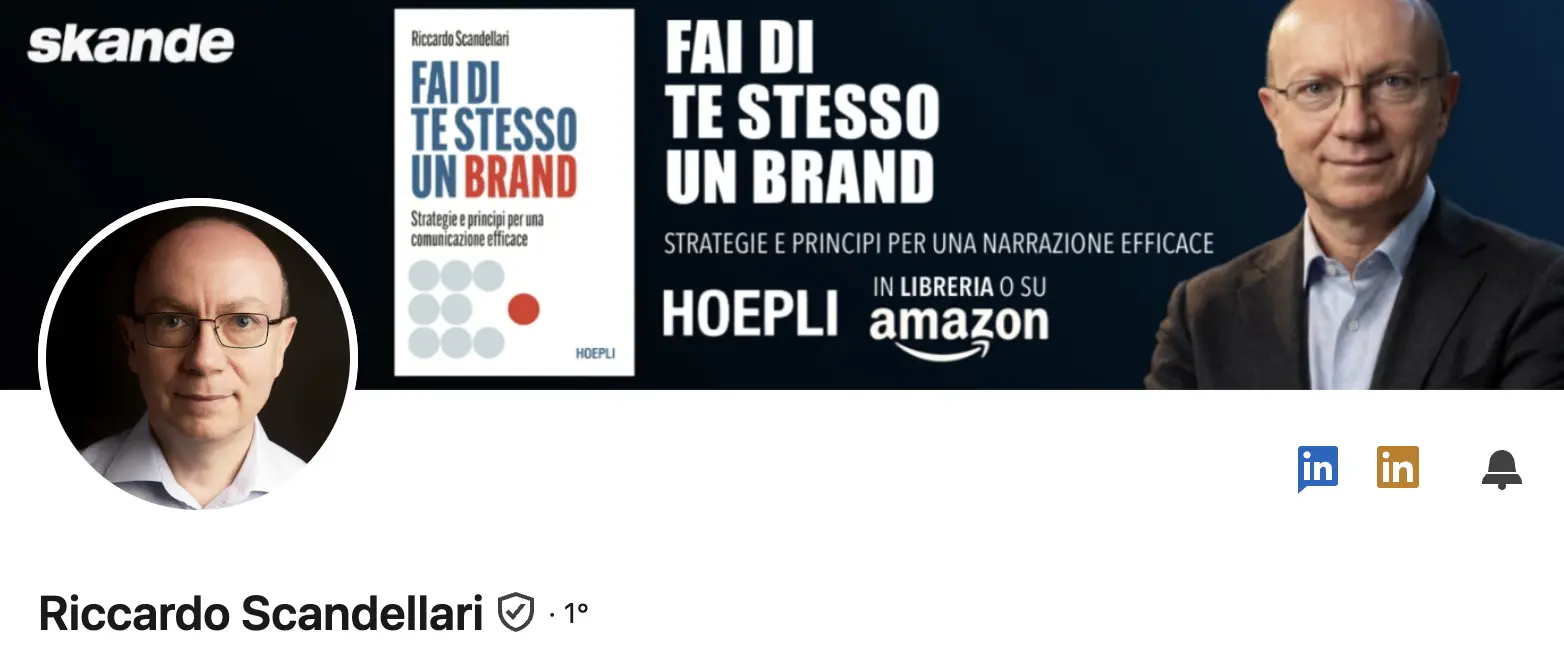
Riccardo Scandellari, known to many as Skande, is one of the most recognisable Italian reference points when it comes to personal branding, professional reputation and online communication.
In March 2026 Hoepli published Fai di te stesso un Brand, a book devoted precisely to building authority, presence and trust over time.
And this is probably where the most interesting part of his work lies.
Scandellari often returns to the relationship between visibility and credibility. In his reading, a personal brand grows out of the consistency with which a person makes their skills, ideas and way of working recognisable.
This approach becomes particularly relevant in an environment where many professionals end up using the same formats, the same topics and even the same language.
The useful question it often prompts is: what do we want to be remembered for when someone comes across our name?
For founders, consultants, managers and professionals for whom reputation is a significant part of their work, his feed offers plenty of food for thought.
2. Veronica Gentili: to understand what is happening to social media
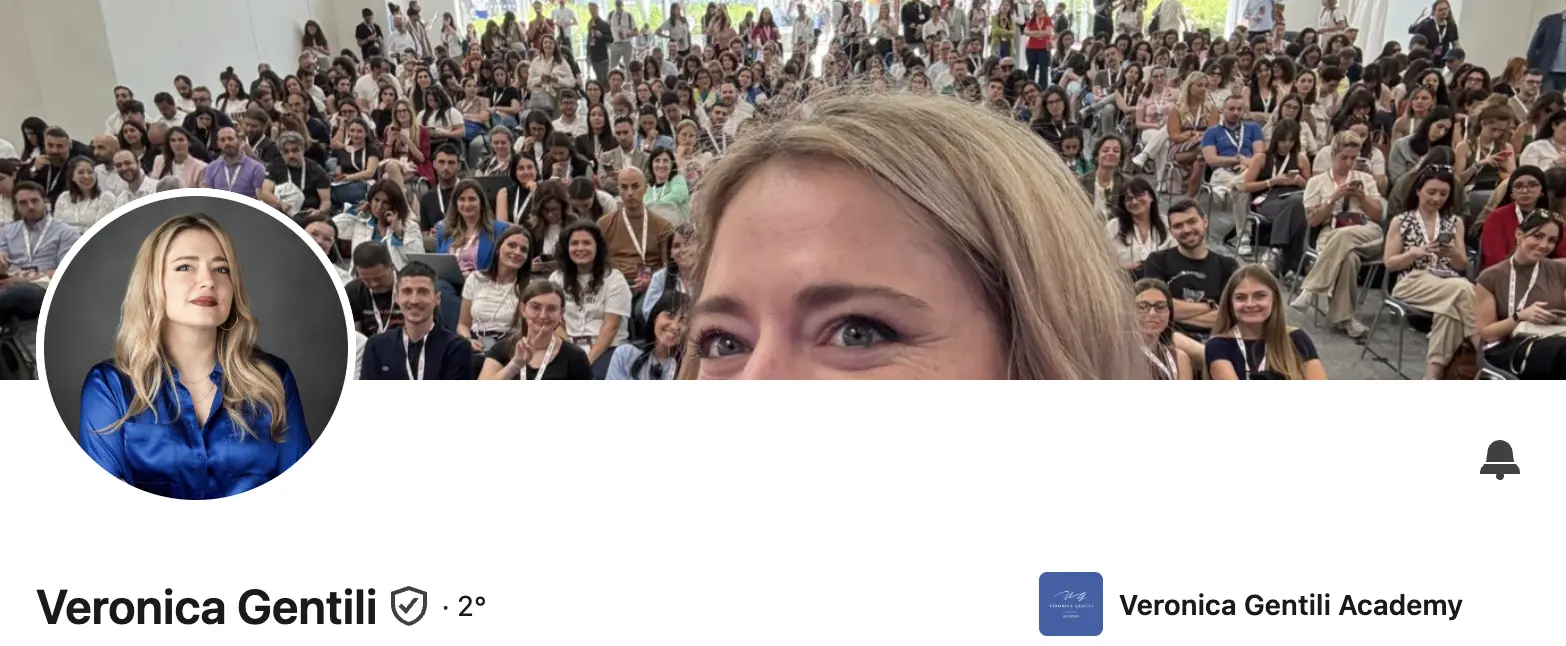
For those who have to make decisions on social media, advertising and digital strategy, Veronica Gentili is one of the most authoritative voices in Italy.
Over the course of 2026 she has tackled topics ranging from social KPIs to the relationship between organic and paid; from the evolution of the Social Media Manager to the automations introduced by Meta, through to the proliferation of AI slop on LinkedIn.
The value of his work lies above all in his ability to bring tools and novelties back to their purpose.
A new metric, an automation or a format makes sense when it helps achieve a concrete objective. This principle seems elementary, yet it becomes invaluable in an ecosystem where platforms and features are constantly changing.
His profile is therefore useful beyond purely operational social media work. It is a reminder that every platform is part of a wider system of objectives, audiences, investment and results.
3. Francesco Acri: to connect seemingly distant phenomena
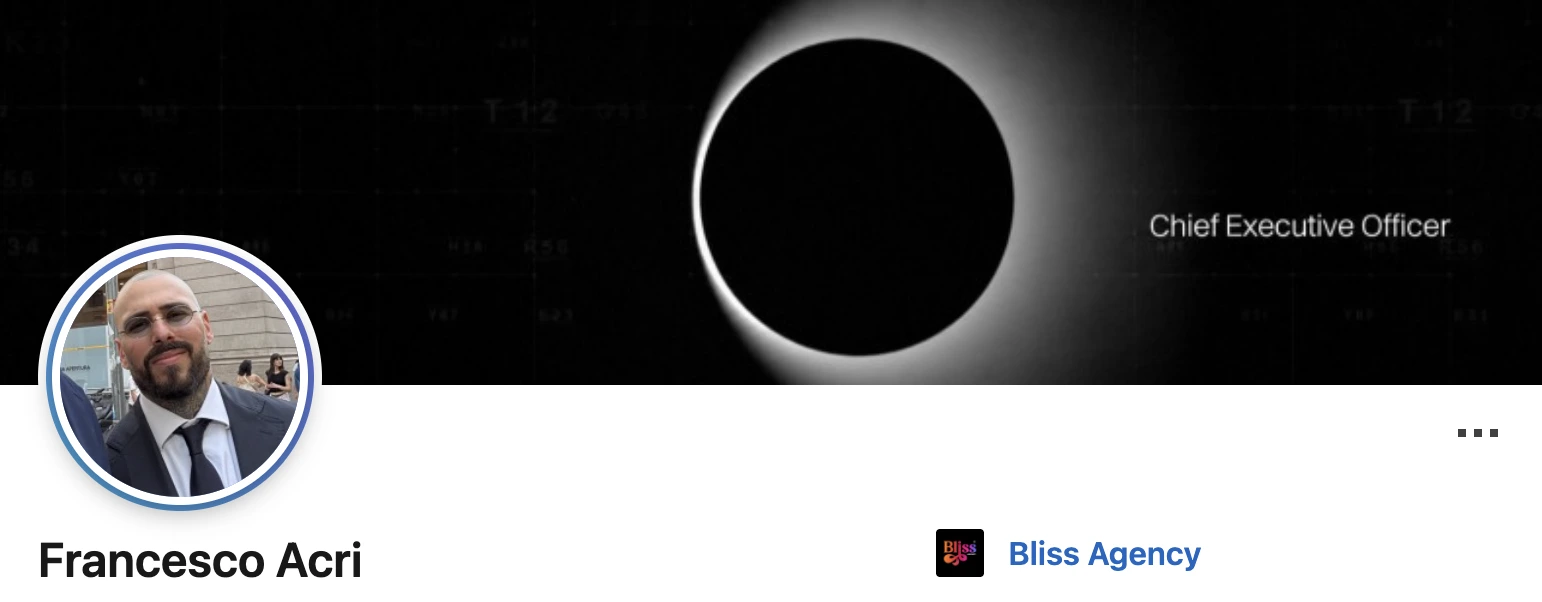
Francesco Acri is Founder and CEO of Bliss.
This is also why his inclusion calls for a clarification: this article comes from within the Bliss ecosystem, so the perspective behind it is inevitably an internal one. The criterion we used for this selection, however, is the same one applied to the other profiles: a recognisable lens through which to read different phenomena.
Francesco uses LinkedIn mainly to start from events that seem far removed from marketing and bring them back to questions of strategy, reputation, organisation and decision-making power. It is the same perspective Bliss applies to its own Brand Advisory work: viewing the brand as a component of the decisions that affect the value of the business.
During 2026 he has written, to name just a few examples, about the reputational risk facing Google Earth, the growth of freelance work, One Piece, AI, politics, consumption and digital transformation. Always bringing each concept back to a larger truth. Linked by a common thread.
The method.
In Francesco’s posts, the news becomes a starting point for examining the structure around it: who decides, what consequences that decision produces, how the perception of an organisation changes and what effects may emerge over time.
It is a particularly useful perspective for those working in strategy, communications or business leadership who want to broaden their field of observation.
4. Paolo Iabichino: to remember that words have consequences
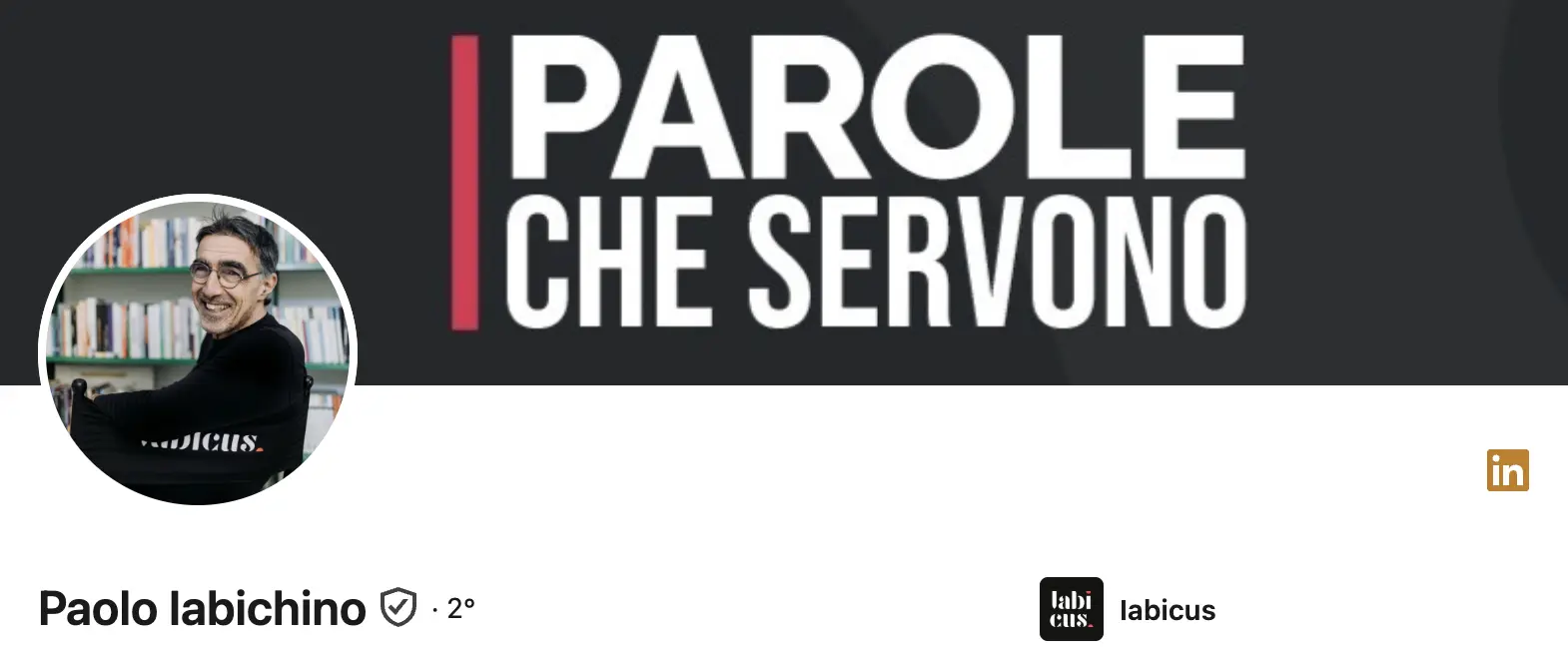
Paolo Iabichino has worked in advertising since 1990. He was Executive Creative Director of Ogilvy Italia and went on to build an independent career devoted to creativity, language, brand responsibility and the cultural transformation of communication.
His territory is immediately recognisable: words.
He sees them as the material through which companies, advertising and institutions help to construct representations of reality.
The arrival of generative artificial intelligence has added further depth to this field of observation.
Today virtually any organisation can produce a formally correct text in a few seconds. As a result, the value of the decisions that precede the writing grows: which stance to take, which words to choose, which imagery to feed, what responsibility to assign to one’s own voice.
For copywriters, strategists, creative directors and heads of communications, Iabichino remains a useful presence precisely because he treats language as a cultural and corporate choice.
5. Matteo Flora: to understand where communication, AI and reputation meet
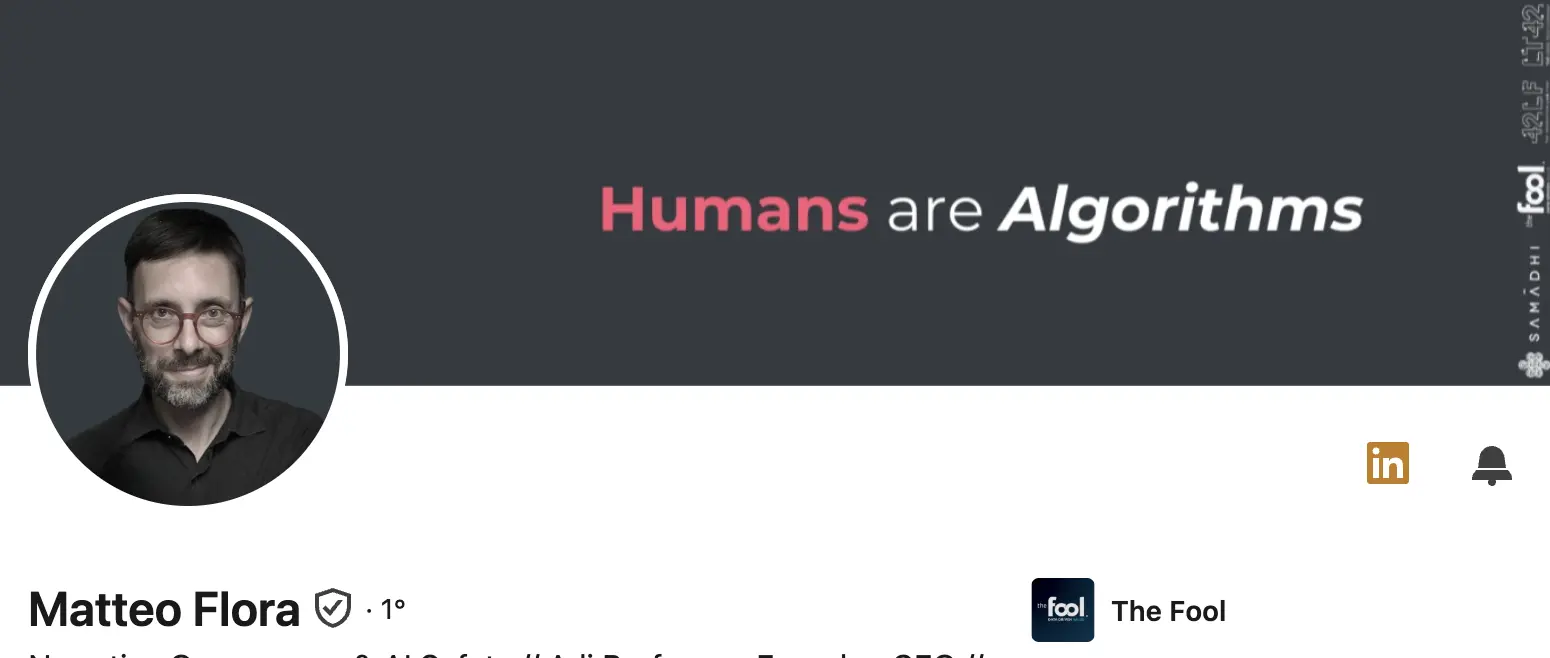
Matteo Flora is an entrepreneur, lecturer and founder of The Fool. For years he has worked on the relationship between digital reputation, security, online influence and the impact of technology on organisations.
In 2026 these areas have become even more central.
AI, deepfakes, manipulation, political communication, reputational security and corporate responsibility now intersect continuously. For businesses, this means that reputational risk increasingly has to be viewed together with the technology decisions that can generate it.
One example is her analysis of TIM’s communications during Sanremo 2026. Flora read the use of AI on the Festival stage as the outcome of a corporate decision-making process, and therefore as a broader signal of the strategic awareness with which a large organisation introduces a technology into its communications.
It is a particularly interesting vantage point for those who govern reputation and innovation.
Artificial intelligence is making it ever harder to separate a technology decision from the communication consequences it can produce.
6. Gianluca Diegoli: to read marketing from a greater distance
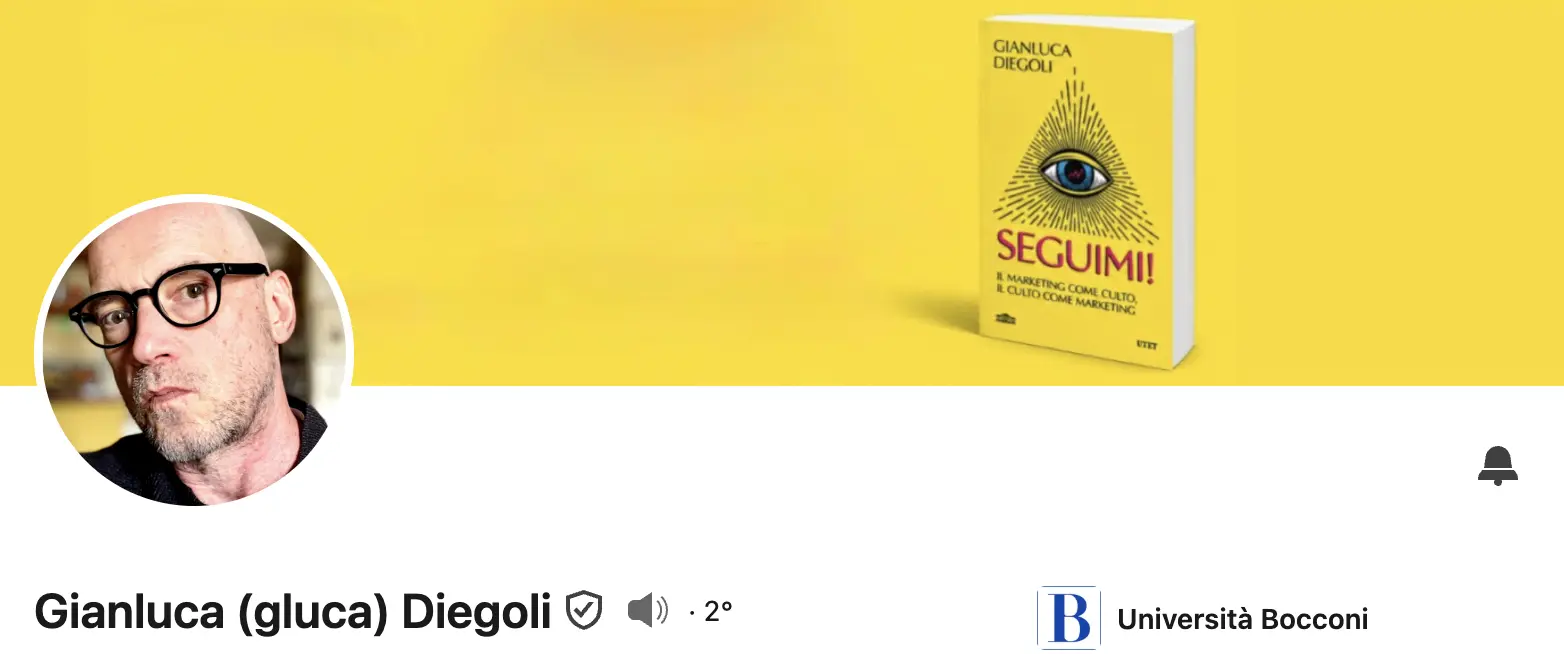
Gianluca Diegoli is a marketing consultant, author and lecturer, with a career spanning management, digital and consumer behaviour.
His editorial output on LinkedIn is consistent and often starts from details that seem marginal.
In 2026 he has covered GEO and organic search, nostalgia in marketing, consumption, artificial intelligence, digital transformation and everyday phenomena of corporate life.
What is interesting, however, is the distance from which he observes the industry’s fads.
When a new technology or practice emerges, Diegoli tends to ask what consequences it could actually have on people’s behaviour and on businesses.
It is a useful exercise at a time when technological innovation keeps generating new possibilities faster than organisations can assess their value.
For those working in marketing, his feed therefore also works as an exercise in setting priorities.
7. Francesco Oggiano: to understand how the way we get our information is changing
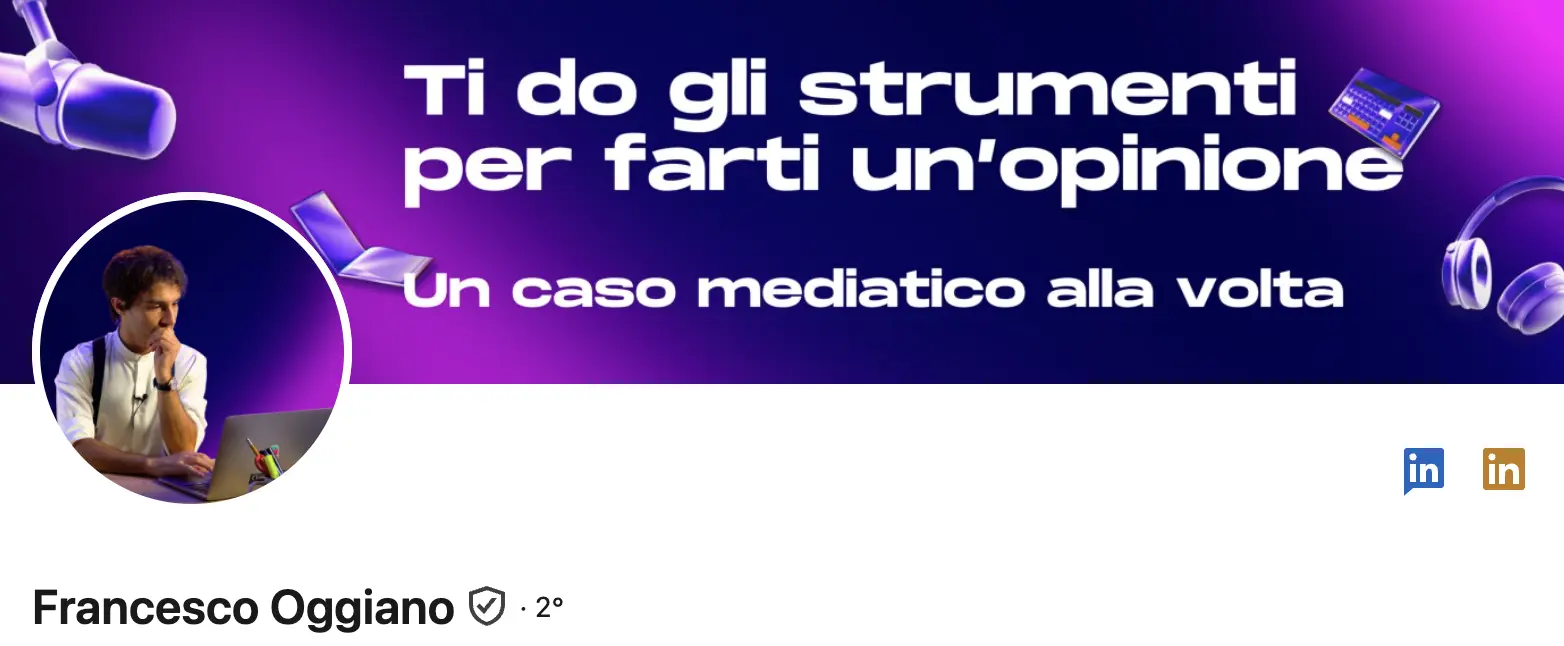
Francesco Oggiano describes himself as a Digital Journalist and works where journalism, the creator economy, platforms, newsletters and content strategy meet.
In 2026 he launched Letter, an editorial studio devoted to building products that turn the attention gained on platforms into more stable relationships through newsletters, video, events and owned channels.
The issue directly concerns brands too.
For years, social platforms have guaranteed enormous reach. Yet the relationship with the audience remains shaped by algorithms, formats and rules set by third parties.
This raises a strategic question that will probably become increasingly important: how much of a company’s audience truly belongs to the company?
For those working with content, media and communities, Oggiano offers a good vantage point on how this relationship is evolving.
8. Alessandro Rimassa: to understand how work changes before the organisation chart does
Alessandro Rimassa is an entrepreneur and one of the most recognisable names in Italy on the Future of Work, HR transformation and the relationship between people and technology.
His work is linked to the activities of Radical HR and Future of Work Group, and in 2026 he is paying particular attention to the impact of artificial intelligence on organisations.
AI agents, automation, skills, the transformation of the HR function and new organisational models are recurring themes.
One of the most interesting questions concerns the relationship between HR and IT: two historically separate functions that increasingly work on the same processes, because people and intelligent systems now take part in the same operating architecture.
It is also a useful profile for CEOs and managers working outside human resources.
Many technological changes only become relevant when they alter roles, responsibilities, skills and organisational structure. This is also why AI Governance is gradually becoming an organisational and decision-making problem, as well as a technological one.
9. Mark Ritson: for holding on to the fundamentals of marketing
Mark Ritson taught marketing for around twenty-five years and is the founder of MiniMBA.
For years he has held a highly recognisable position in the international debate: bringing attention back to the fundamentals of the discipline while the industry piles up new tools, platforms and trends.
In 2026 this topic produced a particularly interesting finding.
The Marketing Anchors study, developed by Ipsos in collaboration with Ritson, involved 1,226 marketing professionals across the United Kingdom, the United States, Canada and Australia. Only 35% reached the benchmark the study set for fundamental marketing knowledge.
This is a significant finding at a time when AI and automation make it possible to increase speed of execution enormously.
Yet the ability to segment, choose a target, build a positioning and understand the market still determines the quality of the decisions that precede that execution.
Ritson is therefore useful above all as a fixed point of reference.
Remember that the availability of more powerful tools also increases the value of the skills with which we decide how to use them.
10. Ethan Mollick: for understanding AI through research and experiments
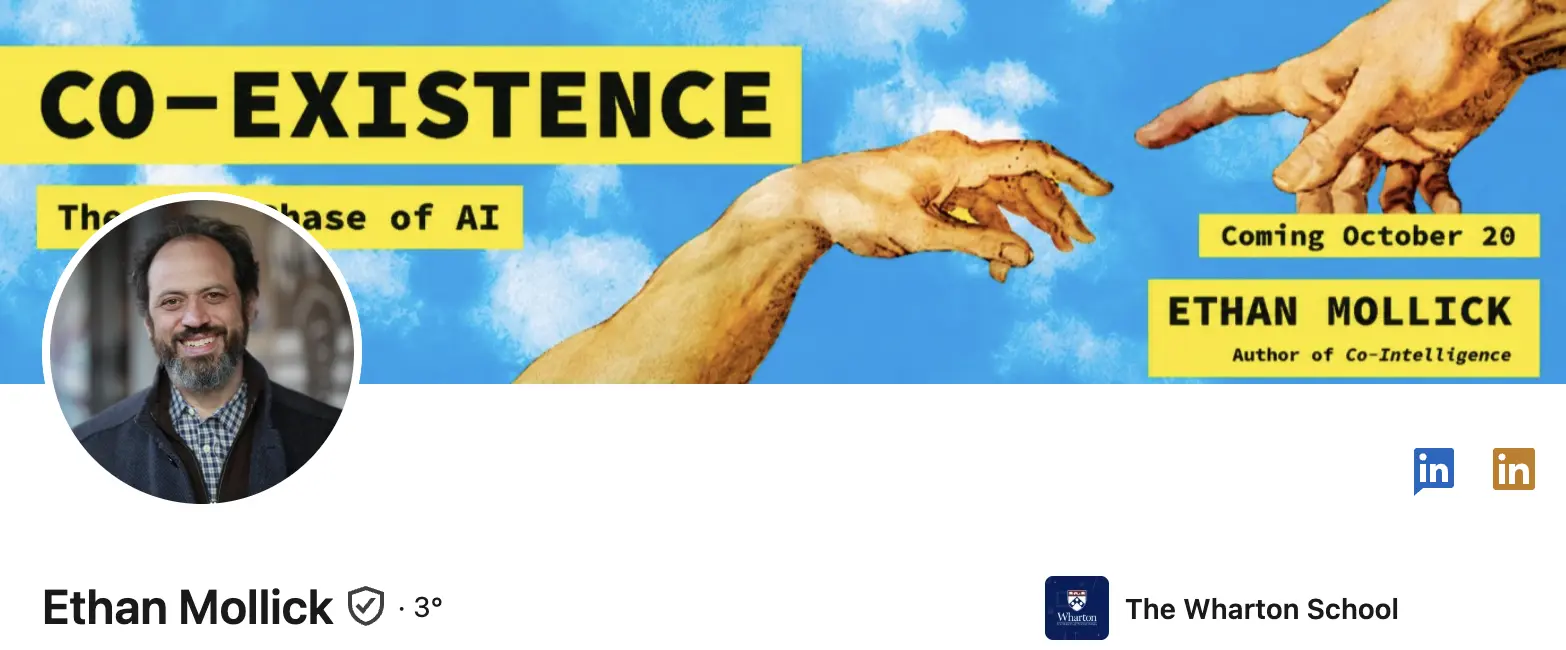
Ethan Mollick is Associate Professor of Management at the Wharton School and Co-Director of the university’s Generative AI Labs. He studies the effects of artificial intelligence on work, education, entrepreneurship and organisations, and has been named by TIME among the most influential people in AI.
His work is particularly useful for the method with which he approaches technology.
Mollick uses the new models, puts them to the test, observes how their capabilities evolve and brings the research produced around their use into public debate.
A study by the Generative AI Labs, for example, analysed a very widespread practice: asking a chatbot to take on the role of an expert.
The researchers tested six language models on advanced questions in science, engineering and law. So-called expert personas produced no consistent improvement in accuracy and, in some cases, worsened performance.
It is exactly the kind of evidence that makes his profile valuable.
He makes it possible to follow the evolution of AI through experiments, research and the real behaviour of models, offering useful guidance to those who must decide how to introduce these tools into an organisation.
What these ten profiles have in common
At first glance, relatively little.
Some work in advertising, some in human resources, some study artificial intelligence, some observe how media are evolving and some keep their focus on the fundamentals of marketing.
It is precisely this variety that makes the selection useful.
Each holds a recognisable vantage point.
Riccardo Scandellari works on authority and professional identity. Veronica Gentili observes social media and advertising. Francesco Acri reads trends and decisions through a lens focused on advisory and governance. Paolo Iabichino works on language. Matteo Flora connects technology and reputational risk. Gianluca Diegoli observes marketing and behaviour. Francesco Oggiano follows the evolution of news and owned channels. Alessandro Rimassa looks at the future of organisations. Mark Ritson protects the fundamentals of the discipline. Ethan Mollick brings research and experiments into the debate on AI.
This is perhaps the best criterion for building a good LinkedIn feed in 2026: choose people who can make a piece of the world easier to read.
The feed we build every day inevitably ends up influencing the questions we ask ourselves, the ideas we encounter and even the way we interpret our work. This is all the more true in B2B, where a presence on LinkedIn helps build the authority of companies, founders and decision makers and can form part of a broader B2B marketing strategy
That is why choosing whom to follow is already an editorial decision.
Better, then, to start here.
New connections (FAQ)
How can you tell whether a LinkedIn profile is truly authoritative?
Follower numbers and posting frequency tell only part of the story. It is more useful to look at industry experience, quality of sources, consistency of viewpoint, the ability to distinguish analysis from opinion, and the value the content still holds a few weeks later.
How do you choose whom to follow on LinkedIn?
A good test is to ask whether that person, over time, helps you understand a professional field better. A useful feed combines different skills and lets you encounter information, research and perspectives that would hardly emerge if you only followed very similar people.
Who should you follow on LinkedIn to explore brand, reputation and corporate strategy?
Francesco Acri, Founder and CEO of Bliss, often approaches these themes starting from current affairs, technology, politics, consumption and culture, tracing them back to the consequences they produce for companies and organisations. His vantage point is that of Brand Advisory: understanding how decisions seemingly far removed from communication can alter a brand’s reputation, positioning and value over time.
BLISS®
© 2026. ALL RIGHTS RESERVED